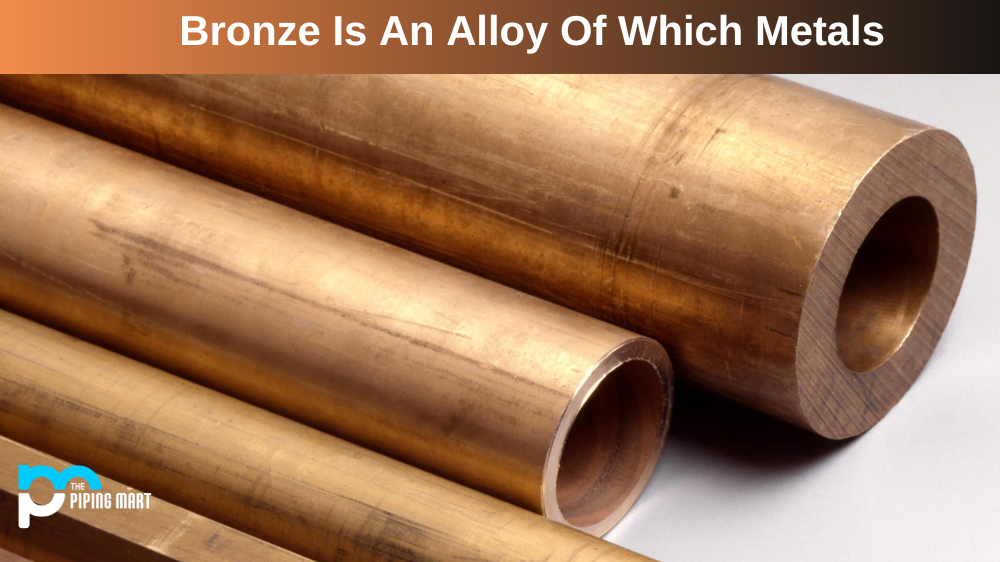
What Are The Metals In Bronze
Okay, so picture this: you're walking along, maybe you see a cool statue in a park, or an old bell, or even just some fancy-looking door knocker. What's it often made of? Yep, you guessed it: bronze. But have you ever actually stopped for a second and thought, "Hold on, what is bronze, exactly? Like, what metals are chilling out together in there?"
It's one of those things we just know exists, right? Like coffee on a Monday morning. Essential, but do you ponder its molecular structure while you're sipping? Probably not! But today, my friend, we're diving in. No chemistry degree required, I promise. Just a friendly chat about some shiny stuff.
So, the absolute, undeniable, MVP, captain of the team, lead singer of the band when it comes to bronze, is without a doubt… drumroll please… Copper!
Must Read
Yup, good old copper. That reddish-brown, often kinda dull, but sometimes super shiny metal that makes up pennies (well, mostly pennies pre-1982, but you get the idea!). It's the foundation, the absolute bulk of what bronze is. Think of it as the flour in a cake. You can't really have a cake without flour, right? Same deal here. Copper is the star because it's relatively soft on its own, super malleable (fancy word for bendy), and conducts electricity and heat like a champ. But for bronze, its main gig is being the base.
On its own, copper is a bit of a softy. Great for wires, not so great for, say, a sword that needs to hold an edge or a bell that needs to resonate for centuries. It needs a buddy, a wingman, to toughen it up. And that, my friend, is where our second main character swoops in.

Enter the Sidekick: Tin!
Here’s the real secret sauce, the ingredient that truly makes bronze bronze in the classic sense. We're talking about Tin! When you mix copper with a dash of tin (usually somewhere between 10% and 12%, but it varies), something magical happens. The soft, bendy copper suddenly gets a serious upgrade.
Tin, on its own, is a silvery-white metal that's also pretty soft. But when it shakes hands with copper in a hot, molten embrace, it strengthens the copper in incredible ways. It makes the resulting alloy significantly harder, more durable, and gives it a lower melting point, which was super handy for ancient people trying to cast things in molds. It's like copper hit the gym and started lifting weights. Suddenly, it can take a punch!

This is why bronze was such a game-changer back in, you know, the Bronze Age. Before bronze, tools and weapons were often made of stone or soft copper. Then, BAM! Harder, sharper, more resilient bronze came along, and humanity basically said, "Well, look at us now!"
The Supporting Cast (Sometimes!)
Now, while copper and tin are the dynamic duo, the Batman and Robin of classic bronze, it's not always just those two. Sometimes, other metals decide to crash the party, depending on what the bronze is being used for. It’s like when you’re baking a cake and decide to throw in some chocolate chips or sprinkles for extra flair.
:max_bytes(150000):strip_icc()/bronze-composition-and-properties-603730_FINAL2-8f9691ca218e465dac6226d233d46cd1.png)
You might find small amounts of zinc (to make it a bit more yellowy and easier to cast), lead (to make it more machinable or to help with lubrication in some applications), or even manganese (for extra strength and corrosion resistance). Sometimes, you'll hear about "aluminum bronze" which, you guessed it, uses aluminum instead of tin as the main alloying element. These are still considered bronze, but they have different characteristics.
But for the vast majority of historical and artistic bronze, and what most people think of when they hear the word? It’s predominantly copper with tin as its trusty sidekick.
So there you have it! The next time you spot a gorgeous bronze sculpture or a sturdy bronze bell, you can impress your friends (or just yourself, let's be real) with a little inside knowledge. It's not just "metal" – it's a carefully crafted blend, a metallic friendship that has literally shaped human history. Pretty cool, right? Now, about that coffee… refill?