
What Are The Disadvantages Of Hydropower Energy

Hey there! So, we were chatting about eco-friendly energy solutions, right? And hydropower came up – you know, dams, rivers, the whole shebang. It sounds super clean and green on the surface, but, like everything else in life (even chocolate!), it's not all sunshine and rainbows. Let's dive into the downsides of hydropower, shall we? Don't worry, I promise it won't be a total downer!
It's a Dam Problem (Literally!)
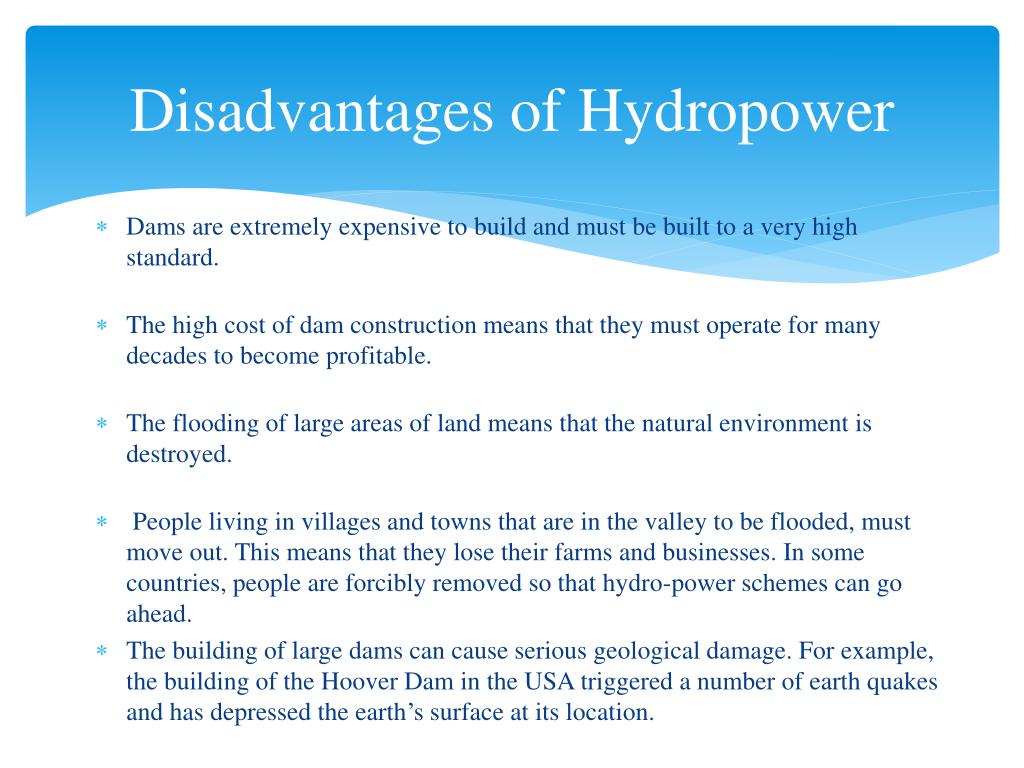
Okay, first things first, the most obvious one: dams. Building a dam is a huge undertaking. We're talking massive concrete structures that can take years (and tons of money!) to build. Think of it as the ultimate LEGO project... but way more complicated and with far fewer instructions.
And all that concrete? Well, it's not exactly eco-friendly to produce. Making cement releases a lot of carbon dioxide into the atmosphere, which contributes to, yep, you guessed it, climate change. So, while hydropower itself doesn't directly burn fossil fuels, the construction part definitely has a carbon footprint. Sneaky, right?
Must Read
Goodbye, River Ecosystem!
Here's where things get a little dicey for our aquatic friends. Dams drastically change the flow of rivers. Imagine trying to swim upstream against a suddenly super-strong current or having your favorite fishing spot completely flooded. Not ideal, is it?
These changes can seriously mess with the natural habitats of fish, plants, and other wildlife. Fish migration? Forget about it! Some species can’t navigate the dam or the altered river flow, leading to population decline. We're talking about potentially endangering entire species, and that's definitely not cool. Think of salmon trying to use a slide... upward. Not gonna happen.

Relocation, Relocation, Relocation!
Building a dam often means flooding large areas of land. And that land? Well, it might be where people live! This means communities have to be relocated, uprooting their lives and cultures. Imagine having to move your entire town because someone decided to build a giant bathtub in your backyard. Talk about a stressful housewarming party!
Relocation can also be devastating for indigenous communities who have deep ties to the land. Losing ancestral lands and traditional ways of life is a heavy blow, and something we need to seriously consider. It's more than just moving houses; it's about losing a part of your identity.

Sediment? More Like Sedimental Problems!
Rivers carry sediment (think of it as tiny rocks and soil) downstream. This sediment is actually really important for maintaining healthy ecosystems downstream, nourishing floodplains, and replenishing coastal areas. But when a dam blocks the flow of a river, the sediment gets trapped behind the dam.
This can lead to erosion downstream, starving coastal wetlands, and even causing beaches to disappear. Imagine building a sandcastle only to have the tide constantly washing away the sand from underneath it. Frustrating, right? That's essentially what happens when sediment gets blocked by a dam.
Methane Matters
Okay, this one's a bit surprising. When reservoirs (the big lakes behind dams) are created, they often flood forests and wetlands. This decaying organic matter releases methane, a potent greenhouse gas, as it decomposes. Yes, you heard that right, these reservoirs are releasing more gases into the atmosphere.
While the exact amount of methane released can vary depending on the reservoir's location and the type of vegetation that was flooded, it's still something to be aware of. It's like finding out your "healthy" smoothie has a secret ingredient that's actually not-so-healthy. Sneaky, sneaky greenhouse gases!

But Don't Despair!
Okay, so I know it sounds like hydropower has a lot of drawbacks. And it does. But it's important to remember that every energy source has its pros and cons. The key is to weigh the benefits against the drawbacks and to consider all the alternatives.
There are ways to mitigate some of the negative impacts of hydropower. Fish ladders can help fish migrate around dams, and careful planning can minimize the environmental and social impacts of reservoir construction. Plus, there are other forms of hydropower, like run-of-river projects, that have a smaller environmental footprint.
The important thing is to be informed and to have a conversation about the best way to meet our energy needs while protecting our planet. Remember, renewable energy is all about the long game! And who knows, maybe someday we'll have even better ways to generate clean energy that are truly sustainable and don't come with so many strings attached. Until then, we can all do our part to reduce our energy consumption and support policies that promote renewable energy development. So, keep your chin up, keep learning, and keep striving for a brighter, greener future!