
What Are The Different Grades Of Stainless Steel

Ever wondered why some shiny metal things last forever while others rust faster than your good intentions after a pizza binge? Chances are, it's all about the stainless steel grade. Don't run away! It sounds complicated, but it's actually kinda cool. Think of it like different flavors of ice cream – all delicious, but perfect for different situations. Let’s dive in!
Why Should I Even Care?
Okay, valid question! Imagine you're making a gourmet tomato sauce. You simmer it for hours, adding all those fresh herbs and spices. Now, picture using a cheap, rust-prone pot. Yuck! Not only does it ruin your sauce (metallic tang, anyone?), but it's also potentially unhealthy. Knowing your stainless steel helps you choose the right tool for the job, ensuring your food is safe and your tools last.
Plus, understanding the grades can save you money. No need to buy the fanciest, most expensive stuff if all you need is a simple spoon. It’s like choosing between a Lamborghini and a trusty Toyota Corolla – both get you from A to B, but one is way more wallet-friendly for everyday errands!
Must Read
The Big Players: 304 and 316
These are the rockstars of the stainless steel world. You'll see them everywhere. Grade 304, sometimes called 18/8 (that's the percentage of chromium and nickel, important for rust resistance!), is the most common. Think your kitchen sink, those shiny pots and pans, and even some cutlery. It's durable, easy to clean, and resistant to most everyday corrosion.
But, what happens when you're dealing with more aggressive environments? Enter Grade 316. This stuff is the superhero of stainless steel because it contains molybdenum. Say what now? Molybdenum helps resist corrosion from chlorides, like those found in saltwater or harsh cleaning chemicals. That's why you'll find 316 in marine applications (boats, docks) and even in surgical implants. It's the heavy-duty option when you need extra protection.

I once accidentally left a cheap, non-stainless steel knife in a bowl of salty water overnight. Let's just say it wasn't a pretty sight the next morning. Rusty city! That's why 316 exists – to stand up to those tough challenges.
The Numbers Game: Decoding Stainless Steel
You'll often see stainless steel grades referred to by numbers (like 304 or 316). These numbers are part of a system created by the American Iron and Steel Institute (AISI). While knowing the entire system isn't necessary for everyday life, understanding that the numbers generally indicate the alloy's composition and properties is helpful.
There are other grades too, like 430 (often used for decorative trim) and 410 (used for cutlery and some fasteners). They each have their strengths and weaknesses, making them suitable for specific applications.

Magnetic Personality: A Quick Test
Here's a fun fact: not all stainless steel is magnetic! Generally, 304 and 316 are not magnetic, or only very weakly so. This can be a quick way to get a rough idea of the grade (though it's not foolproof!). Grab a magnet and see if it sticks. If it strongly clings, it's likely not 304 or 316.
Choosing the Right Grade: A Practical Guide
So, how do you choose the right grade? Here are a few quick tips:
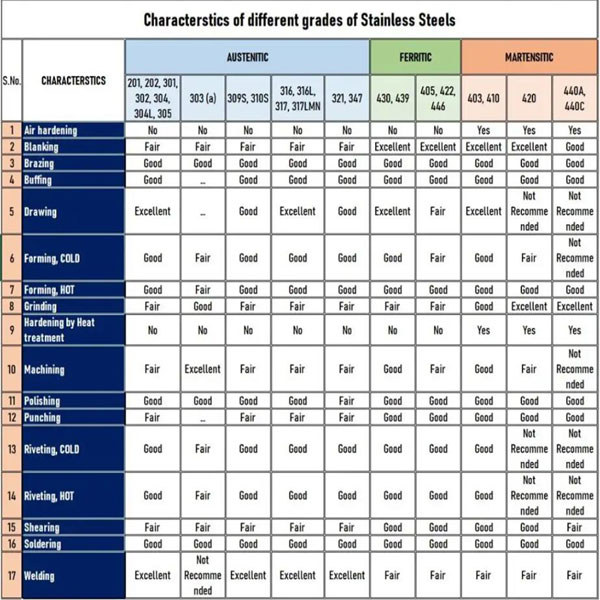
- For most kitchenware: 304 stainless steel is your reliable friend.
- For outdoor applications, especially near saltwater: 316 is the way to go.
- For simple, decorative items: Other grades like 430 might suffice.
When in doubt, check the product description or ask a sales representative. They should be able to tell you the grade of stainless steel used.
Beyond the Basics: Other Considerations
It's worth noting that even within the same grade, there can be variations in quality. Look for reputable brands and products with good reviews. Also, proper cleaning and maintenance can significantly extend the life of your stainless steel items, regardless of the grade.
The Takeaway: Stainless Steel Savvy
Understanding the different grades of stainless steel might seem like a small thing, but it can make a big difference in the longevity and performance of the items you use every day. By knowing the basics, you can make informed decisions, save money, and ensure that your tools and equipment are up to the task. So go forth and conquer the stainless steel world! You've got this!
