
What Are The Characteristics Of The Alkali Metals

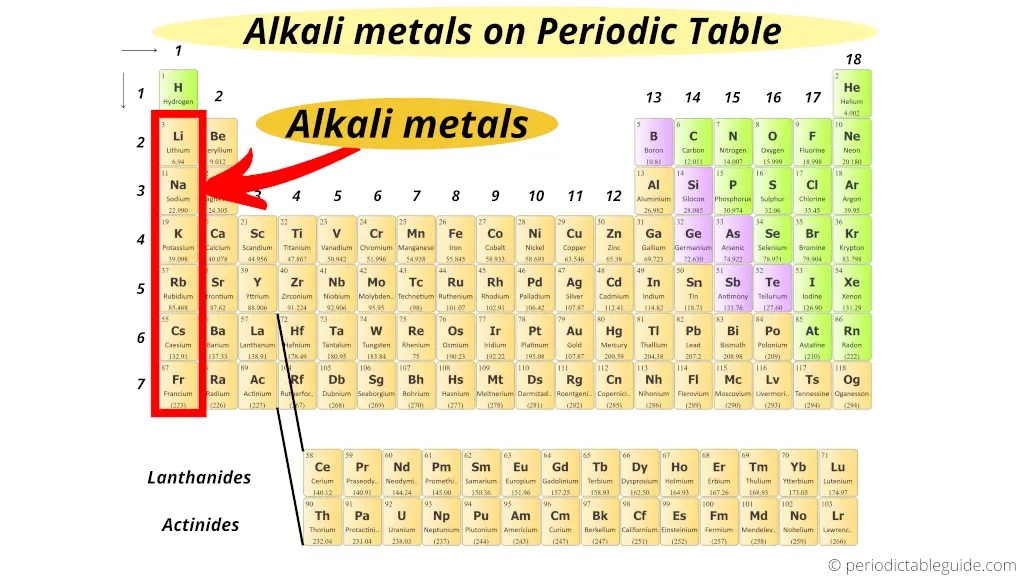
Ever heard of the alkali metals? They're a bunch of elements that hang out on the left side of the periodic table. Think of them as the cool kids, but instead of popularity, they have super-reactive personalities!
What Makes Them So Special?
Let's dive into what makes these elements so entertaining and unique. Prepare for some chemistry fun!
Super Social Butterflies
Alkali metals are the ultimate social butterflies. They absolutely love to react with other elements.
Must Read
This is because they only have one lonely electron in their outer shell. They are always eager to get rid of it.
It's like having that one friend who's always trying to set you up on a date. These metals are always looking to bond!
Softies, Literally!
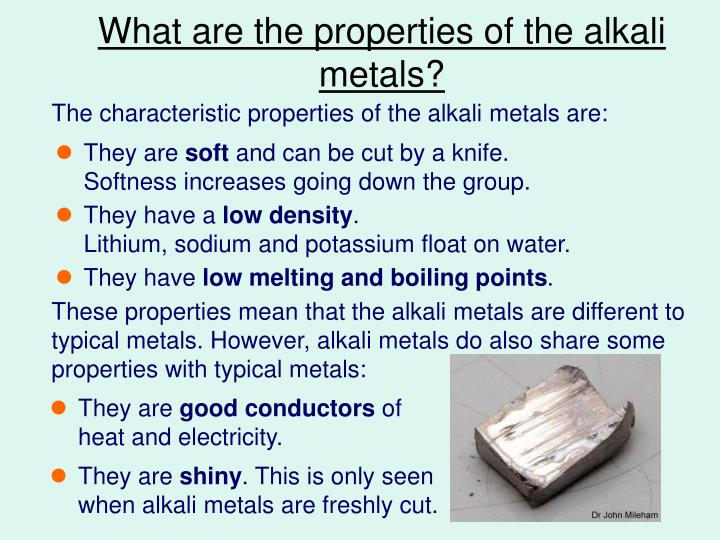
These metals are surprisingly soft. You could cut them with a butter knife.
Try that with iron and you'll have a bad time!
It's like discovering your toughest-looking friend is secretly a giant teddy bear.
Shiny, But Not For Long
When freshly cut, alkali metals are shiny and silvery. But don't get too attached to that sparkle!
Because they are so eager to react, that shine doesn't stick around. It quickly tarnishes in air!
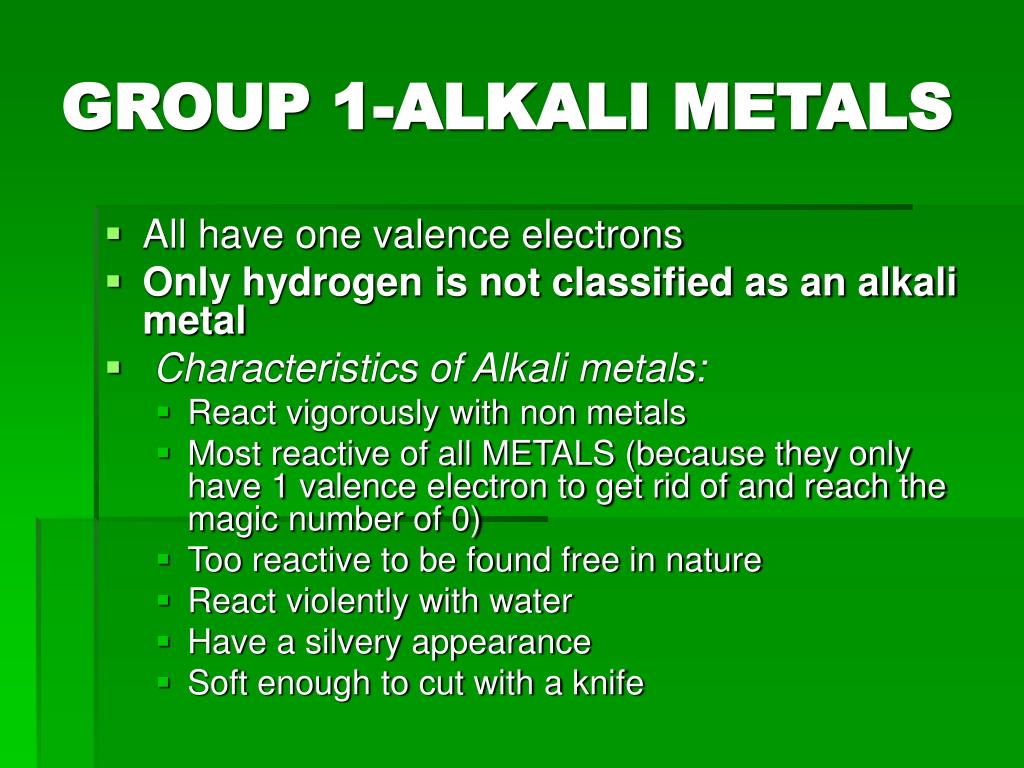
They are just too excited to stay pretty for long, they are much more into bonding with oxygen and other elements.
Always Ready to React (Boom!)
This is where the fun really starts. Alkali metals react vigorously with water. Sometimes so vigorously they create fire!
Drop a small piece of sodium in water, and you'll see it zoom around the surface, fizzing and sparking. Lithium reacts similarly, but is a bit less crazy.
Potassium? Now that's a whole different ballgame. It bursts into flames!
It's like a tiny controlled explosion, all thanks to their eagerness to react. Seriously, don't try this at home without proper supervision. Safety first!
Meet The Family
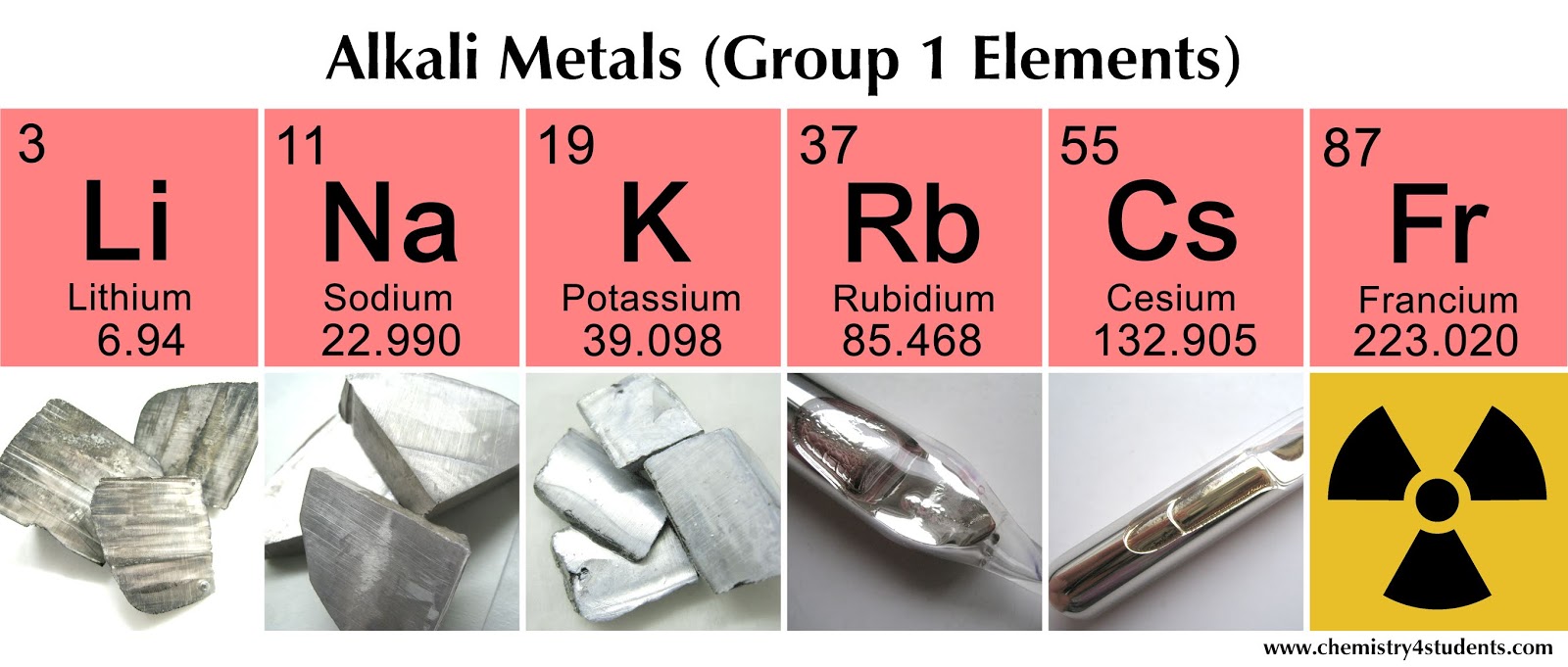
Lithium (Li)
Lithium is the lightest of the alkali metals. You might know it from batteries that power our phones and laptops.
It's also used in medicine to treat mood disorders. A versatile element!
Who knew a metal could help keep our devices running and our minds at peace?
Sodium (Na)
Sodium is probably the most familiar alkali metal. It's a key component of table salt (sodium chloride, NaCl).
It's essential for life and helps regulate our body's fluids. You also see it in many streetlights, giving them that distinctive orange glow.
So, next time you sprinkle salt on your fries, remember you're interacting with a reactive alkali metal!
Potassium (K)
Potassium is another essential element for life. It plays a crucial role in nerve function and muscle contraction.
You can find it in bananas, avocados, and spinach. So eating healthy helps keep your potassium level balanced.
Think of potassium as the unsung hero of your nervous system, keeping everything running smoothly.
Rubidium (Rb)
Rubidium is a bit rarer than the other alkali metals. It has some interesting uses.
It can be used in atomic clocks, which are incredibly precise timekeepers. It also finds its way into some specialized electronics.
Rubidium might not be a household name, but it's quietly contributing to some high-tech applications.
Cesium (Cs)
Cesium is even more reactive than the other alkali metals. It can react explosively with cold water.
Like rubidium, it's used in atomic clocks. Cesium atomic clocks are so accurate, they only lose about one second every 30 million years!
Cesium is the ultimate timekeeper, setting the standard for precision around the world.
Francium (Fr)
Francium is the rarest and most unstable of the naturally occurring alkali metals. It's so radioactive that it quickly decays into other elements.
In fact, there's probably never more than a few grams of francium present on Earth at any given time. Because it decays so fast.
Due to its rarity and radioactivity, francium doesn't have any practical applications. But it remains an interesting subject of scientific study. It is also one of the least electronegative elements on the periodic table.
Why Should You Care?
So, why should you care about these reactive metals? The answer is simple: they're everywhere!
They play essential roles in biology, technology, and even our everyday lives. From the batteries in our phones to the salt on our tables, alkali metals are constantly at work.
Understanding their properties helps us understand the world around us. Besides, their explosive reactions are pretty cool!
In Summary
Alkali metals are a fascinating group of elements with unique properties. They're reactive, soft, and essential for life.
From lithium to francium, each element has its own story to tell. Now that you know a bit about them, maybe you'll see them in a new light. Or at least, avoid throwing them in water!
So, go forth and explore the world of chemistry! You might just discover something amazing.