
What Are The 7 Types Of Fire Extinguishers
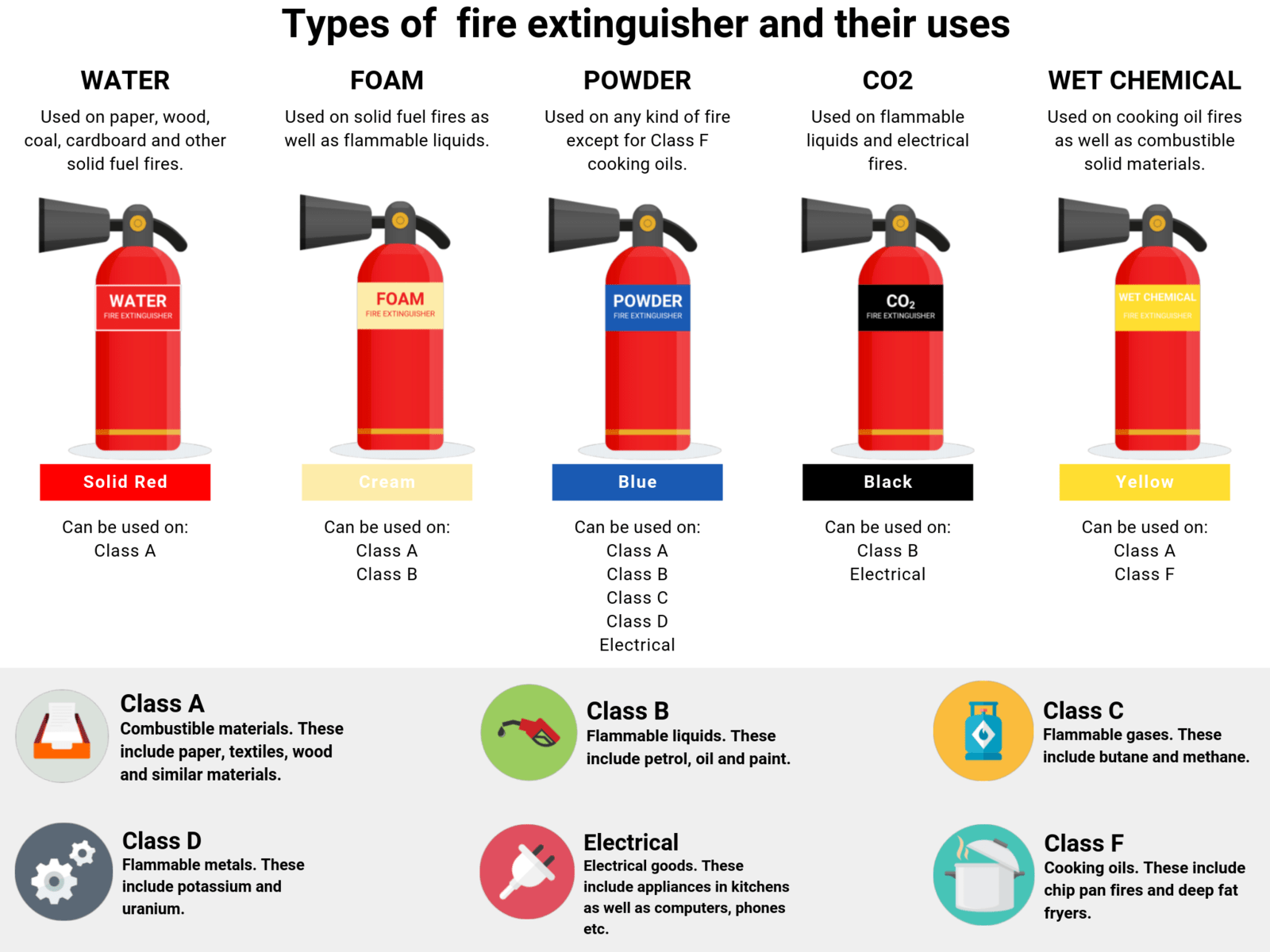
Alright, settle in, because I'm about to drop a truth bomb that might just shake your world. Ready? Most people think a fire extinguisher is just... a fire extinguisher. You know, a big red can you hope you never have to use.
And that, my friends, is an unpopular opinion I'm here to lovingly dismantle.
Because, get this: there isn't just one kind of fire extinguisher. Oh no, my sweet summer child. There are SEVEN. Yes, seven distinct, super-cool, specialized heroes waiting to tackle different kinds of fiery trouble. Mind blown yet? Good. Let's dive into this secret world of flame-fighting marvels, shall we?
Must Read
The Original: Water Extinguisher
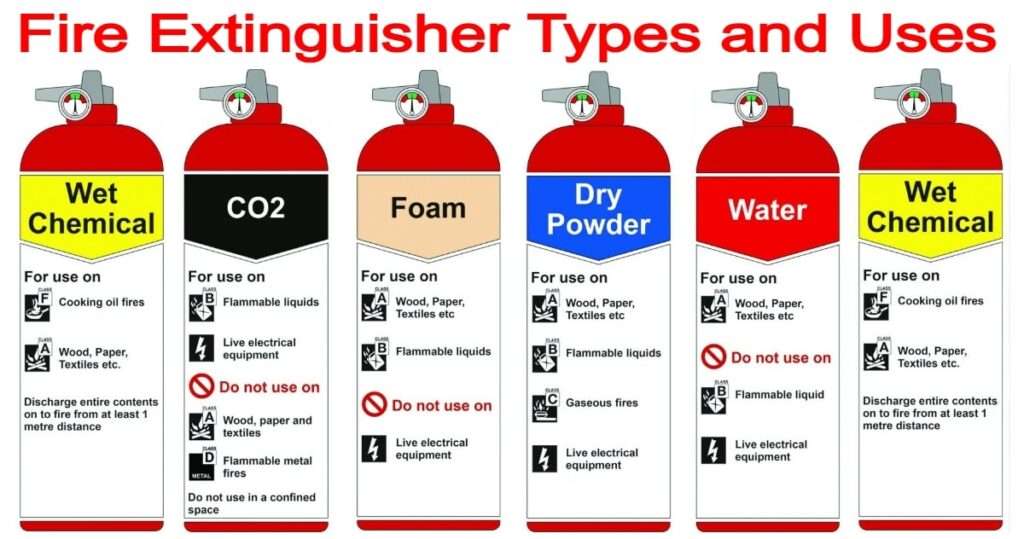
Meet the classic, the OG, the grandpa of fire extinguishers. This is your go-to for what we call Class A fires. Think wood, paper, fabric, plastics – basically, anything that leaves an ash behind. It cools the flames down like a sudden rain shower. It's simple, effective, and totally doesn't care if you call it basic. It just gets the job done for everyday blazes. But, and this is crucial, it's terrible for electrical fires or grease fires. Imagine throwing water on hot oil – spoiler alert, it doesn't end well.
The Bubble Bath: Foam Extinguisher
Now, if water is the plain Jane, then foam is her slightly more sophisticated cousin. It's excellent for Class A fires too, but its real superpower shines with Class B fires. What are those? Flammable liquids like gasoline, oil, paint, or solvents. The foam creates a blanket, smothering the fire by cutting off its oxygen supply. It's like giving the flames a really suffocating, bubbly duvet. Clean-up? A bit sticky, but hey, your garage isn't on fire anymore, right?

The Swiss Army Knife: Dry Powder Extinguisher
Okay, this one is the ultimate multi-tasker. The Dry Powder extinguisher often covers Class A, B, and C fires. Class C, by the way, are electrical fires. So, this bad boy can handle solids, flammable liquids, AND live electrical equipment. Some even tackle Class D (flammable metals, we'll get to those!) and pretty much everything else. It works by chemical interruption of the fire triangle. The catch? It makes a HUGE, powdery mess. Think a flour fight in a blizzard. You'll put out the fire, but you'll be vacuuming for weeks. Still, a total hero in a pinch!
The Ghost Extinguisher: CO2 Extinguisher
If you're dealing with fancy electronics or machinery you actually want to save, this is your guy. The Carbon Dioxide (CO2) extinguisher is perfect for Class B (flammable liquids) and Class C (electrical) fires. It works by displacing oxygen and cooling the fire. The best part? It leaves absolutely no residue. None! It’s like a fire-fighting ghost; it swoops in, does its job, and vanishes. Just be careful, it's super cold when it comes out, and can be dangerous in confined spaces due to oxygen displacement. Your electronics will thank you, though.
The Kitchen Crusader: Wet Chemical Extinguisher
Raise your hand if you've ever had a grease fire flare up in the kitchen. Terrifying, right? This is where the Wet Chemical extinguisher steps in, specifically designed for Class F (or Class K in the US) fires. These are fires involving cooking oils and fats. It creates a chemical reaction that forms a soapy film, cooling the oil and preventing re-ignition. It's basically magic for deep fat fryers gone rogue. A must-have for any serious chef, or anyone who just enjoys not burning down their kitchen.
The Delicate Diplomat: Clean Agent Extinguisher
This is the CO2's slightly more refined, eco-conscious cousin. Clean Agent extinguishers use advanced gases like Halotron or FM-200. They're also fantastic for Class B and Class C fires, especially in super sensitive environments like data centers, art galleries, or server rooms. They extinguish fires without leaving any damaging residue, and they're safer for people than CO2 in occupied spaces. Think of it as the ultimate stealth mode, high-tech fire suppression. You don't even know it was there, except for the absence of fire.

The Metal Master: Class D Extinguisher
Okay, this one is niche. Super niche. But incredibly important for industrial settings. The Class D extinguisher is for fires involving combustible metals like magnesium, titanium, potassium, or sodium. Regular extinguishers just make these types of fires worse, often reacting violently with the metals. Class D extinguishers use a special dry powder that smothers the fire and forms a crust. Unless you're running a metalworking shop in your backyard, you probably won't encounter this hero. But now you know it exists, and isn't that just a little bit awesome?
So, there you have it. Seven different fire extinguishers, each a specialist in its own right. Next time you see a fire extinguisher, you won't just see a red can. You'll see a potential life-saver with a specific mission. Go ahead, spread this knowledge. Your friends might think you're a bit obsessed, but secretly, they'll be impressed. You're now officially cooler than you were five minutes ago. You're a fire extinguisher connoisseur!
