
What Are Some Examples Of Non Renewable Resources
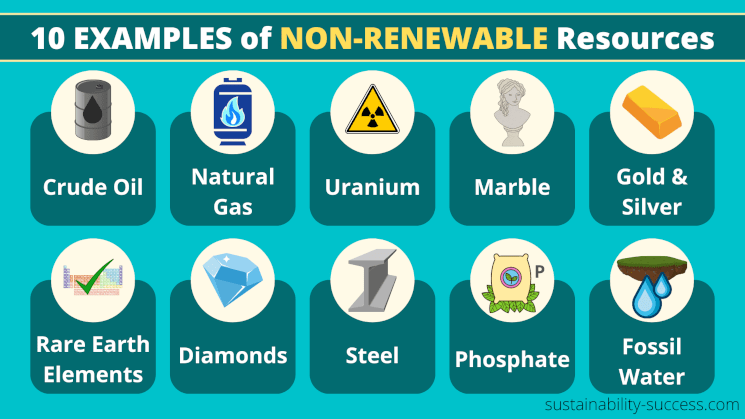
Ever wonder where the stuff that powers our world comes from? I'm talking about the energy that keeps the lights on and our cars running. Well, a lot of it comes from things called non-renewable resources. Think of them like limited-edition collector's items – once they're gone, they're gone!
Fossil Fuels: The Classics
Okay, let's start with the big guns: fossil fuels. These are like the dinosaurs of the energy world. Except instead of roaming the Earth, they're buried deep underground! We're talking about coal, oil (or petroleum), and natural gas.
Imagine millions of years ago: plants and tiny sea creatures lived and died. Over time, their remains were buried under layers of sediment. Pressure and heat transformed them into these energy-rich substances. It's like a very, very slow-cooked recipe for power!
Must Read
Coal is basically squished, ancient plant matter. We dig it up and burn it to make electricity. Think of it as setting a really old garden on fire (but in a controlled way, of course!).
Oil is a liquid treasure found deep beneath the Earth's surface. We refine it into gasoline to power our cars, trucks, and even some motorcycles. It's the stuff that keeps us moving!
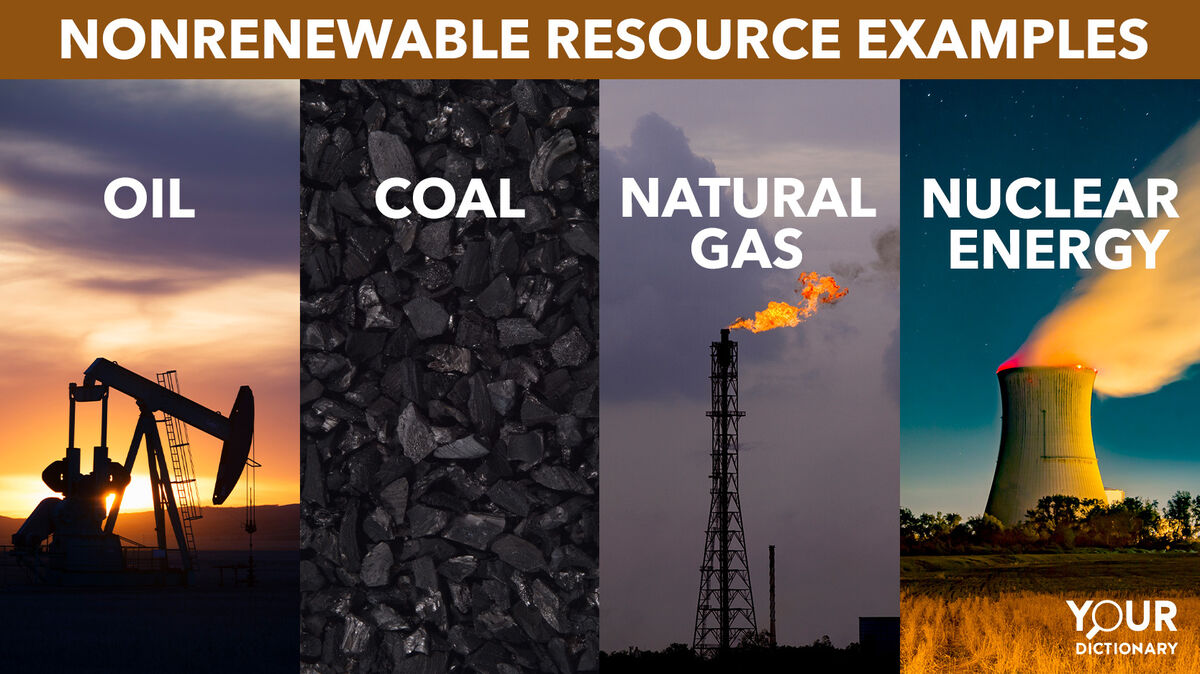
Natural gas is a gas (duh!) primarily made of methane. We use it for heating our homes, cooking our food, and even generating electricity. It's like having a giant underground barbecue pit, but much more useful.
Fossil fuels are amazing because they pack a serious energy punch. But the catch? They take millions of years to form, and we're using them up way faster than they can be replenished!
Nuclear Energy: Splitting Atoms for Power
Now, let's get a little more sci-fi. Another major non-renewable resource is uranium, used in nuclear power plants.

Uranium is a naturally occurring radioactive element. Nuclear power plants don't burn uranium like coal or oil. Instead, they use a process called nuclear fission. This involves splitting uranium atoms to release a tremendous amount of heat.
That heat boils water, creates steam, and spins turbines to generate electricity. It’s a chain reaction of energy release! It's like setting off a tiny controlled atomic explosion to power your toaster (again, in a very controlled way!).
The cool thing about nuclear energy is that it doesn't produce greenhouse gasses like burning fossil fuels. But there's a downside: nuclear waste. Dealing with radioactive waste is a big challenge.
Why Should You Care?
So, why is all this important? Because non-renewable resources are finite! We can only use them for so long before they run out. Imagine your favorite ice cream shop suddenly announcing they're out of your go-to flavor... forever!
Plus, burning fossil fuels contributes to climate change. That's like turning up the Earth's thermostat, and nobody wants a sweaty planet!

Learning about non-renewable resources is the first step to understanding the energy challenges we face. And who knows? Maybe you'll be the one to come up with the next big energy solution! It all starts with curiosity!
Think about it: what if we could harness the power of the sun, wind, or water in a sustainable way? That's the promise of renewable energy, the superheroes of the energy world! But that's a story for another time...
So, the next time you flip a light switch or fill up your car, remember the journey these non-renewable resources took to get there. It's a fascinating story of buried treasures, atomic reactions, and the quest for energy!