
What Appliances Qualify For Energy Tax Credit Irs
So, you're thinking about upgrading your home appliances, huh? Maybe that ancient fridge is finally kicking the bucket, or perhaps you're just tired of your dishwasher sounding like a jet engine taking off. Whatever the reason, did you know that Uncle Sam might actually help you pay for it? That's right, we're talking about energy tax credits!
Now, before you start picturing yourself swimming in a Scrooge McDuck-style vault of government money, let's clarify what qualifies for these credits. It's not just any appliance. Think of it as rewarding you for being kind to Mother Earth (and your wallet!). Basically, the IRS wants to encourage you to buy appliances that sip energy instead of gulping it down.
The Usual Suspects: Major Appliances Get the Spotlight
The big players that often qualify are your refrigerators, washing machines, and dishwashers – the heavy hitters of energy consumption. But here's the catch: they need to be ENERGY STAR certified. Think of the ENERGY STAR label as a little gold star for appliances, saying, "Hey, I'm a super-efficient energy saver!" It means the appliance meets certain standards set by the EPA. Check for that label; it's your golden ticket.
Must Read
Imagine you're at the appliance store, staring at a sea of shiny, new gadgets. One fridge is screaming, "Buy me! I'm sleek and have an ice dispenser that makes fancy ice!" The other, slightly less flashy fridge, has a quiet confidence and that little ENERGY STAR label. That's the one you want if you're aiming for a tax credit. It might not have the bells and whistles, but it’s a champion of efficiency.
HVAC Heroes: Heating, Ventilation, and Air Conditioning
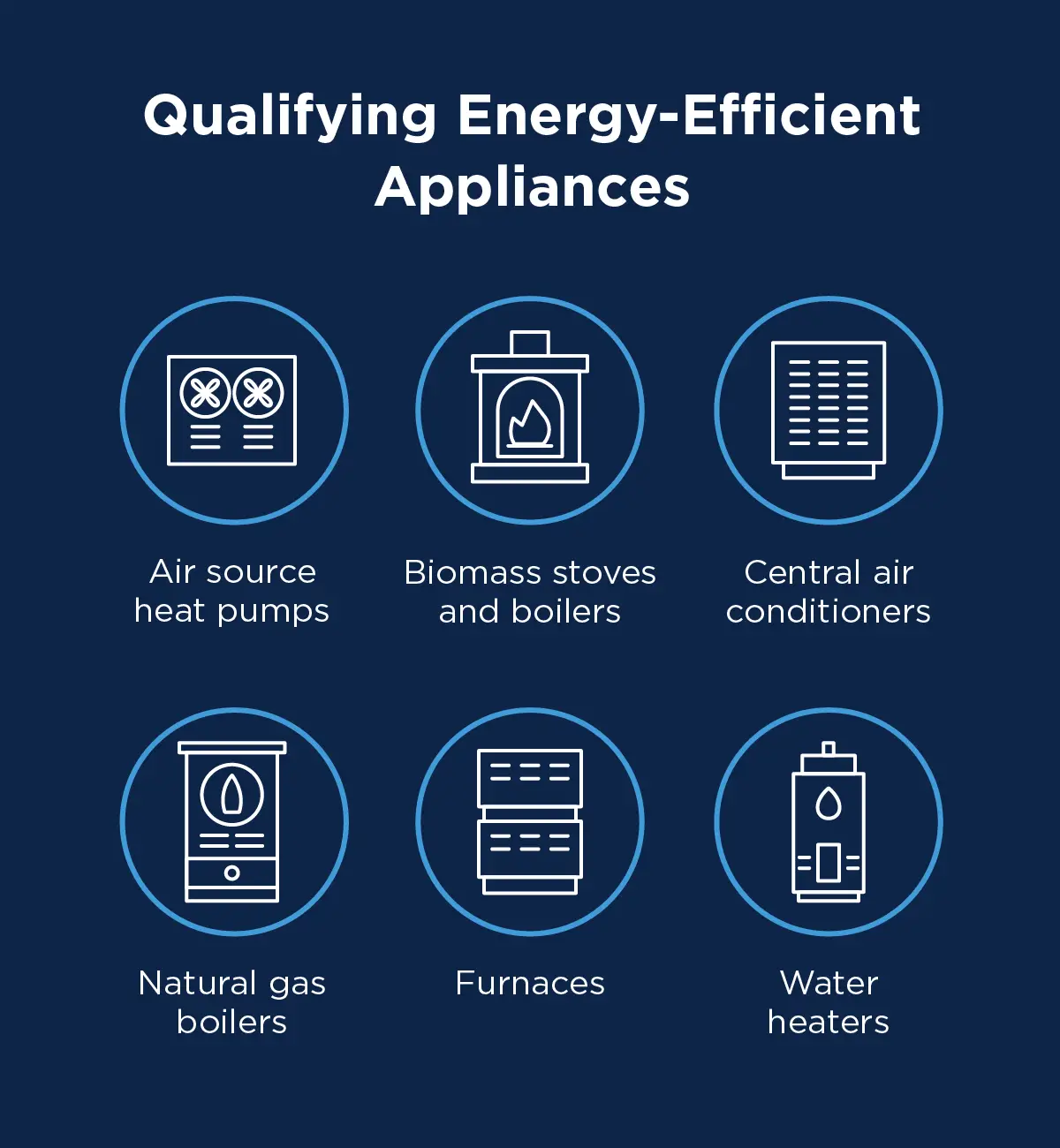
Beyond the kitchen, your heating and cooling systems can also be tax credit contenders. We're talking about things like heat pumps, central air conditioners, and even some furnaces. Again, efficiency is key. Look for high SEER (Seasonal Energy Efficiency Ratio) ratings for air conditioners and HSPF (Heating Seasonal Performance Factor) ratings for heat pumps. The higher the number, the more efficient the system, and the happier the IRS (and your bank account) will be.
![What Appliances Qualify for Energy Tax Credit? [2024 Guide]](https://www.aireserv.com/us/en-us/aire-serv/_assets/images/types-of-energy-efficient-home-improvement-credits1.webp)
Think of your HVAC system as the lungs of your home. A healthy, efficient system keeps your house breathing comfortably without sucking up all the energy in the neighborhood. Investing in an upgrade can be a breath of fresh air – literally and figuratively!
Water Heaters: The Unsung Energy Savers
Don't forget about your water heater! This often-overlooked appliance can be a major energy hog. Switching to a high-efficiency model, like a heat pump water heater, can significantly reduce your energy consumption and potentially qualify for a tax credit. These newer models are like the marathon runners of water heaters – they go the distance with minimal energy expenditure.
![What Appliances Qualify for Energy Tax Credit? [2024 Guide]](https://www.aireserv.com/us/en-us/aire-serv/_assets/images/three-steps-to-claim-tax-credit-for-energy-efficient-appliances.webp)
Picture this: you're enjoying a long, hot shower, completely oblivious to the energy your old water heater is guzzling. Upgrading to a more efficient model is like giving your wallet a little spa day. You still get your luxurious shower, but without the guilt of excessive energy use.
Beyond the Big Guns: Smaller (But Still Important!) Considerations
While the big appliances get most of the attention, there are other energy-efficient improvements that could qualify for tax credits, such as insulation, energy-efficient doors and windows, and even some renewable energy systems like solar panels. These improvements are like giving your home a cozy sweater – they keep the heat in during the winter and the cool air in during the summer, reducing your reliance on energy-guzzling heating and cooling systems.
Of course, always consult with a tax professional or refer to the IRS guidelines to ensure you meet all the specific requirements. Tax laws can be as confusing as trying to assemble IKEA furniture without the instructions, so it's always best to get expert advice. Check the IRS Form 5695 for details.
Ultimately, investing in energy-efficient appliances isn't just about saving money on your taxes. It's about making a conscious effort to reduce your environmental impact and create a more sustainable future. Plus, who doesn't love the satisfaction of knowing they're being both financially savvy and environmentally responsible? So, go forth, upgrade your appliances, and claim those tax credits! You'll be doing yourself, your wallet, and the planet a favor.
