Umbc Computer Science Program
Okay, let's talk UMBC Computer Science. You know, the place where seemingly normal people disappear into labs and emerge blinking into the sunlight, fluent in languages that sound like alien transmissions. But trust me, it's way more relatable than it sounds.
Think about it. Ever tried to get your grandma to understand how to attach a photo to an email? That's basically a 100-level CS problem. Explaining complex systems with frustratingly simple logic? Yeah, UMBC preps you for that kind of everyday challenge. Except instead of explaining email, you're explaining how to train a neural network to identify cats in pictures. Which, let's be honest, is arguably more useful.
The Courses: It's Like Building Legos... But With Less Brick and More Brain
The curriculum. It's structured, sure, but think of it less like a rigid school timetable and more like a giant Lego set. They start you with the basic building blocks: programming fundamentals, data structures (think digital filing cabinets), and computer architecture (the blueprints of the machine itself). Then, you gradually start adding more complex pieces, eventually building your own freakin' Lego Death Star… I mean, your own innovative software.
Must Read
One course everyone dreads (and secretly loves)? Data Structures and Algorithms. It's basically the CrossFit of computer science. You’ll be sweating over binary trees and linked lists, questioning your life choices, and then BAM! You finally understand it, and suddenly you can solve problems you never thought possible. It’s like learning to ride a bike – in the dark – but once you got it, you can’t unsee the world differently.
The Professors: More Like Mentors With a Side of Geek Chic
The professors at UMBC CS? They're not just lecturers; they're guides. They've been there, done that, debugged the T-shirt. They genuinely care about seeing you succeed, even if that means patiently explaining pointers for the tenth time (we've all been there).
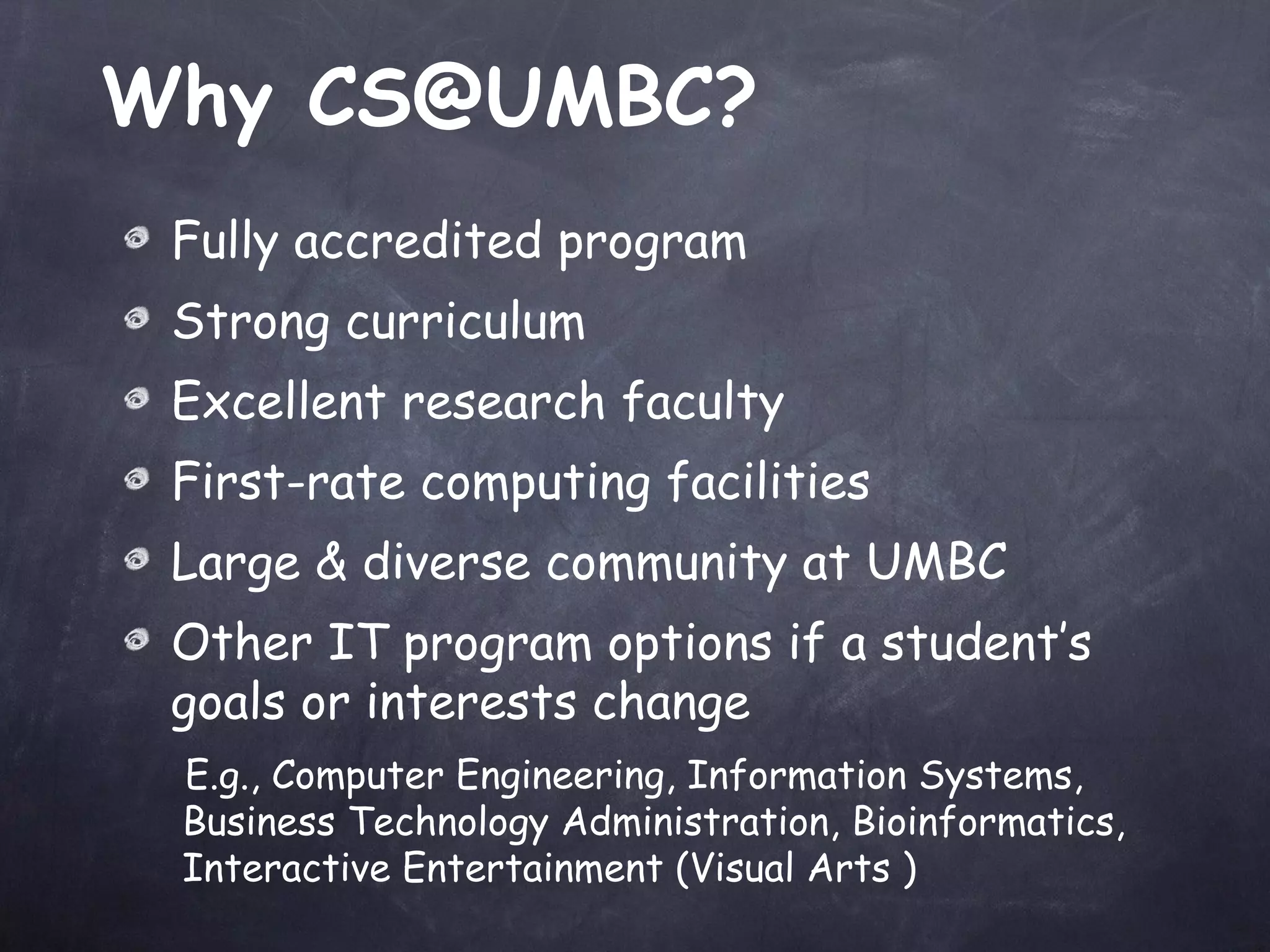
Plus, many of them are actively involved in cutting-edge research. So, you're not just learning textbook theory; you're learning about the latest breakthroughs in fields like AI, cybersecurity, and data science, straight from the source. Think of it as getting inside scoop on the future of technology.
The Community: We Suffer Together, We Code Together
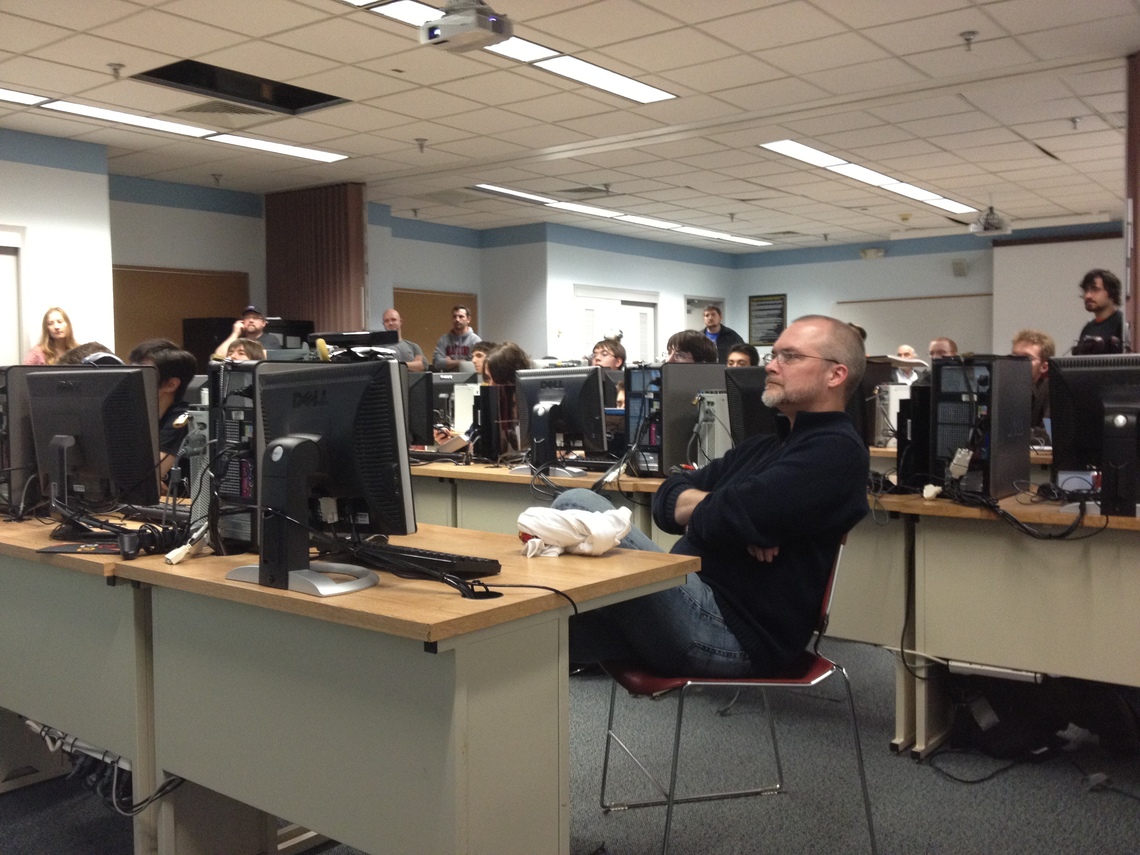
The best part about UMBC CS is the community. You’ll quickly realize that you’re not alone in your struggles (or your triumphs). Late nights in the labs, fueled by questionable coffee and the burning desire to fix that one elusive bug, become shared experiences.

You’ll form study groups that become your support system, your coding buddies, your fellow soldiers in the war against syntax errors. You'll learn to rely on each other, to bounce ideas off each other, and to celebrate each other's successes.
Hackathons are a huge part of the experience. These coding competitions are like adrenaline-fueled pizza parties where sleep is optional, and the only limit is your imagination (and maybe your caffeine tolerance).
Beyond the Classroom: Real-World Skills, Real-World Opportunities
UMBC CS doesn't just teach you how to code; it teaches you how to think critically, solve problems creatively, and collaborate effectively. These are skills that are valuable in any field, not just computer science. And UMBC's location (right next to the booming tech industry of the Baltimore-Washington corridor) means there are tons of internship and job opportunities waiting for you.
From government agencies to startups to established tech giants, everyone's looking for skilled CS graduates. So, yeah, those late nights in the lab? They pay off. Literally.
So, is UMBC Computer Science challenging? Absolutely. Is it worth it? Definitely. It's a place where you can learn to build amazing things, solve complex problems, and become part of a community of passionate, driven individuals. Just be prepared to drink a lot of coffee, learn a few new languages (both human and computer), and maybe, just maybe, develop a slight addiction to debugging.