
Theory And Design For Mechanical Measurements
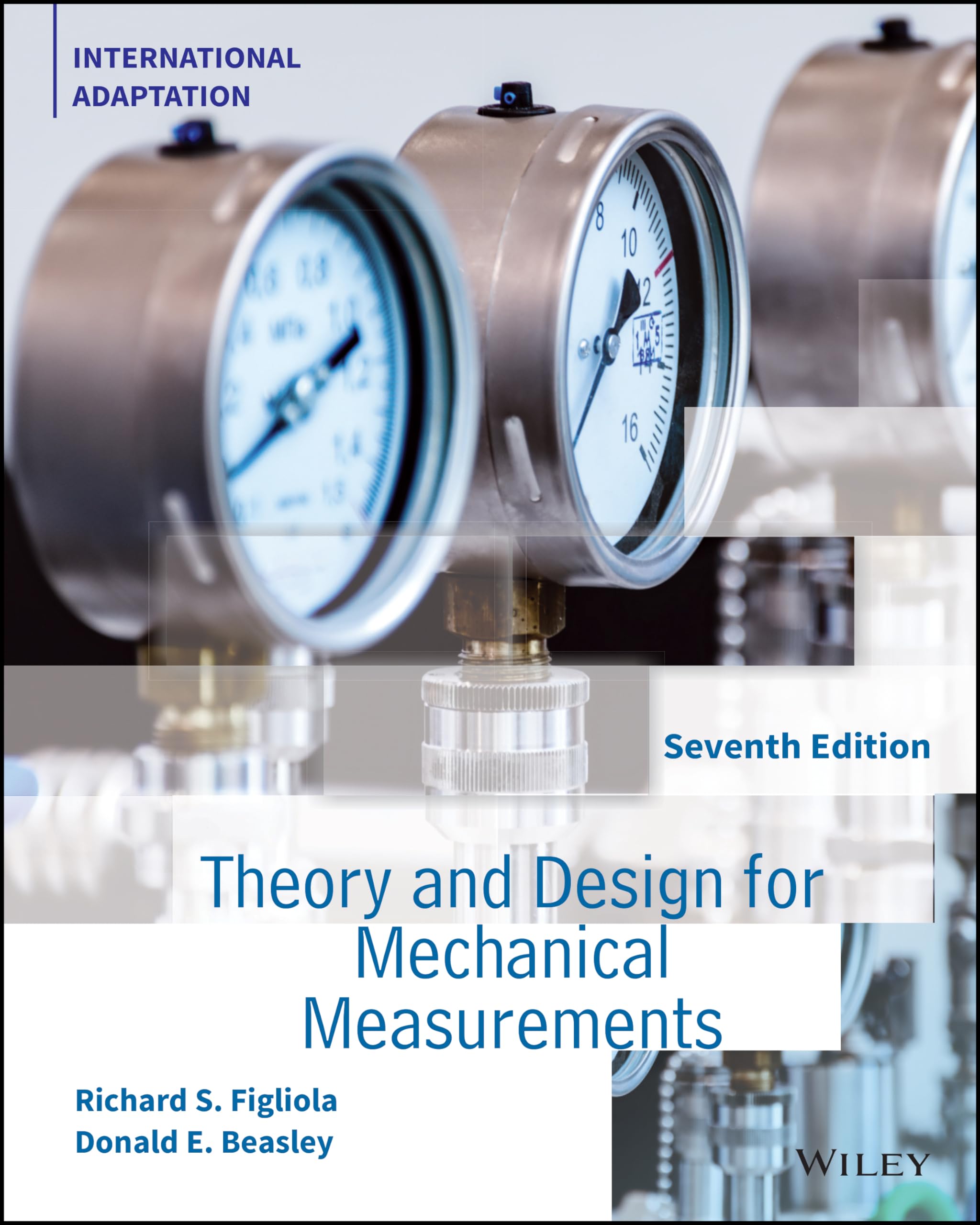
Ever wondered how engineers make sure bridges don't wobble too much, or that your car's engine isn't about to explode? It's all thanks to mechanical measurements! Sounds kinda dry, right? But trust me, the theory and design behind it is surprisingly fascinating. It's like being a detective, but instead of solving crimes, you're solving the mysteries of the physical world.
What's the Big Deal with Mechanical Measurements?
Okay, so what exactly are mechanical measurements? Simply put, they're all about quantifying physical properties like length, force, pressure, acceleration, temperature, and flow. Think of it like this: you can say something is "heavy," but mechanical measurements let you say it weighs exactly 5 kilograms. That precision is crucial for all sorts of things.
Why do we even care? Well, imagine building a skyscraper without knowing the precise strength of the steel beams. Yikes! Or designing an airplane without knowing how much lift the wings will generate. Double yikes! Accurate mechanical measurements are the foundation of almost everything we build and use. They ensure safety, efficiency, and performance.
Must Read
It's not just about big, industrial things either. Think about your smartphone. It's packed with sensors that measure all sorts of things, from your phone's orientation (so your screen rotates) to the pressure you apply to the screen. Pretty cool, huh?
The Theory: It's More Than Just Rulers!
So, how do we actually do these measurements? This is where the "theory" part comes in. It's not just about grabbing a ruler and eyeballing it. There's a whole lot of physics and math involved! We need to understand the principles of mechanics, materials science, and signal processing. Don't run away! It's not as scary as it sounds.

Think of it like this: you're trying to measure the temperature of a cup of coffee. You could just stick your finger in it (not recommended!), but that's not very accurate or safe. Instead, you use a thermometer. But how does the thermometer know the temperature? It relies on the principle that some materials expand or contract with temperature changes. The mercury (or alcohol) in the thermometer expands when heated, and the amount of expansion tells you the temperature. That's theory in action!
The theory also helps us understand the limitations of our measurements. Every measurement has some degree of uncertainty. There are always sources of error. Maybe the thermometer isn't perfectly calibrated. Maybe you aren't holding it in the right spot. The theory helps us identify and minimize these errors, so we can get the most accurate results possible.
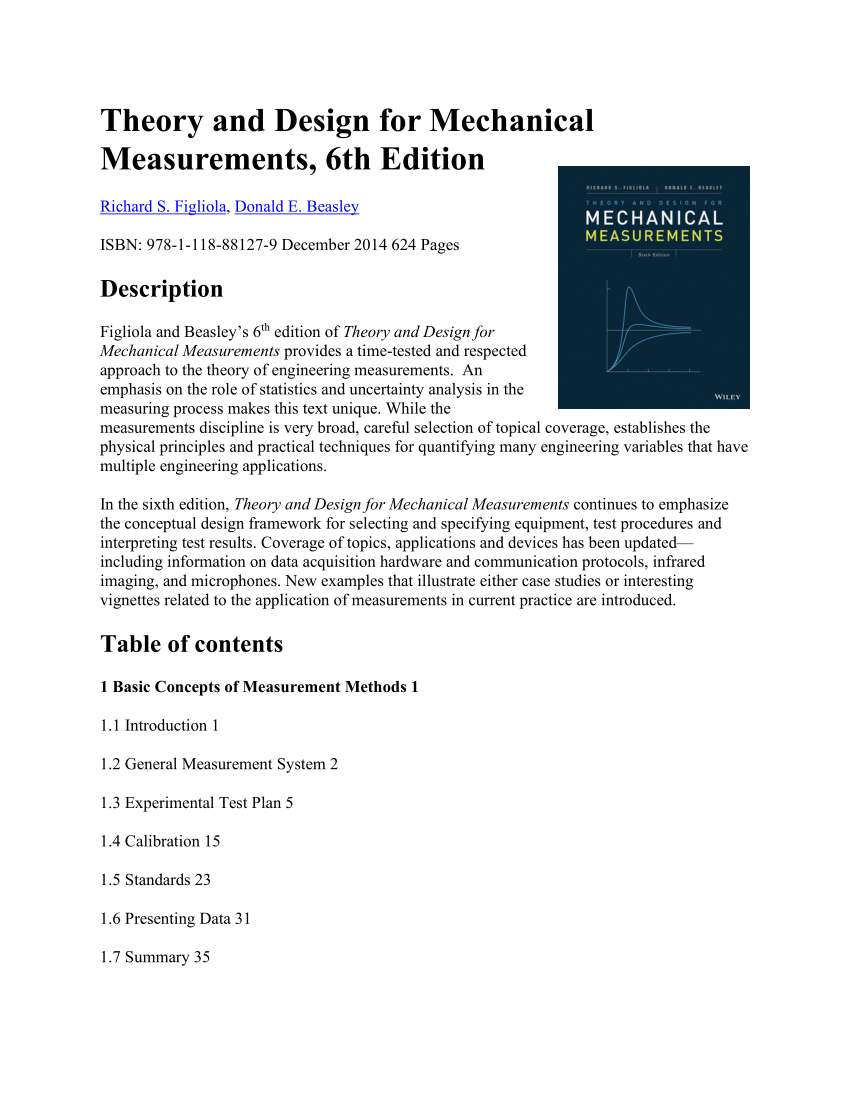
Design: Building the Right Tools for the Job
Now for the "design" part. Once we understand the theory, we can start designing instruments and systems to make measurements. This is where things get really creative. It's like being a chef: you know the basic ingredients (the theory), but you need to combine them in the right way to create a delicious dish (a working measurement system).
The design process involves choosing the right sensors, signal conditioning circuits, data acquisition systems, and software. There are tons of different types of sensors out there, each with its own strengths and weaknesses. Some sensors are very accurate but expensive. Others are cheap but less accurate. The design process involves making trade-offs to meet the specific needs of the application.

For example, let's say you want to measure the force exerted by a robot arm. You could use a load cell, which is a type of sensor that measures force. The load cell produces a small electrical signal that is proportional to the force. But this signal is usually very weak and noisy. So, you need to use a signal conditioning circuit to amplify and filter the signal. Then, you need a data acquisition system to convert the analog signal into a digital signal that can be read by a computer. And finally, you need software to display and analyze the data. See? It's more involved than just grabbing a ruler!
Why This Matters (Even If You're Not an Engineer)
You might be thinking, "Okay, this is all interesting, but why should I care?" Even if you're not an engineer or scientist, mechanical measurements play a huge role in your life. They affect the safety of your car, the efficiency of your home appliances, and the accuracy of your medical devices.

Think about the quality control processes used to manufacture the food you eat. Measurements of temperature, pressure, and flow are critical for ensuring that food is safe and fresh. Or consider the weather forecast. It relies on measurements of temperature, humidity, wind speed, and barometric pressure.
So, the next time you see a bridge, a car, or even a simple kitchen appliance, remember that it was designed and built using the principles of mechanical measurements. It's a field that is constantly evolving, with new sensors and techniques being developed all the time. And who knows, maybe you'll be the one to invent the next big breakthrough in measurement technology! It's a pretty cool thought, right?
And who knows? Maybe understanding a little about the theory and design behind mechanical measurements will help you understand the world around you a little better. It's all about understanding how things work, and that's always a worthwhile pursuit.