The Term Half Life Represents The Time It Takes
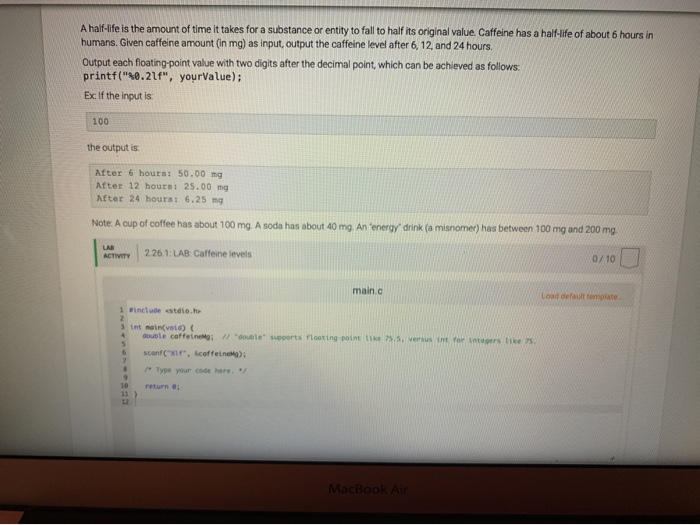
Ever wondered how long something sticks around? Whether it's the caffeine buzz from your morning coffee, the potency of a medicine, or even the existence of a radioactive substance, the concept of half-life helps us understand how things decay or diminish over time. It's a surprisingly useful and fascinating idea, and while it might sound intimidating, it's actually quite straightforward at its core.
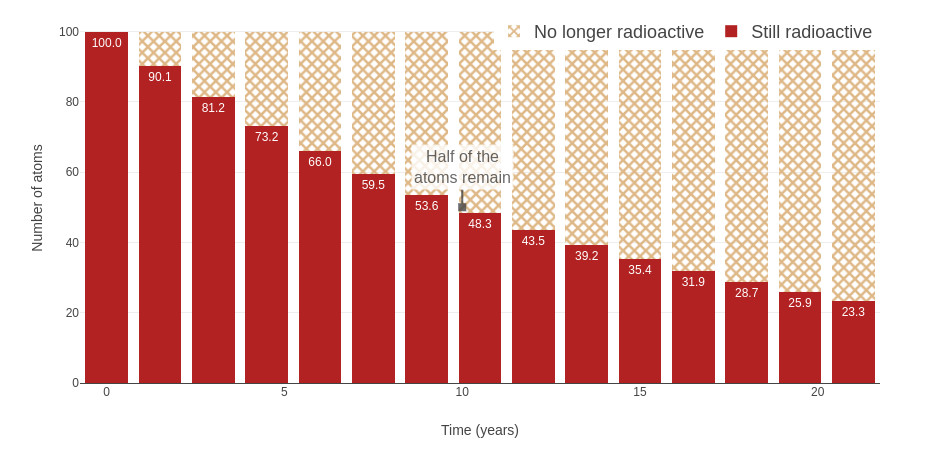
So, what is half-life? Simply put, it's the time it takes for half of something to disappear or transform. Imagine you have a delicious pizza. If the half-life of that pizza is one hour, it means that after one hour, you'll only have half a pizza left (assuming it's being devoured, of course!). After another hour, half of that remaining half will be gone, leaving you with a quarter of the original pizza. This process continues, with smaller and smaller amounts disappearing each time.
The primary purpose of understanding half-life is to predict how long something will persist. This is incredibly important in various fields. In medicine, for example, knowing the half-life of a drug helps doctors determine the proper dosage and frequency of administration. They need to ensure the drug stays effective long enough to treat the ailment, but also ensure it doesn't build up to dangerous levels in the body. Similarly, in environmental science, understanding the half-life of pollutants helps us assess their long-term impact on the environment and develop strategies for remediation.
Must Read
Half-life plays a significant role in nuclear chemistry and physics. It's used to determine the age of ancient artifacts through a process called radiocarbon dating. By measuring the amount of radioactive carbon-14 remaining in an artifact, scientists can estimate how long ago the organism it came from died. This has been crucial in understanding human history and prehistoric life.
You might encounter half-life concepts in everyday life without even realizing it. Think about the depreciation of a car. While not a perfect example of exponential decay, it illustrates the idea of value diminishing over time. Or consider the loss of charge in a battery. The rate at which the battery drains is related to the principles of exponential decay, similar to half-life.
Want to explore the concept of half-life further? Try a simple experiment! Grab a bag of candies, like M&Ms. Pour them out onto a table and remove all the candies that have the "M" facing up. Count how many candies are left. Repeat this process several times, each time removing the "M" side up candies. You'll notice that the number of candies decreases by roughly half each round, illustrating the principle of half-life in action. You can even graph your results to visualize the exponential decay curve.
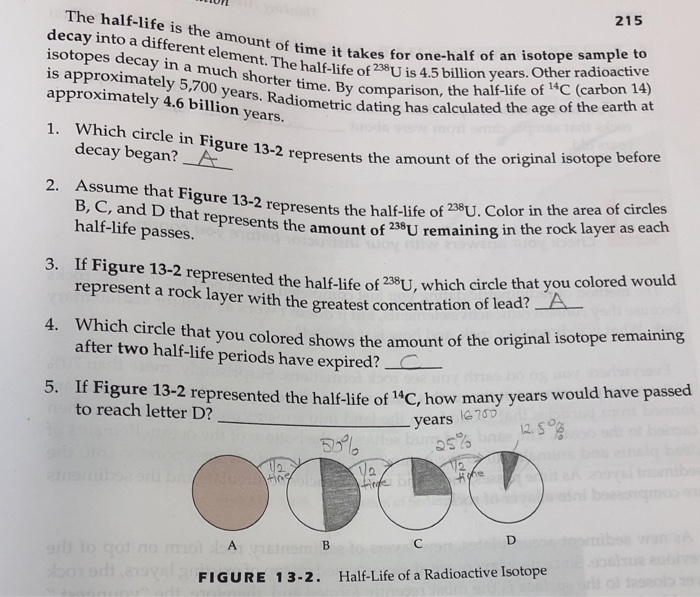
Another fun way to explore half-life is through online simulations. Many websites offer interactive tools that allow you to manipulate variables and observe the effects on radioactive decay. These simulations can help you develop a deeper understanding of the concept in a visual and engaging way.
Understanding half-life isn't just about understanding complex scientific principles; it's about understanding the world around us and how things change over time. It's a powerful tool for making predictions and informed decisions, whether you're a scientist, a doctor, or simply a curious individual.