
The Severity Of Electric Shock Depends On

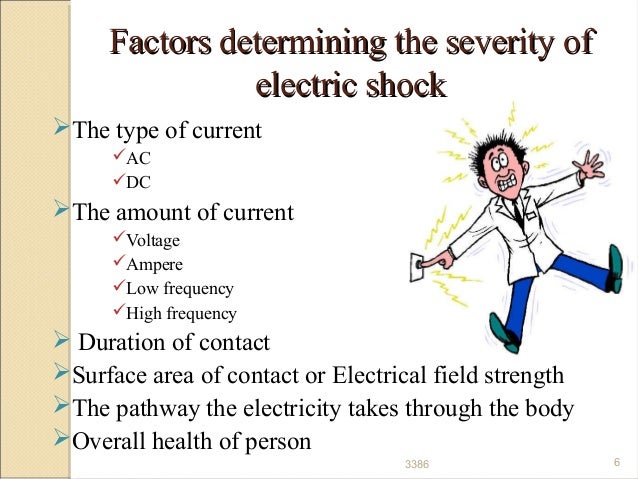
Okay, let's talk about electric shock. Sounds scary, right? Like something out of a cheesy horror movie? Well, sometimes it can be, but understanding what makes a shock really bad is like knowing how much hot sauce to put on your tacos – too much, and you're gonna have a bad time! So, let's break down what affects how severe an electric shock can be, in a way that’s less "science textbook" and more "chatting over coffee."
How Much Ouch Are We Talking? It Depends!
Imagine you’re reaching for that last cookie in the jar (we’ve all been there!), and you get a tiny static shock. Annoying, sure. Does it send you to the hospital? Probably not. But if you were, say, fixing a live wire with bare hands (please don't ever do that!), the story would be… considerably different. The severity of an electric shock isn't just random; it depends on a few key things.
Think of it like this: a little sprinkle of rain versus a full-on monsoon. Both are water, but the impact is massively different. Same with electricity!
Must Read
The Current: The Real Culprit
First up is the current, measured in amps. This is the main player in the "how bad will this shock be?" game. It's like the volume knob on your stereo. Turn it up a little, and you might just tap your foot. Crank it all the way, and you’re getting evicted. Even a tiny amount of current can be dangerous. Microamps (millionths of an amp) can be felt, but milliamps (thousandths of an amp) can be deadly. Remember, it's not the voltage, it's the current that kills.
A good analogy? Think of voltage as the water pressure in a pipe. High pressure (voltage) means the electricity wants to flow. But it's the amount of water actually flowing through the pipe (current) that determines how much gets your garden watered... or floods your basement.
Voltage: Setting the Stage
Next, we have voltage. While current does the damage, voltage is what pushes the current through your body. Higher voltage means more potential for a larger, more dangerous current to flow if you make contact. Think of it like this: a small puddle (low voltage) versus a raging river (high voltage). You can probably splash around in the puddle without much risk, but you wouldn’t want to jump into the river!
A 9-volt battery? Annoying little zap, maybe. A power line carrying thousands of volts? Stay away! Very, very far away!
Resistance: The Body's Natural Obstacle Course
Our bodies naturally have resistance to electricity. This is like a natural obstacle course that electricity has to navigate. Dry skin is a good resistor, meaning it’s harder for electricity to flow through it. But wet skin? Suddenly, the obstacle course is gone, and it’s smooth sailing for that current! This is why being wet significantly increases your risk during an electrical shock.
Imagine trying to run through thick mud versus running on a smooth track. The mud adds resistance and slows you down. Wet skin essentially removes the "mud" for electricity.
Pathways Matter! Where Does the Electricity Go?
The path the electricity takes through your body is also crucial. If it goes from one hand to the other, it's likely to pass through your heart. And trust me, your heart doesn't appreciate electrical interference. A shock across your chest is far more dangerous than one that only involves, say, your finger. Think about it – electricity flowing through critical organs is a much bigger deal than a quick jolt in your pinky!

It's like taking a detour on a road trip. A minor detour might add a few minutes. A detour that takes you straight through downtown during rush hour? Not so good.
How Long Were You Zapped?
Duration is another important factor. A quick, momentary shock might sting, but a prolonged exposure to electricity is way more serious. The longer the current flows, the more damage it can do to your tissues and organs. It's like leaving a sunburn on too long. A little bit of sun gives you a tan. Hours of sun leaves you looking like a lobster.
A quick touch and pull away versus holding onto a live wire? The difference is, quite literally, life and death.
Why Should You Care? (Besides, you know, staying alive!)
Knowing these factors isn’t just about winning a trivia night (though that would be cool, too!). It's about being safe. It’s about understanding that a seemingly harmless situation can quickly turn dangerous if you’re not careful. Don’t mess with electrical work unless you're a qualified electrician. Always use safety precautions. And remember: water and electricity don't mix!
Think of it like driving. You don't need to be a mechanic to drive a car safely, but you do need to know the basic rules of the road and understand potential hazards. Same goes for electricity! A little knowledge can go a long way in keeping you (and your loved ones) safe and sound.