
The Price Earnings Ratio Is Calculated By Dividing
Hey there, future stock market wizard! Ever heard of the Price-to-Earnings ratio, or P/E ratio? Yeah, it sounds super intimidating, but trust me, it's simpler than ordering pizza (and way more fun to learn about!).
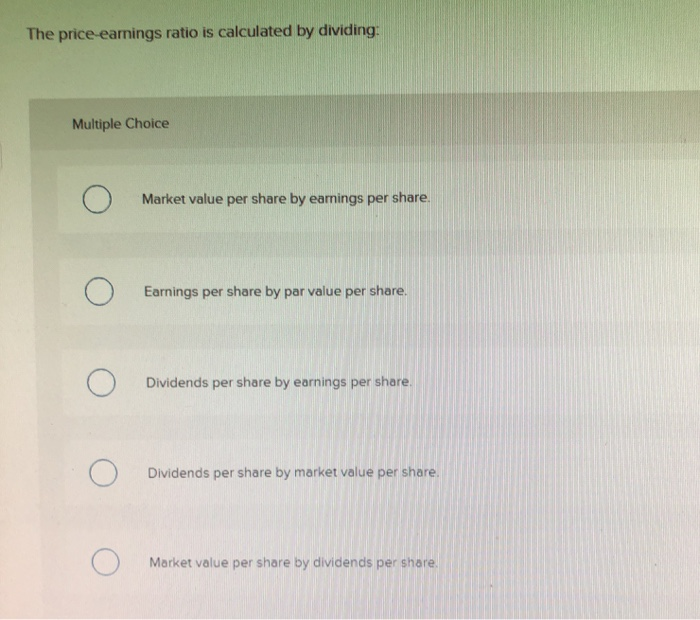
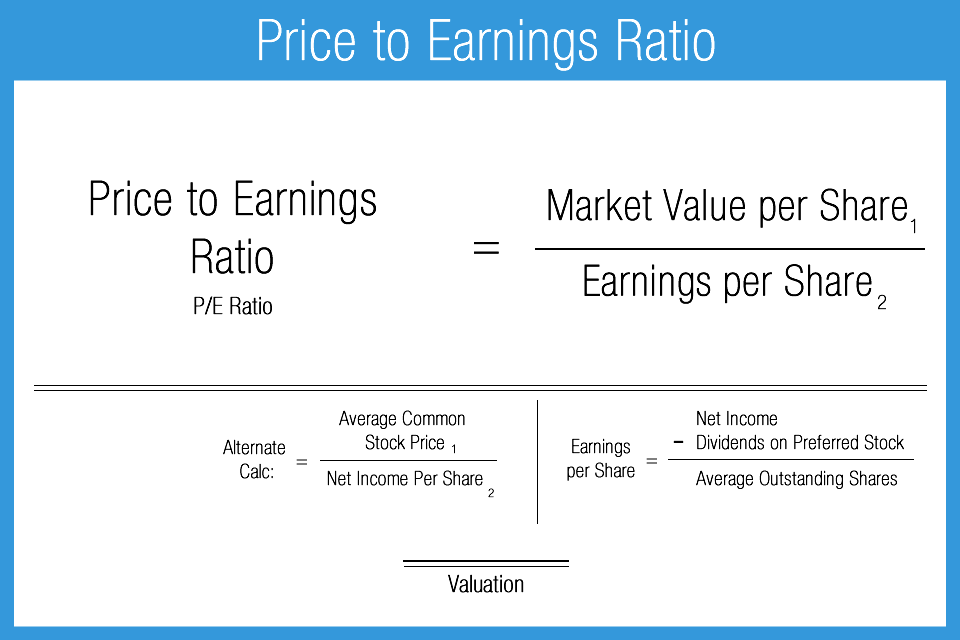
Basically, the P/E ratio is calculated by dividing… wait for it… the price of a stock by its earnings per share (EPS)! BOOM! Mind. Blown. Okay, maybe not blown, but at least gently nudged.
So, What's the Big Deal?
Why should you even care about this goofy ratio? Well, think of it like this: it's a quick way to see if a stock is cheap, expensive, or just right (like Goldilocks’ porridge, but with stocks!).
Must Read
Imagine you’re buying a burger. If one burger joint sells burgers for $5 and another sells the EXACT same burger for $20, you'd probably question the $20 burger, right? The P/E ratio helps you do that with stocks! Are you getting good value for your investment?
A high P/E ratio might mean the stock is overvalued. People are paying a lot for each dollar of earnings. Kinda like paying $50 for that burger we talked about. A low P/E ratio might suggest the stock is undervalued. You're snagging a bargain!
But… and there's always a but, right?… it's not quite THAT simple. It's like judging a book by its cover. Sure, the cover might be shiny, but what about the juicy stuff inside?
The Math(ish) Behind the Magic
Let's break down the formula again:
P/E Ratio = Stock Price / Earnings Per Share (EPS)
So, if a stock is trading at $100 and its EPS is $10, then the P/E ratio is 10 ($100 / $10 = 10). Easy peasy, lemon squeezy!
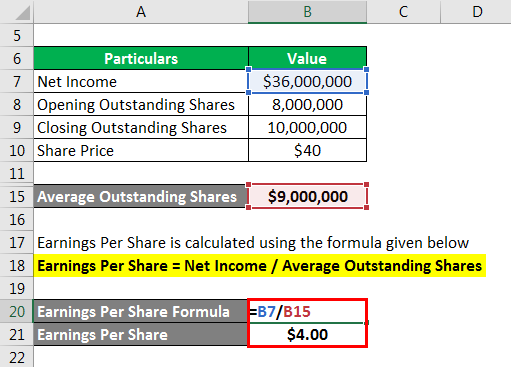
Earnings per share? That's just the company's profit divided by the number of outstanding shares. It tells you how much profit each share 'earns' for you.
Think of it this way: You own a tiny piece of the company. The EPS tells you what that tiny piece earned that year. The P/E then says how much you're paying for each dollar of that earning.
Peeking Behind the Curtain
Now, here's where it gets interesting. P/E ratios are relative. You can't just look at one P/E ratio in isolation and shout, "That stock is overvalued!" You need to compare it to:

- The company's historical P/E ratio: Is it higher or lower than it usually is?
- The P/E ratios of similar companies in the same industry: Is it an outlier?
- The average P/E ratio of the market: Is it significantly above or below average?
For instance, a tech company might have a higher P/E ratio than a utility company. Tech companies are often expected to grow faster, so investors are willing to pay more for each dollar of earnings. It's all about future expectations!
Also, a super high P/E could mean the company had a bad year, earnings were low, and the price is still high. Or maybe everyone thinks it'll be the next big thing, like a company promising teleportation devices (which, let's be honest, would be pretty cool!).
Caveats and Quirks
Here's the fun part: the P/E ratio isn't perfect. Sometimes, it can be misleading. Like when:
- A company has no earnings (or negative earnings!): You can’t calculate a P/E ratio. It’s like trying to divide by zero – math gets angry!
- A company has artificially inflated earnings: Companies sometimes use accounting tricks to make their earnings look better than they really are. Sneaky!
- There are one-time events: Maybe the company sold a building and got a huge profit boost that won't happen again. This can skew the P/E ratio.
So, always do your homework! Don't just rely on the P/E ratio. It's one piece of the puzzle, but you need the whole picture to make smart investment decisions. It's like building a Lego castle – you need all the bricks!
Why This is Actually Fun
Learning about the P/E ratio is like unlocking a secret code in the stock market. It’s a little tool that can help you understand how investors are feeling about a company. Are they optimistic? Pessimistic? It’s financial tea leaf reading!
Plus, it's a great conversation starter at parties (okay, maybe not every party). Imagine casually dropping, "Oh, the P/E ratio of that company is ridiculously high!" You'll sound super smart! (Just kidding… mostly.)
So, go forth and conquer the P/E ratio! Remember, it's all about dividing the stock price by the earnings per share. And remember to take everything with a grain of salt (especially financial advice from a random article on the internet!). Happy investing!