
The Lost Book Of Herbal Remedies Free

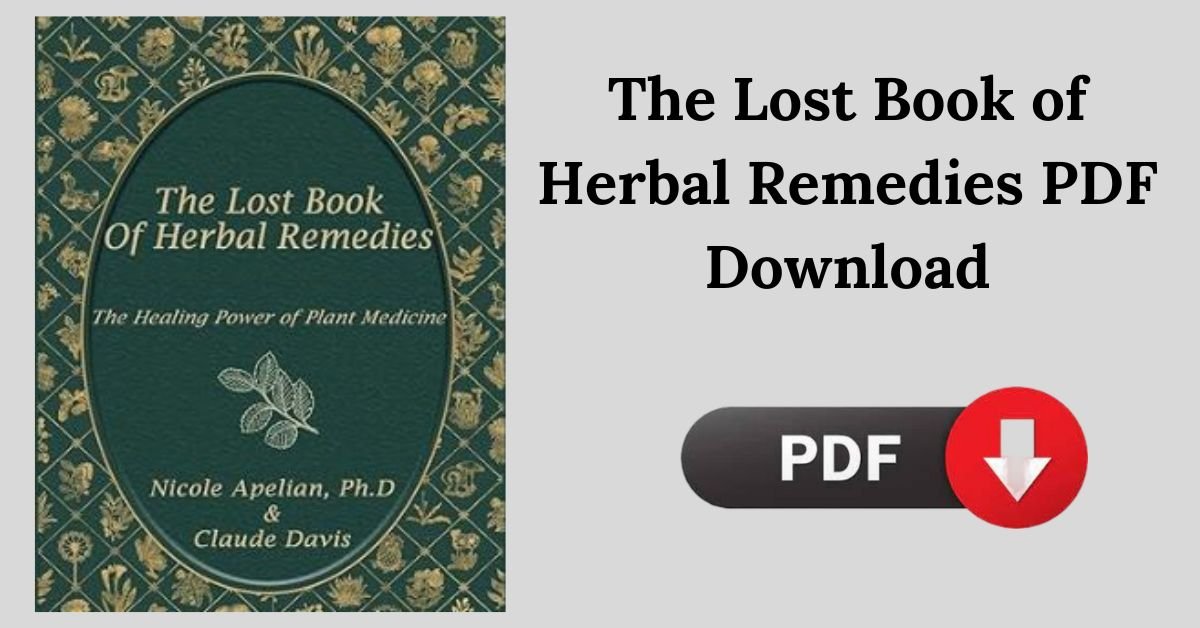
Okay, gather 'round, friends! Let's talk about this mythical beast: "The Lost Book of Herbal Remedies Free." Now, I'm using air quotes because, let's be honest, if it's actually lost, how are we all supposed to be getting it for free, huh? It's like the pirate's treasure that mysteriously shows up on Amazon Prime. Suspicious, right?
But let’s pretend for a second it did exist in a purely digital, totally-not-ripped-off-from-somewhere-else form, floating around the internet like a botanical ghost. What would be inside? Probably a bunch of stuff your grandma already told you, but maybe with slightly fancier illustrations and, like, a five-page chapter on kombucha.
What's the Big Deal with Herbal Remedies Anyway?
Alright, for those of you who think “herbal remedy” means adding a sprig of parsley to your spaghetti, let’s clarify. We're talking about using plants for medicinal purposes! Think chamomile tea for sleep (works better than counting sheep, trust me), ginger for nausea (perfect after that dodgy sushi), and maybe even willow bark for pain relief (the OG aspirin!). It’s basically going back to nature, but with a healthy dose of skepticism, because not everything green is good for you. Poison ivy, I’m looking at you!
Must Read
Important Disclaimer: I am not a doctor, nor do I play one on the internet. If you're feeling like you've been hit by a bus, go see an actual medical professional. Don't rely on a blurry PDF you downloaded from a website that looks like it was designed in 1998.
That being said, understanding the basics of herbal remedies can be empowering. Imagine knowing which plant in your backyard can soothe a bug bite or help you relax after a stressful day. You'd be like a botanical superhero! Okay, maybe a sidekick. Still cool.
The Allure of the "Free" Version
Now, the word "free" is like catnip for humans. We see it, we pounce. But remember that old saying, “If it seems too good to be true, it probably is?” That applies tenfold to anything you find online that claims to be a free, complete version of a copyrighted book. You might end up downloading a virus that turns your computer into a bitcoin mining farm run by rogue squirrels. Not ideal.
Seriously, be careful! There are plenty of legitimate resources out there. Libraries are a thing, people! And reputable websites with information on herbalism are readily available. You don't need to risk your digital life for a potentially fake "lost book."

What You Might Actually Learn (Legitimately!)
Okay, so assuming you ditch the sketchy download and opt for a safer, more ethical path, what kind of herbal wisdom can you gain? You could learn about the different ways to prepare herbs: infusions (like tea), decoctions (boiling for longer periods), tinctures (alcohol-based extracts), and salves (for topical application). You might even discover that your favorite spice rack is a mini pharmacy in disguise!
Did you know that turmeric is a powerful anti-inflammatory? Or that peppermint can help soothe indigestion? Mind blown, right? It's like discovering superpowers hidden in your grocery store.
![The Lost Book of Herbal Remedies Review [2021 Updated]](https://www.livenutritionacademy.com/wp-content/uploads/2020/09/The-Lost-Book-of-Herbal-Remedies-Reviews.jpg)
You’ll also learn to identify plants. That’s where the “lost book” might actually be helpful if it existed in reality with pictures. But seriously, never consume a plant unless you are absolutely certain you know what it is. Misidentification can lead to some seriously unpleasant consequences. We’re talking emergency room visits, not a pleasant afternoon tea.
Beyond the Book: Responsible Herbalism
Even with the best information, it's crucial to practice responsible herbalism. Start small. Research thoroughly. Consider potential interactions with medications you’re already taking. And, for the love of all that is green, talk to your doctor before making any significant changes to your health regimen.

Think of it like learning to play the ukulele. You wouldn't jump on stage at Carnegie Hall after watching a five-minute YouTube video, would you? (Okay, maybe some people would, but they probably wouldn't sound very good.) Same goes for herbalism. It's a journey, not a sprint.
So, forget about hunting for the mythical "Lost Book of Herbal Remedies Free." Focus on finding reliable sources, learning gradually, and respecting the power of plants. You might not become a botanical superhero overnight, but you'll definitely gain a deeper appreciation for the natural world – and maybe even find a natural remedy for that annoying crick in your neck.
Now, if you'll excuse me, I'm going to go make a cup of chamomile tea. My cat’s been using my head as a trampoline again.