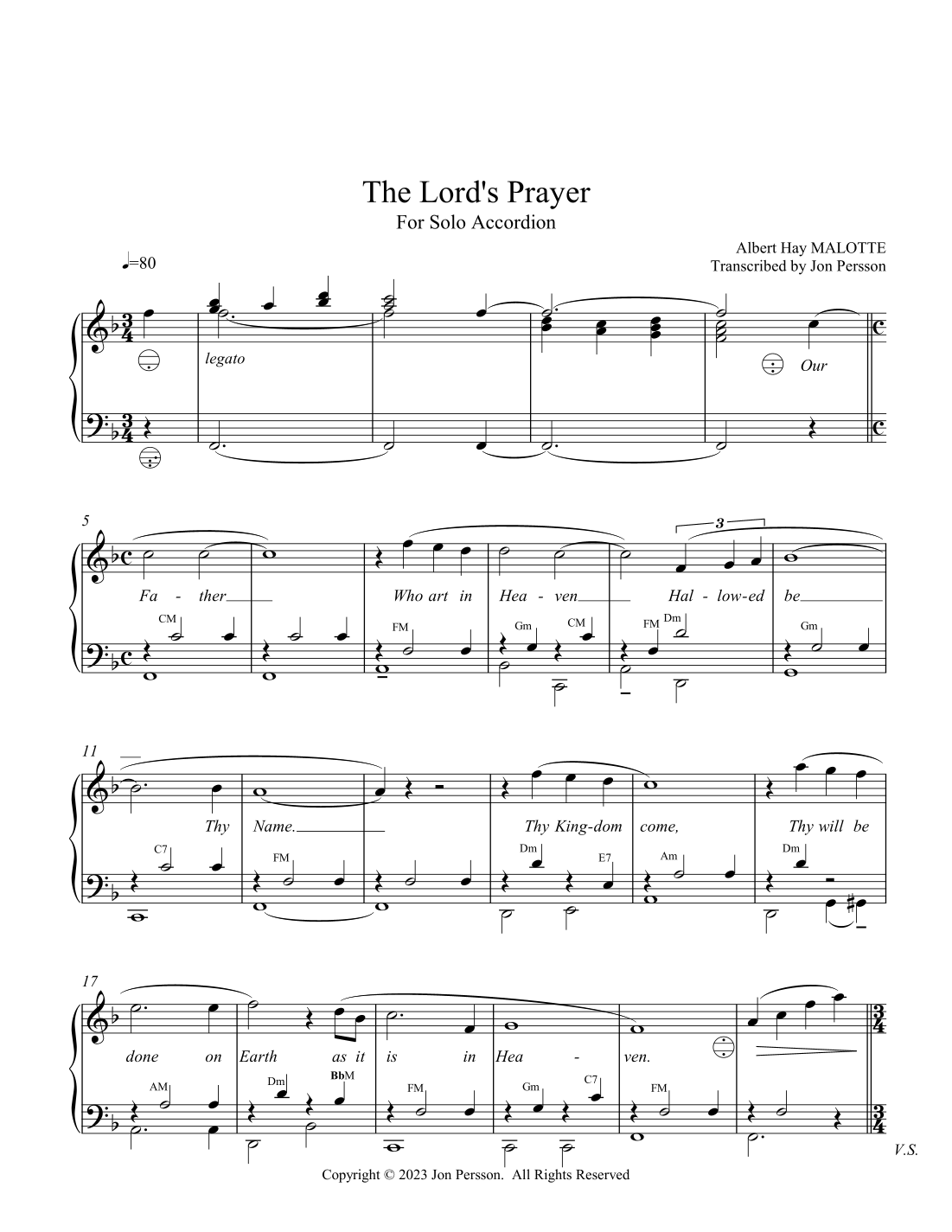
The Lord's Prayer Albert Hay Malotte Sheet Music
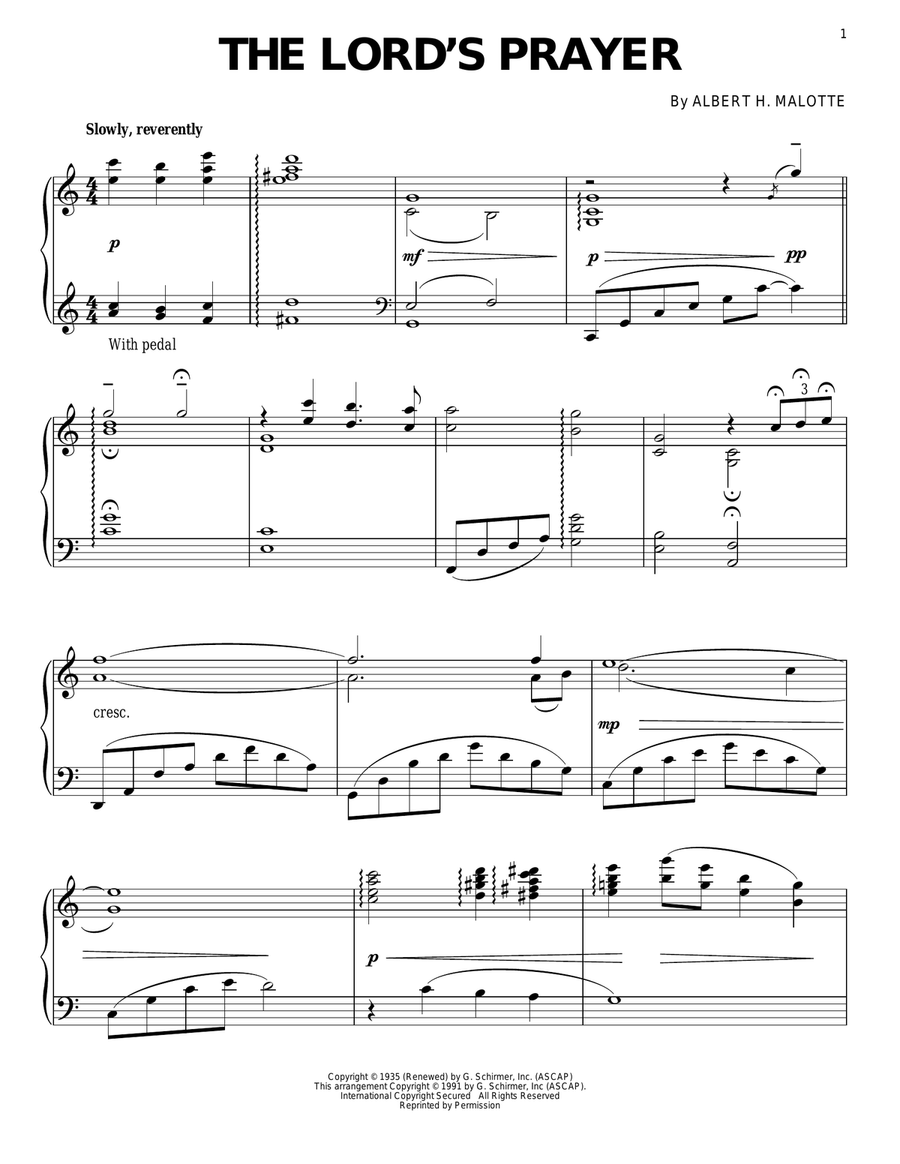
Have you ever found yourself humming a tune that just seems to resonate deep within your soul? A melody that brings a sense of peace and comfort, or perhaps even a surge of inspiration? For many, Albert Hay Malotte's setting of "The Lord's Prayer" is exactly that kind of piece. It's more than just sheet music; it's an experience, a journey, and a connection to something larger than ourselves. People often turn to this piece for solace, during times of reflection, or as a way to express their faith and hope.
But why is this particular setting so enduring? The answer lies in its ability to beautifully blend profound words with a simple yet powerful melody. "The Lord's Prayer" itself, regardless of religious affiliation, offers a framework for daily living. It encourages gratitude ("Hallowed be thy name"), acknowledges our dependence on a higher power ("Give us this day our daily bread"), promotes forgiveness ("Forgive us our trespasses, as we forgive those who trespass against us"), and seeks protection from temptation ("Lead us not into temptation, but deliver us from evil"). These are timeless principles that can guide us through the challenges and triumphs of everyday life.
You'll often hear Malotte's "The Lord's Prayer" performed at weddings, funerals, church services, and even as a solo performance in concert halls. Its versatility lies in its ability to connect with a wide audience, regardless of their musical background or religious beliefs. For some, it's a reminder of cherished memories; for others, it's a source of strength during difficult times. Many choirs use it as a staple in their repertoire, bringing its message of hope and faith to congregations around the world. Even individuals learning to sing often choose it because of its manageable range and emotionally resonant lyrics.
Must Read
So, how can you truly appreciate and enjoy Malotte's "The Lord's Prayer" sheet music more effectively? First, take time to understand the meaning behind the words. Research the history and significance of "The Lord's Prayer" itself. Understanding the context will enrich your experience, whether you're singing, playing, or simply listening. Second, pay close attention to the dynamics and phrasing indicated in the sheet music. Malotte's arrangement is intentionally crafted to build to a powerful climax and then gently fade into a peaceful resolution. Emphasizing these nuances will bring the piece to life. Third, don't be afraid to personalize your interpretation. While respecting the original intent of the composer, allow your own emotions and experiences to inform your performance. If you're singing, focus on diction and pronunciation to clearly convey the message. If you're playing, pay attention to your touch and tone to create a beautiful and expressive sound.
Ultimately, whether you're a seasoned musician or a casual listener, Albert Hay Malotte's "The Lord's Prayer" offers a profound and enriching experience. By understanding its history, appreciating its musical nuances, and allowing your own emotions to guide you, you can unlock the full potential of this timeless piece and connect with its message of hope, faith, and enduring peace.