The Difference Between A Cyclone And A Hurricane
Ever wondered why some storms are called hurricanes and others are called cyclones, even though they look pretty much the same on weather maps? It's a fun little geography and meteorology puzzle! Understanding the difference isn't just a cool party trick; it can actually be useful for knowing how to interpret weather warnings, especially if you travel or have family in different parts of the world.
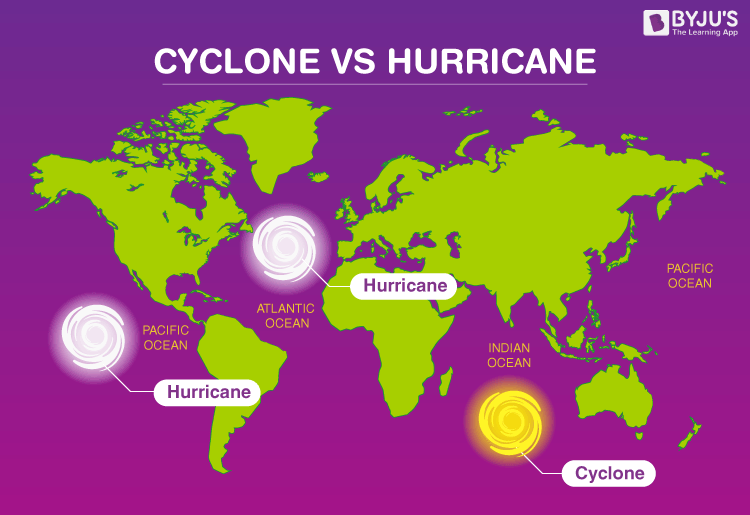
The core difference, simply put, is their location. Think of it like this: these powerful rotating storms are all part of the same family, but they go by different names depending on where they form. For beginners, the key takeaway is that they're the same type of weather phenomenon, just with regional nicknames.
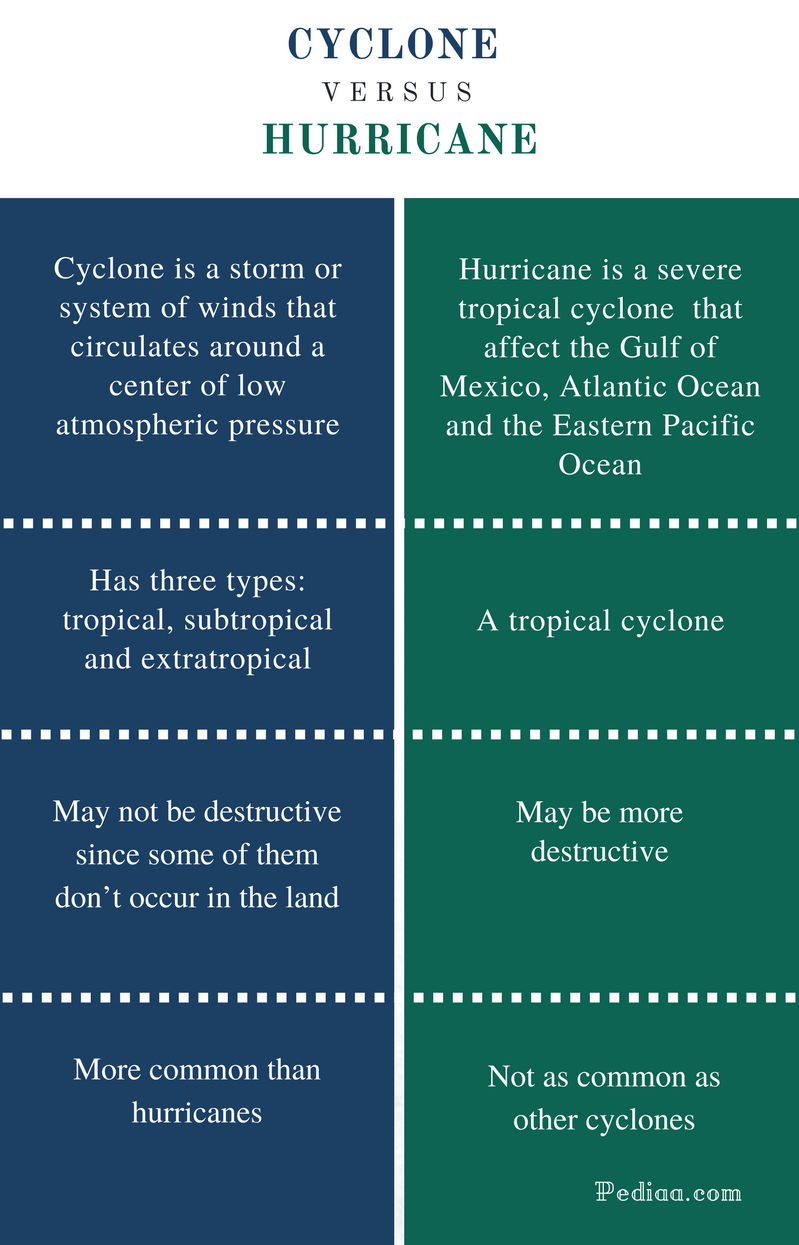
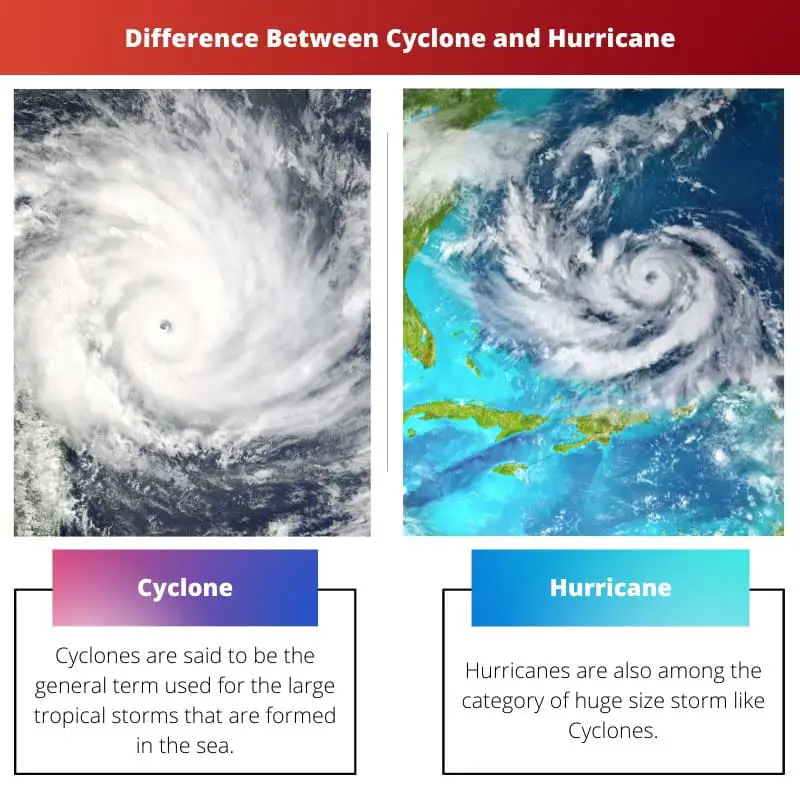
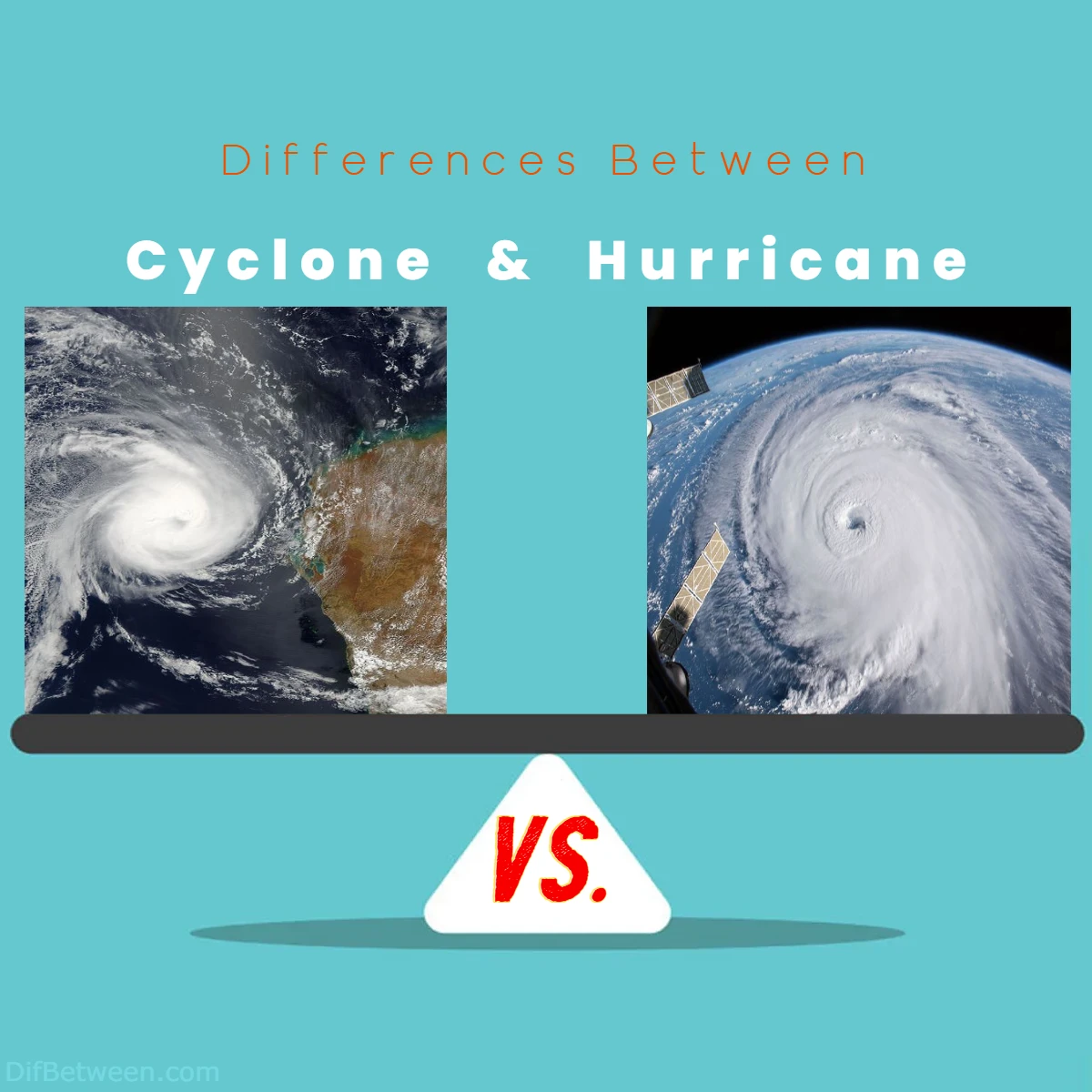
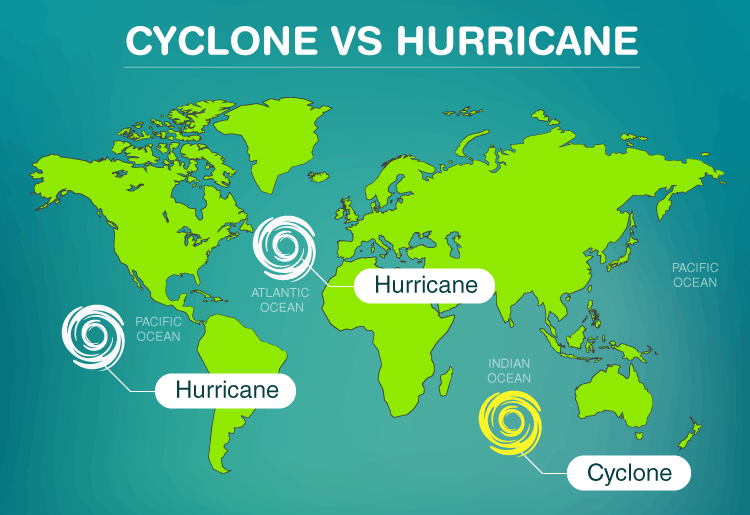
Specifically, a hurricane is a tropical cyclone that occurs in the Atlantic Ocean and northeastern Pacific Ocean. A cyclone, on the other hand, is used for tropical cyclones in the South Pacific and Indian Ocean. In the northwestern Pacific Ocean, they're called typhoons. So, if you're tracking a storm near Florida, it's a hurricane; near India, it's a cyclone; and near Japan, it's a typhoon. They all share the same swirling structure and intense winds.
Must Read
For families, understanding this difference can be a great way to engage kids in learning about geography and weather. You can track storms together, using a world map to pinpoint where different types of cyclones occur. This can turn a potentially scary weather event into an educational opportunity. You could even create a family project, researching the history of major hurricanes, cyclones, or typhoons and their impact on different regions.
For weather hobbyists, diving deeper into the meteorology behind these storms is fascinating. You can explore the conditions that lead to their formation, the role of sea surface temperatures, and the impact of climate change. There are also variations within each category. For example, we have "super typhoons" which are exceptionally powerful typhoons. Similarly, hurricanes are classified into categories based on their wind speeds using the Saffir-Simpson scale.
Getting started with understanding these storms is easy! Here are a few practical tips:
- Watch the news: Pay attention to how weather reporters refer to storms in different parts of the world.
- Use online resources: Websites like the National Hurricane Center (NHC) and the World Meteorological Organization (WMO) provide tons of information.
- Look at weather maps: Familiarize yourself with how these storms are depicted on maps and note their location.
Remember, regardless of what they're called, these storms are serious weather events. Understanding the terminology helps you stay informed and prepared. Whether you're a curious beginner, a parent looking for educational activities, or a dedicated weather enthusiast, learning about the differences between hurricanes, cyclones, and typhoons is a rewarding and valuable experience. It's all about appreciating the power and complexity of our planet's weather systems!