The Atlas Of North American English

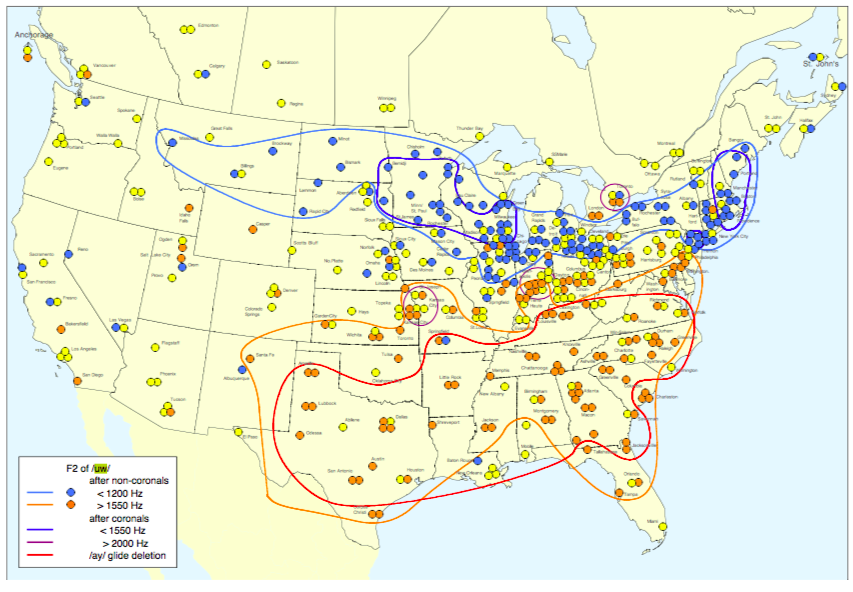
Have you ever wondered why someone from Boston says "wicked" to mean "awesome," or why folks in the South add "y'all" to nearly every sentence? The answer, and so much more, lies within the fascinating pages of the Atlas of North American English. This isn't just a dry linguistic textbook; it's a vibrant map charting the diverse and ever-evolving landscape of how we speak. It's become a surprisingly popular resource, not just for academics, but for anyone who appreciates the rich tapestry of language – especially those looking for creative inspiration.
For artists, hobbyists, and casual learners, the Atlas is a goldmine. Imagine you're writing a novel and need to give your characters authentic regional voices. The Atlas helps you avoid tired stereotypes and instead craft dialogue that rings true. Are you a painter? Think about creating a series of portraits celebrating the faces and phrases of different American subcultures. A musician could draw inspiration from the rhythmic cadences of various dialects, incorporating them into unique song structures. Even crafting a simple game night can benefit; try a dialect-guessing game for guaranteed laughs!
The Atlas showcases a remarkable range of linguistic variations. For instance, it details the Northern Cities Vowel Shift, a phenomenon reshaping the vowel sounds in cities like Chicago and Detroit. This means the "a" in "cat" might sound more like the "ee" in "feet," and the "o" in "hot" drifts towards the "a" in "father." Then there's the Southern Drawl, a slower, more elongated pronunciation style that lends a distinctive charm. In terms of vocabulary, you'll find everything from the regional preferences for "pop" versus "soda" versus "coke" to the evolution of terms like "hoagie," "sub," and "grinder" for the same type of sandwich, depending on where you are.
Must Read
So, how can you explore the Atlas at home? Start by simply browsing through the maps and listening to the audio samples (many are available online). Pay attention to the nuances in pronunciation and vocabulary. Try to identify the regional features in everyday conversations. Listen to podcasts featuring people from different parts of the country. Even watching TV shows or movies can provide clues, although remember that these are often exaggerated for comedic effect. Don't be afraid to experiment! Try imitating different accents (respectfully, of course!) and see how it feels to speak in a different way.
Ultimately, the appeal of the Atlas lies in its ability to connect us to each other. Language is a powerful force that shapes our identities and binds us together. By understanding the nuances of North American English, we gain a deeper appreciation for the diversity of our culture and the ingenuity of human communication. It's a journey of discovery that's both informative and immensely enjoyable. So, dive in, explore the map, and prepare to be amazed by the vibrant tapestry of American voices!