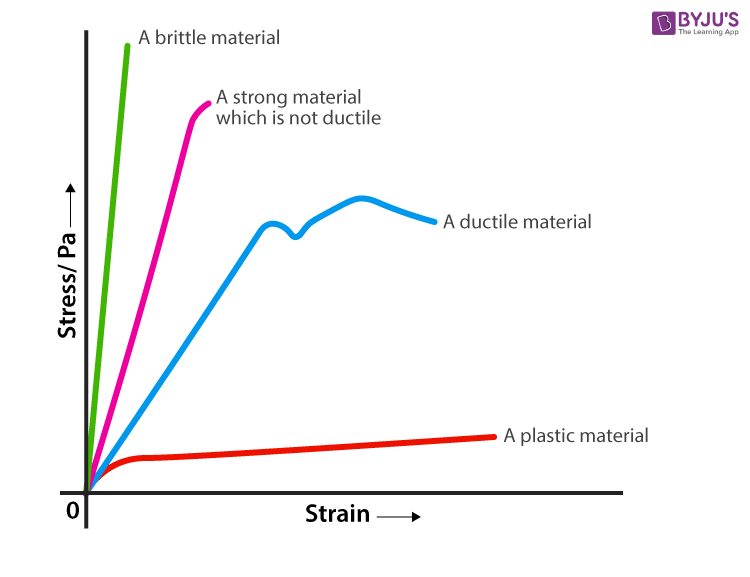
Stress Strain Curve For Different Materials

Okay, so picture this: I was hanging a picture the other day. Simple enough, right? Nailed the hook, hung the frame... and then SNAP. The wire on the back just gave way. Cheap wire, I guess. But it got me thinking - what exactly makes one material stronger than another? Like, why didn't that wire just stretch a little first? Enter: the stress-strain curve, our new best friend (or at least, a mildly interesting acquaintance).
Basically, the stress-strain curve is a visual representation of how a material behaves under load. Think of it as a material's resume, showing off its strengths (and weaknesses!). It plots stress (the force applied per unit area) against strain (the deformation or change in length of the material). Don't let the jargon scare you; we'll break it down.
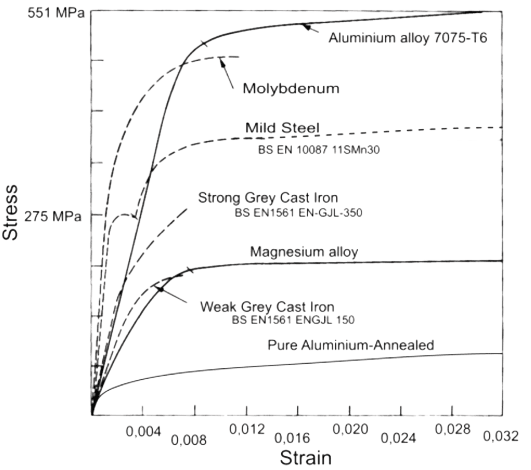
Different materials have wildly different curves. A rubber band's curve looks nothing like a steel beam's curve. And that’s precisely the point! Let's dive into some examples.
Must Read
Ductile Materials: The Stretch Armstrongs of the Material World
First up, we have ductile materials, like mild steel, aluminum, and copper. These are the guys that give you a warning before they break. You know, like that rubber band that stretches way out of shape before it finally snaps. (Remember those? Hours of fun... until they got stuck in your hair.)
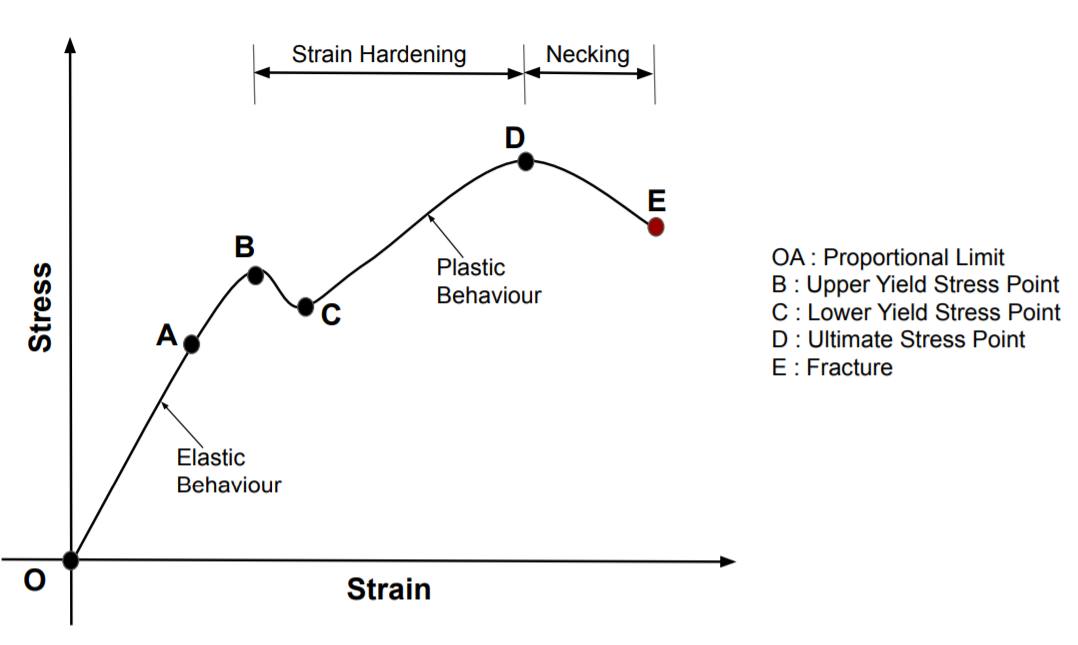
Their curve typically has a few key regions:
- Elastic Region: This is the "no harm, no foul" zone. Apply stress, the material deforms, remove the stress, and it bounces right back to its original shape. Think of it like stretching a spring lightly. The slope of this region is called Young's Modulus (or the modulus of elasticity), and it tells you how stiff the material is. Steeper slope? Stiffer material.
- Yield Point: This is where things start getting interesting. This is the point where the material starts to permanently deform. Even if you remove the load now, it won’t return to its original shape. It’s like bending a paperclip – it stays bent.
- Strain Hardening: After yielding, the material actually gets stronger again! Weird, right? It's like it's saying, "Okay, you bent me, but I'm not giving up yet!" It can withstand even more stress.
- Ultimate Tensile Strength: This is the peak of the curve – the highest stress the material can handle. Think of it as the material’s maximum bragging rights.
- Necking: After the ultimate tensile strength, the material starts to thin out at one spot (like that rubber band about to snap). This is called "necking," and the stress required to keep stretching it actually decreases.
- Fracture Point: The inevitable end. The material finally breaks. RIP.
Ductile materials are great for applications where you want some warning before failure. Bridges, buildings, that sort of thing. You want them to bend, not just shatter.
Brittle Materials: The Glass Cannons
Now, let's talk about brittle materials like glass, concrete, and cast iron. These are the materials that fail suddenly and catastrophically. No warning, no stretching, just BAM! (Like that cheap picture hanging wire, cough.)
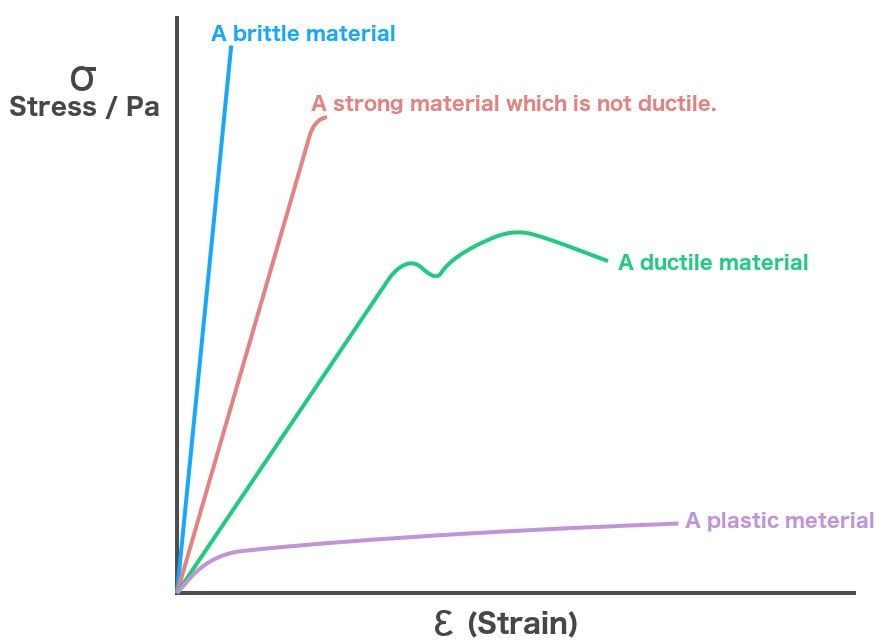
Their stress-strain curve is much simpler. It's almost a straight line up to the breaking point. They have a very small (or non-existent) plastic region. This means they don’t yield or undergo significant deformation before fracture.
Think of trying to bend a piece of chalk. It doesn't bend; it just snaps. That's brittle behavior in a nutshell.
Other Material Behaviors: It's a Material World, and We're Just Living In It
Of course, there are other types of material behavior too. Some materials are elastic (like a spring), some are plastic (like clay), and some are viscoelastic (a combination of both, like silly putty). (Remember silly putty? Sticking it on comic strips to lift the image? Good times.)
The stress-strain curve is a powerful tool for engineers and scientists. It helps them choose the right materials for different applications, predict how materials will behave under load, and design structures that are safe and reliable.
So, next time you see something break, remember the stress-strain curve. It's a fascinating glimpse into the hidden world of material behavior. And maybe, just maybe, you'll think twice before hanging that expensive painting with cheap wire! You've been warned!