Stainless Steel 18 10 Vs 304

Ever found yourself staring at a shiny new saucepan or a sleek piece of flatware, wondering what makes one just a little bit more... oomph-y than the other? You’re not alone! In the wonderful world of home goods, stainless steel is the undisputed MVP. It’s tough, it’s beautiful, and it’s practically everywhere, from your kitchen sink to your morning coffee spoon. But peel back the polished surface, and you’ll often find a hidden numbers game: 18/10 vs. 304. What do these secret codes mean for your daily life? Let’s dive in!
Decoding the Shimmer: What Do the Numbers Mean?
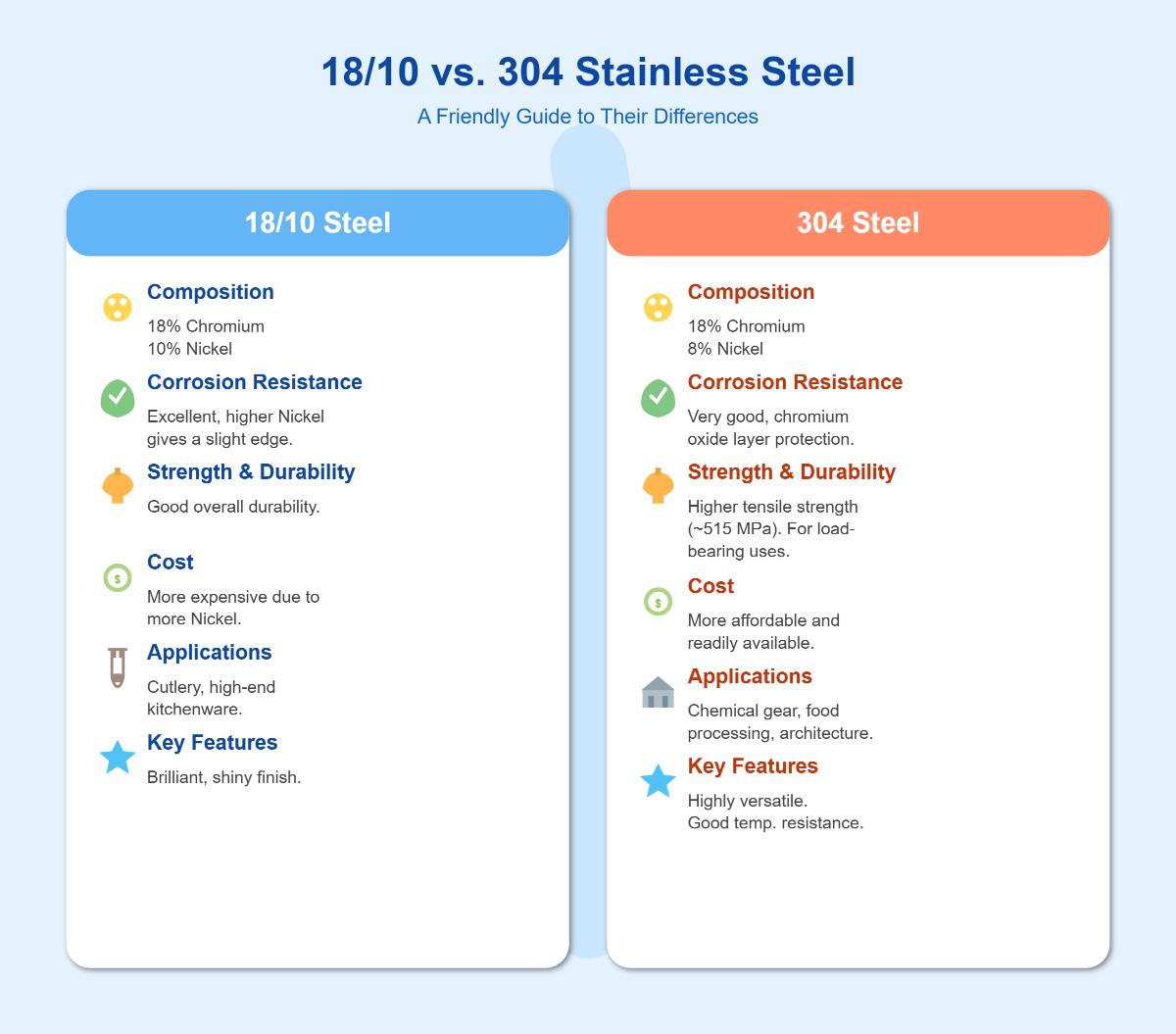
Before we pick sides, let's get scientific, but keep it breezy. Those numbers you see – 18/10, 18/8, or simply '304' – refer to the alloy composition of the steel. Specifically, they tell you the percentage of chromium and nickel. Chromium is the superhero for corrosion resistance and that signature shine, while nickel adds extra luster, durability, and even more rust resistance. Think of it like a secret recipe for metallic magic!
So, when you see 18/10 stainless steel, it means it contains 18% chromium and 10% nickel. And 304 stainless steel? This is typically 18% chromium and 8% nickel (which is why you often see it called 18/8). See? Not so scary after all.
Must Read
18/10: The Luxe Life & The Polished Performer
Let's talk about 18/10. With its higher nickel content, this grade of stainless steel is often considered the crème de la crème. It boasts superior resistance to rust, corrosion, and staining, making it a dream for things that need to look pristine day after day. Imagine a fancy dinner party – your sparkling flatware, the elegant serving dishes, perhaps even your high-end cookware – all likely rocking the 18/10 badge.
Practical Tip: If you're investing in flatware that you want to last for generations, or cookware that will withstand acidic foods and rigorous washing without a hint of dullness, 18/10 is your go-to. It’s wonderfully resistant to food acids, meaning your tomato sauce won’t leave a mark, and it tends to hold its polish beautifully. It's the kind of steel that makes you feel a little bit fancy, even when you're just having toast.
304: The Workhorse Hero & The Everyday Champion
Now, let's shine a light on 304 stainless steel, often referred to as '18/8'. Don't let the slightly lower nickel content fool you; this stuff is an absolute champion. While 18/10 might be the elegant diner, 304 is the robust, reliable chef that keeps the kitchen running smoothly. It's incredibly versatile, strong, and provides excellent corrosion resistance – just perhaps a hair less than its 18/10 cousin in extremely harsh conditions.
You’ll find 304 everywhere, from your kitchen sink (yes, the one that endures daily abuse!) to major appliances like refrigerators and dishwashers, and even in many commercial kitchens. It's the standard for a reason: it offers a fantastic balance of durability, performance, and affordability. It's the steel that gets the job done without fuss, reliably holding its own against spills, scratches, and everyday wear and tear.

Fun Fact: Did you know 304 stainless steel is so robust and reliable that it’s often used in architectural applications and even parts of the aerospace industry? It's a testament to its incredible strength and resistance!
Choosing Your Steel: Where Do They Shine?
So, how do you decide? It really boils down to where and how you're using it.

- For show-stopping serving pieces and long-term flatware: Lean towards 18/10. Its superior polish retention and resistance to food acids make it perfect for pieces that will be on display and frequently come into contact with various foods. Think of it as investing in jewelry for your table.
- For hardworking kitchen essentials: 304 is your steadfast friend. Sinks, appliance exteriors, and many everyday pots and pans benefit from 304's excellent durability and value. It’s tough enough for daily abuse and won’t break the bank.
Both are food-safe and excellent choices, but knowing the difference empowers you to make smarter purchasing decisions. It’s like knowing the difference between a sleek sports car (18/10 for flash and precision) and a sturdy, reliable SUV (304 for everyday utility and resilience).
Keeping That Shine: A Universal Truth
Regardless of whether you choose 18/10 or 304, a little care goes a long way in maintaining that iconic stainless steel gleam. Always remember to:
- Wash promptly: Don't let food acids sit too long.
- Dry thoroughly: Water spots are the arch-nemesis of shine.
- Avoid harsh abrasives: Use soft cloths and mild cleaners.
- Go with the grain: When cleaning, follow the invisible "grain" of the steel for streak-free results.
The Reflective Ending: More Than Just Metal
Ultimately, understanding the difference between 18/10 and 304 stainless steel isn't about rigid rules; it's about being an informed consumer. It's about appreciating the engineering that goes into the everyday objects that make our lives easier and more beautiful. From the gleaming fork at your dinner table to the sturdy sink where you wash your worries away, these metals are silent partners in our daily routines. Knowing their story just makes you appreciate them a little bit more, turning mere objects into thoughtful additions to your well-curated life.