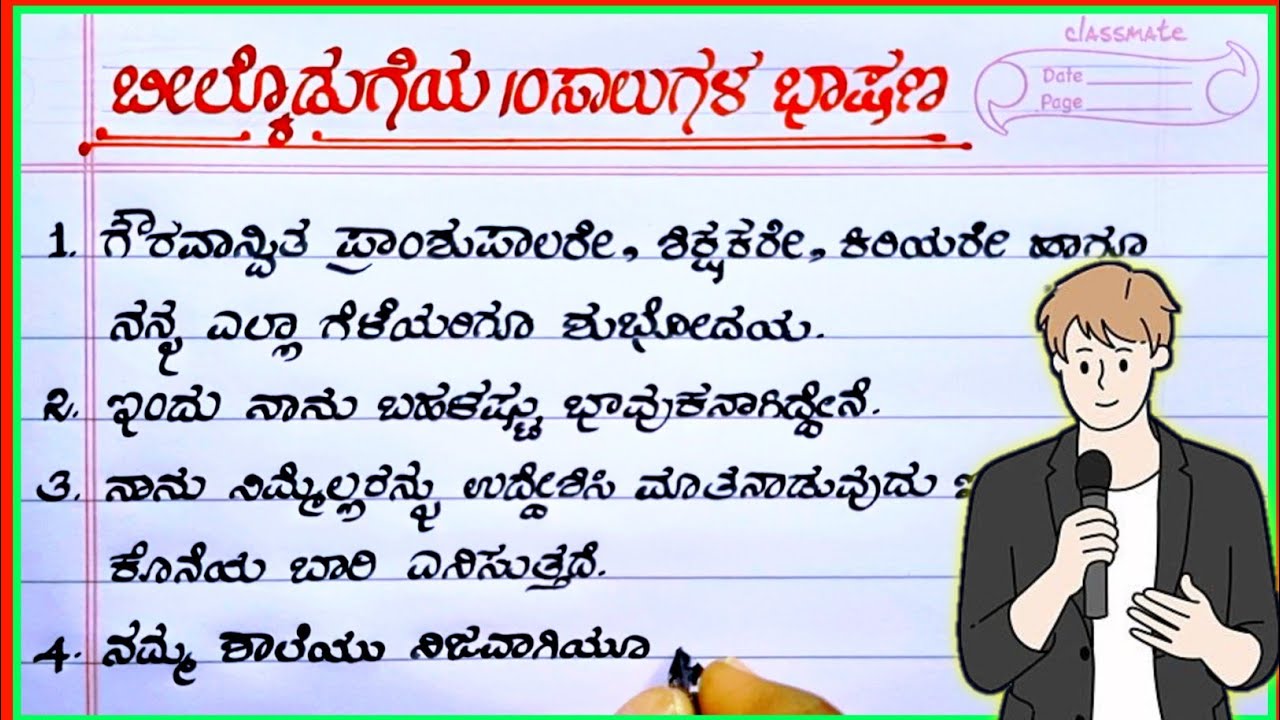
Speech On Retirement In Kannada

Ever wondered how people in different cultures say goodbye to their working lives? It's fascinating to peek into how traditions and values shape even something as universal as a retirement speech. Today, we're taking a little linguistic adventure to explore the art of a retirement speech, but with a Kannada twist! Kannada, a beautiful language spoken predominantly in the state of Karnataka, India, offers a unique lens through which to view this significant life event.
Why is learning about a retirement speech in Kannada relevant, even if you don't speak the language? Well, for starters, it's a window into a different cultural perspective. It reveals how respect, gratitude, and well-wishes are expressed within a specific community. Understanding these nuances can broaden our own understanding of human connection and communication. Plus, it’s just plain interesting to see how different languages tackle the same human experiences! Imagine hearing graceful Kannada phrases filled with heartfelt sentiment – it’s enriching, no matter your linguistic background.
The purpose of a retirement speech, regardless of the language, is multifaceted. Primarily, it's an opportunity to express gratitude to colleagues, superiors, and the organization for the years of service and support. It's a moment to reflect on achievements, share anecdotes, and offer words of wisdom to those continuing the journey. In Kannada, the speech often emphasizes the importance of family, community, and contributing to society even after retirement. There’s a strong sense of wishing the retiree a peaceful and fulfilling next chapter, often expressed through blessings and good wishes.
Must Read
The benefits of understanding the structure and tone of a Kannada retirement speech extend beyond simple translation. It enhances cross-cultural communication skills, fostering empathy and respect. In educational settings, exploring such speeches can be a valuable tool for language learners, providing context and cultural insights alongside vocabulary and grammar. Imagine a language class analyzing a transcript of a retirement speech, discussing the cultural values reflected in the word choices and expressions of gratitude. In daily life, even a basic understanding can help those working in multicultural environments to appreciate and better understand their Kannada-speaking colleagues.
So, how can you explore this fascinating topic further? Start with simple searches online. Look for examples of retirement speeches in Kannada, ideally with English translations or transliterations. Pay attention to the common phrases used to express gratitude, acknowledge colleagues, and offer blessings. Listen to recordings of Kannada speakers and try to identify the tone and cadence used in these speeches. Consider exploring online language learning resources that focus on conversational Kannada, paying particular attention to expressions of respect and appreciation. Even watching Kannada films or dramas with subtitles can offer insights into cultural norms and communication styles. Don't be afraid to reach out to Kannada speakers and ask them about their experiences with retirement speeches – personal anecdotes can be incredibly insightful. Remember, the goal isn't to become fluent overnight, but to open your mind to a new perspective and appreciate the beauty of language and culture.