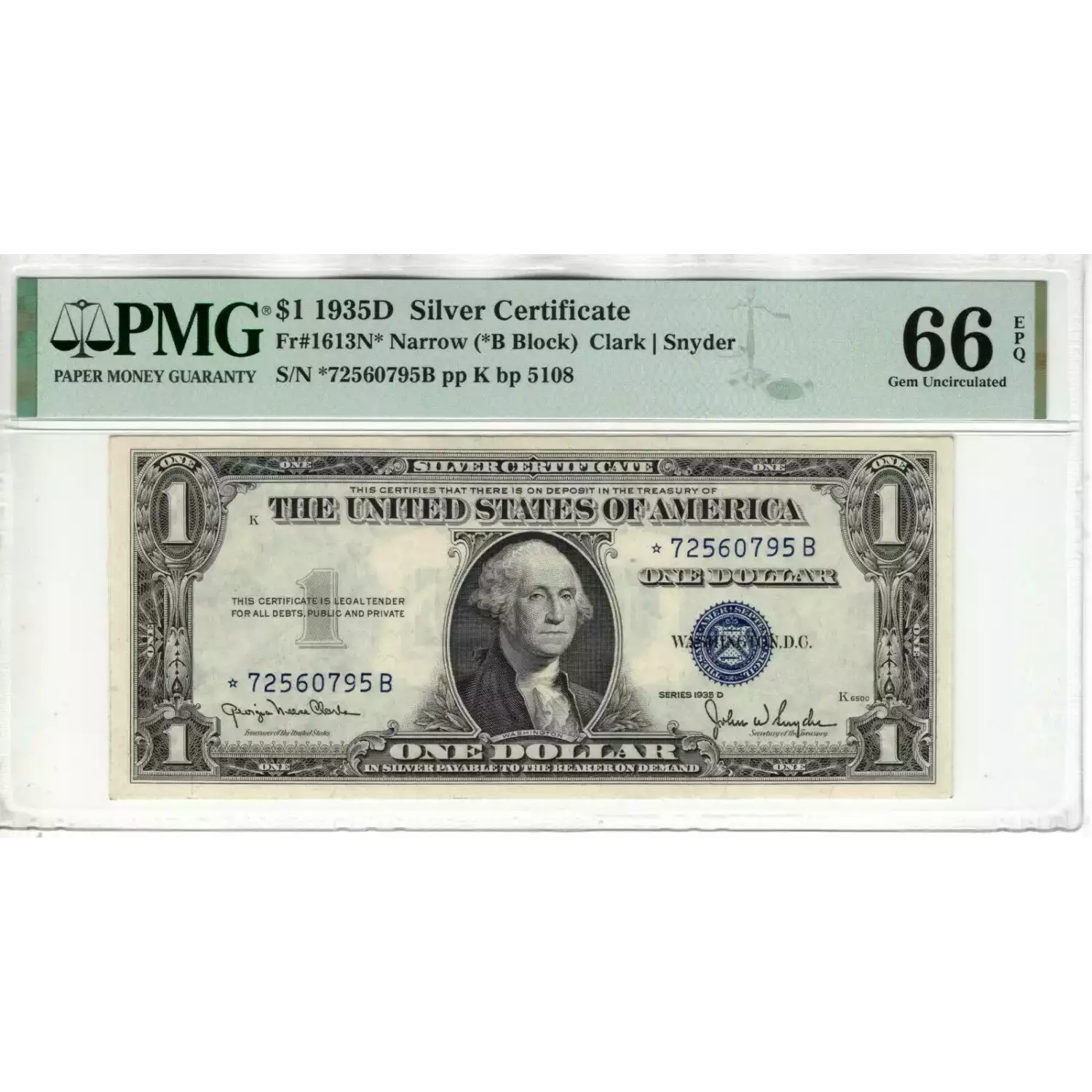
Silver Certificate Dollar Bill 1935 D Blue Seal Worth

Okay, let's talk about something we've probably all encountered at some point, either in Grandma's dusty attic, tucked in a well-worn wallet, or maybe even – gasp! – still floating around in circulation: the 1935 D Silver Certificate Dollar Bill with that snazzy blue seal. Think of it as the slightly quirky, blue-collar cousin of the regular greenback. It's got character!
Now, before you start picturing yourself buying a yacht and naming it "The Silver Certificate," let’s pump the brakes a little. The value of these little guys isn't always "retire early" money. It’s more like "treat yourself to a fancy coffee" money, maybe. But hey, coffee is good!
So, What's the Hype?
You might be asking, "Why all the fuss over a dollar bill? Isn't it, you know, just a dollar?" Well, yes and no. See, these Silver Certificates were different. Back in the day, they were actually redeemable for – you guessed it – silver! Imagine that! You could walk into a bank and say, "I'd like one dollar's worth of shiny metal, please!" It's like trading Pokemon cards for actual superpowers.
Must Read
That all changed in 1968. Suddenly, no more silver for your certificate. Sad trombone. Now it's just a cool piece of history, but hey, history is cool!
The "1935 D" Factor
Here's where things get a little more specific. Not all 1935 Silver Certificates are created equal. The "D" after the 1935 is important. It tells you where the bill was printed. In this case, “D” signifies that it was printed in Dallas. Think of it like the difference between a designer handbag and one you got at the flea market. Both carry your stuff, but one might be worth a bit more (or a lot more!) because of its origins and scarcity.

Generally speaking, the better the condition of your bill, the more it's worth. Think of it like this: would you rather have a vintage car that's been lovingly restored and kept in a garage, or one that's been used as a jungle gym for raccoons in the backyard? (Okay, maybe raccoon jungle gyms are cool too, but you get the point.)
Checking the Condition: Is it Crisp or Crinkled?
If your bill looks like it just came off the press, crisp and uncirculated, you're in better shape than if it looks like it's been through a washing machine, a dryer, and a wrestling match with a badger. Rips, folds, stains, and excessive wear all detract from the value.
Consider these factors:

- Crispness: Like a freshly ironed shirt, a crisp bill is a good sign.
- Folding: Like your laundry after you've been putting it off for 2 weeks, excessive folding hurts the value.
- Tears/Stains: Nobody wants a dollar bill that looks like it survived a wild party.
So, What's it Really Worth?
Alright, let's get down to brass tacks (or maybe silver tacks, in this case). A well-circulated 1935 D Silver Certificate might only be worth a buck or two. Basically, face value. It's still fun to have, though!
But, if you've got a pristine, uncirculated beauty, you could be looking at anywhere from $10 to $30 or more. It really depends on the condition and how badly someone wants it.

To get a more accurate estimate, consider consulting with a professional currency appraiser. They're like the antique roadshow experts of the paper money world. They can give you the definitive scoop.
Where to Find Out More:
There are numerous websites and online forums dedicated to currency collecting. A quick search for "1935 D Silver Certificate value" should turn up a plethora of resources. Just be wary of overly optimistic claims – not every bill is a lottery ticket!
Think of hunting for valuable old bills as a fun hobby. It's like a treasure hunt that might just pay for a nice dinner. Or at least, that fancy coffee. Happy hunting!