
Series In Parallel Out Shift Register
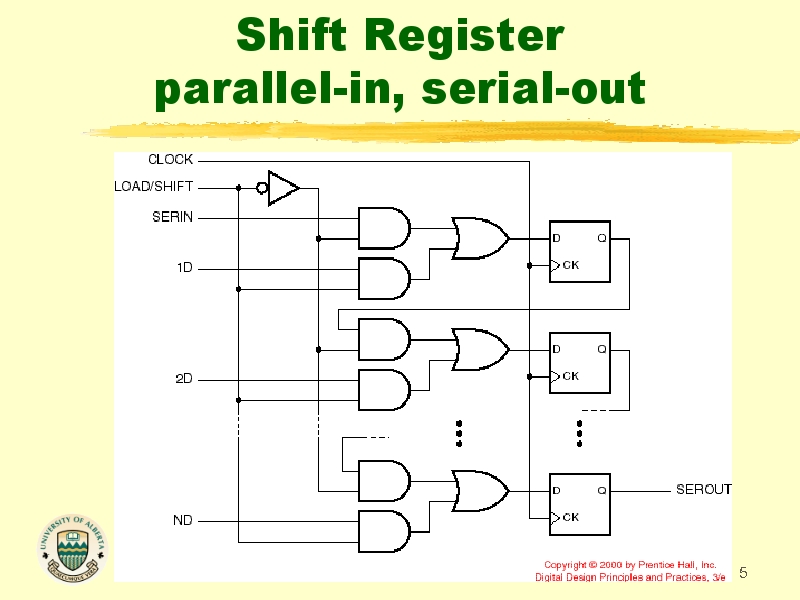
Okay, let's talk Series In Parallel Out Shift Registers. Sounds complicated, right? Like something only rocket scientists (or maybe your super-nerdy cousin) would understand. But I promise, it's not as scary as it sounds. Think of it like this: a digital version of the telephone game, but with less garbled information (hopefully!).
Imagine a line of people. Each person is a little memory unit, holding a single piece of information – a '1' or a '0'. In our game, someone whispers a secret to the first person. This is the "Series In" part. The secret, bit by bit, gets passed down the line. Each person shuffles their information over to the next person when a signal (a "clock pulse," fancy, huh?) tells them to.
Now, the "Parallel Out" part. Instead of waiting for the last person to whisper the entire secret back, everyone in the line simultaneously shouts out what they know. BOOM! The whole secret is revealed all at once. It's like instant information gratification!
Must Read
Unpopular Opinion Time!
Here's where things get controversial (maybe). I think Series In Parallel Out Shift Registers are secretly the unsung heroes of digital electronics. Everyone's always raving about microprocessors and AI, but these little guys are the workhorses behind the scenes. They're the reliable friends who always show up when you need them, diligently shifting and storing data.
Consider a digital thermometer. It reads the temperature, converts it to a digital signal, and then uses a shift register to send that information to the display. That sleek, user-friendly number staring back at you? Thank a shift register. And probably a good marketing team, but mostly the shift register.

Or think about converting data from a serial form (one bit at a time, like that whispered secret) to a parallel form (all bits at once). This is super useful when you're trying to get data from a slower input, like a sensor, to a faster processor. It's like taking a slow-moving convoy of trucks and instantly unloading all the goods onto a waiting train.
More Analogies Because Why Not?

Let's say you're baking cookies. The ingredients (data) are coming in one after another (serial in): flour, sugar, eggs, chocolate chips. The shift register is like your mixing bowl. It holds each ingredient until everything's there, then BAM! You pour the whole mixture onto the baking sheet (parallel out) and pop it in the oven.
Another one! Think of a ticket dispenser at an amusement park. People (data) arrive one at a time (serial in). The dispenser holds each person's info (in a virtual queue), and then spits out a whole batch of tickets at once (parallel out) to a group waiting to ride the rollercoaster.

Why This Matters (A Little)
Okay, you're probably not going to use this information at your next cocktail party (unless you're really trying to impress someone). But understanding the basics of shift registers helps you appreciate the complexity of the devices we use every day. It’s a tiny peek behind the curtain of the digital world.
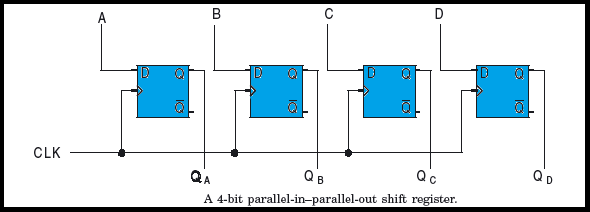
And who knows? Maybe you'll be the next person to invent a revolutionary gadget that relies on the humble Series In Parallel Out Shift Register. You could be the hero we didn't know we needed, solving problems we didn't even know existed, all thanks to understanding how to move bits around efficiently.
So, the next time you see a digital display, or use a sensor, or just generally appreciate the magic of modern electronics, remember the unsung hero: the shift register. It's probably working hard to make your life a little bit easier (and a little bit more connected).
Don't judge a book by its cover (or a component by its name). These little guys are more useful (and way less intimidating) than you might think. And that, my friends, is my (slightly) unpopular opinion.