
Romeo And Juliet Prologue Translation

Alright, gather 'round, folks! Let's talk Shakespeare. Specifically, that pesky little intro to Romeo and Juliet – the Prologue. You know, the bit nobody actually understands but nods along to anyway, pretending they’re fluent in Elizabethan English. I'm here to tell you, it’s not as scary as it looks. Think of me as your Shakespearean tour guide, minus the funny hat and mandatory "huzzah!"
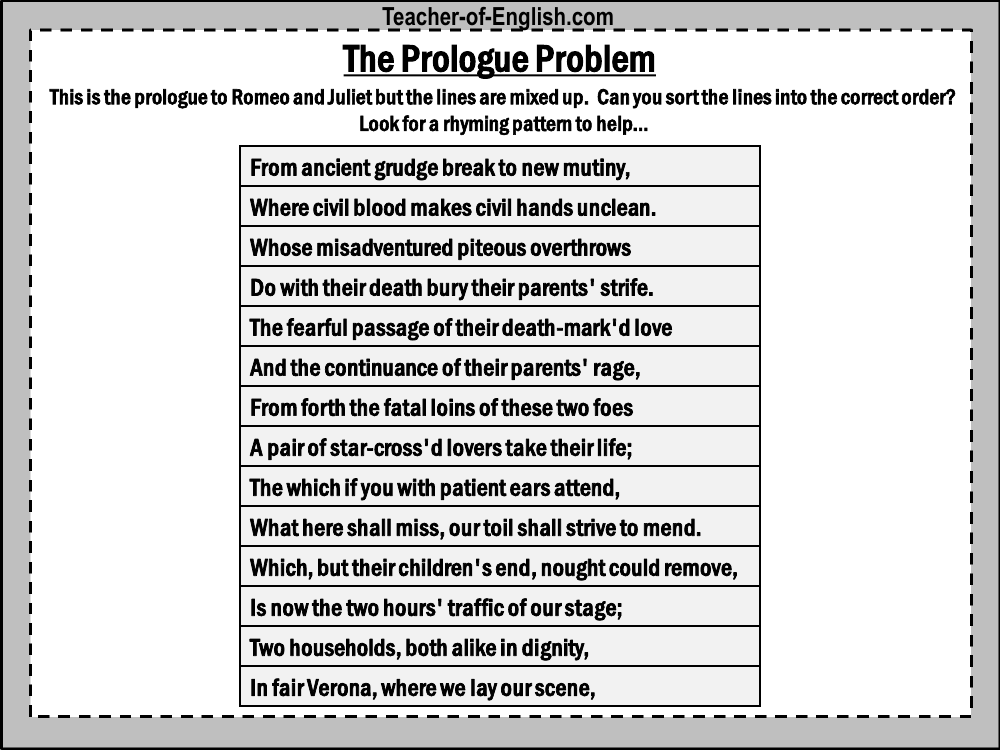
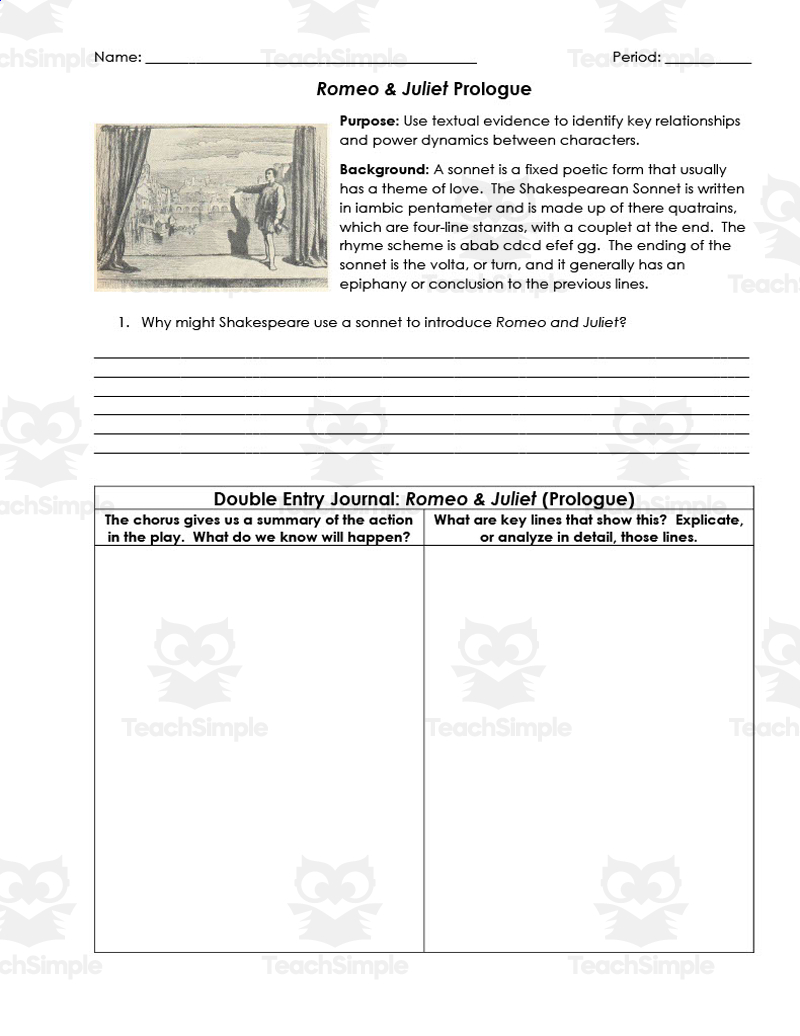
So, what is the Prologue? Well, imagine Shakespeare needed to give everyone the CliffsNotes version of the play before the curtain even went up. He basically drops the whole plot – spoiler alert, everyone dies – in a neat little 14-line sonnet. Efficient, right? Like a theatrical PowerPoint presentation, but in iambic pentameter. Which, by the way, sounds way more intimidating than it is. It just means there are ten syllables per line, alternating stressed and unstressed syllables. See? We’re already learning things!
Decoding the Elizabethan Dialect
Now, let's get down to brass tacks and translate this thing. First hurdle: the language. Shakespeare didn't speak like we do. He was all about "thee"s and "thou"s and verbs ending in "-eth." It's like trying to decipher a text message from your grandma, only with more poetry and less emojis.
Must Read
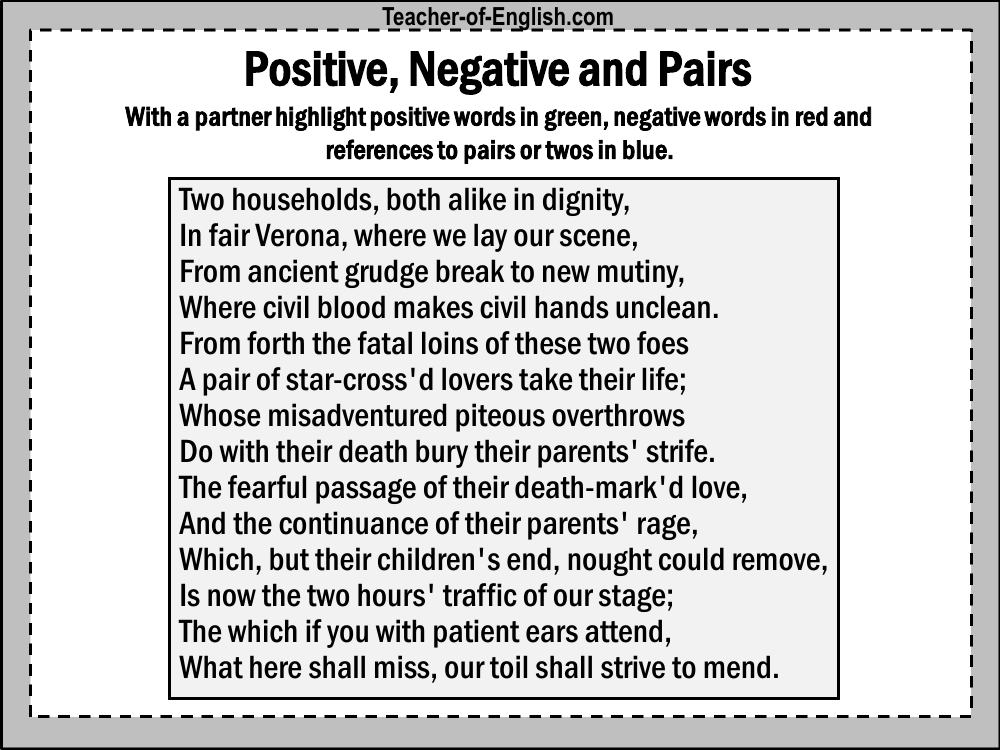
Take this line, for example: "Two households, both alike in dignity." Sounds fancy, right? But it simply means: "There are two families, and they're both kinda snooty." See? Not so hard! The key is to resist the urge to overthink it. Shakespeare wasn’t trying to win a Nobel Prize for ambiguity; he was just telling a story.
Another classic: "From forth the fatal loins of these two foes..." Okay, this one sounds a bit more intense. It's basically saying: "These two families are enemies, and their kids are gonna have some serious problems." “Fatal loins” is just a slightly dramatic way to say "descendants," or even just “kids.” Shakespeare loved his metaphors. He could probably make doing the dishes sound like an epic battle.
Breaking Down the Rhyme and Rhythm
But it's not just the words; it's the way they're arranged! Remember that iambic pentameter thing? It gives the Prologue a certain rhythm, like a heartbeat, thump-thump, thump-thump. That rhythm is crucial. It’s like the musical score behind the words, adding to the drama. Imagine reciting the Prologue to a beatbox track. Okay, maybe don't actually do that. But you get the idea.
And then there's the rhyme scheme: ABAB CDCD EFEF GG. Translation: Every other line rhymes for the first twelve lines, and then the last two lines rhyme. It's like a verbal puzzle, which makes it easier to remember… or at least makes your English teacher happy.
Why Even Bother?
So, why bother translating the Prologue in the first place? I mean, we already know what happens, right? Everyone dies! Mission accomplished! Well, understanding the Prologue gives you a deeper appreciation for the play. It sets the stage, introduces the themes (love, fate, family feuds), and tells you exactly what to expect. It's like watching the trailer before a movie, except way more poetic and potentially more confusing if you don’t pay attention.
Plus, knowing the Prologue makes you sound super smart at parties. Just casually drop a line like, "A pair of star-cross'd lovers take their life," and watch everyone's jaw drop. Bonus points if you can recite it in a dramatic voice. (Warning: may result in eye-rolling from your friends.)
But seriously, understanding the Prologue is like unlocking a secret code to Romeo and Juliet. It's not just about knowing the plot; it's about understanding how Shakespeare tells the story. It's about appreciating the beauty of the language, the rhythm of the verse, and the timeless themes that still resonate with us today.
Let’s Translate! A Quick Example
Okay, let’s do a quick example: "The fearful passage of their death-mark'd love."

Translation? “The story of their doomed love affair is scary.” Boom! See? Not so scary after all!
Shakespeare’s Prologue isn't some impenetrable fortress of Ye Olde English. It's a cleverly crafted introduction to one of the greatest love stories ever told. So next time you hear it, don't panic. Just remember my incredibly helpful (and hilarious) guide, and you'll be fluent in Shakespeare in no time. Well, maybe not fluent, but at least you won't be completely lost. And that, my friends, is a victory in itself!
Now, go forth and conquer Shakespeare! And maybe bring a dictionary. Just in case. Good luck, and may the Bard be with you! Remember, it's all about love, death, and slightly confusing language!