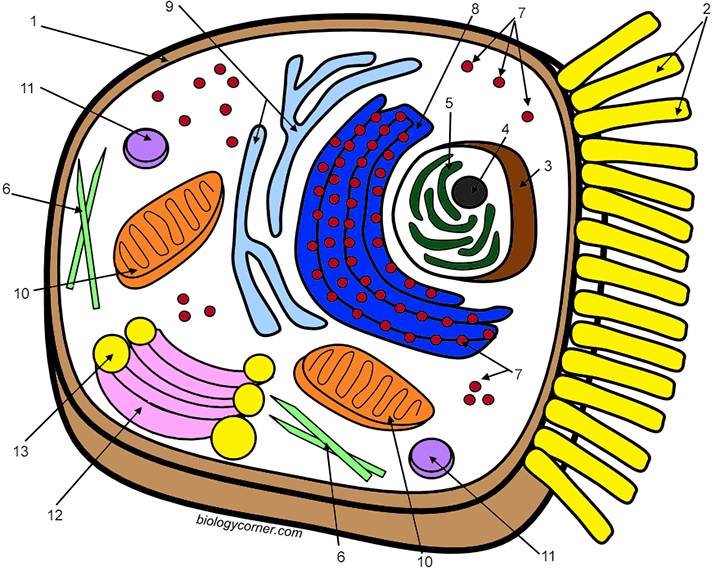
Plant And Animal Cell Coloring Page Answer Key

Okay, picture this: I'm sprawled on the floor, surrounded by half-eaten cookies (don't judge!), desperately trying to remember the difference between a Golgi apparatus and an endoplasmic reticulum. My niece, Lily (bless her inquisitive little heart), had just cornered me with her science homework. A coloring page, naturally. Plant and animal cells. And, wouldn't you know it, I felt like I was back in 8th grade, completely lost.
That’s when it hit me: Where does one even find a reliable plant and animal cell coloring page answer key these days? The internet, obviously. But sifting through all the, uh, "educational" (read: sketchy) websites felt like a monumental task. Hence, this little brain dump. Let's navigate the cell-coloring chaos together, shall we?
First off, why coloring pages? Seriously, what’s the deal? Turns out, there's actually some legit science behind it. Coloring helps with visual learning. You’re actively associating a specific structure (like, say, the mitochondria – the powerhouse of the cell! Remember that?) with a particular color. It's way more engaging than just staring at a textbook, trust me. (Though maybe textbooks should just come with built-in coloring sections? Just a thought.)
Must Read
So, you've got your coloring page. You’ve got your crayons (or, let's be honest, your fancy colored pencils). Now you need the answers. Here's the thing: the ideal answer key is going to be specific to the coloring page you’re using. Makes sense, right? Not all coloring pages are created equal. Some are super detailed, others are… well, let's just say they're "artistically interpreted."
Your best bet? Try these strategies:

- Check the Source: Did the coloring page come from a textbook or a reputable educational website? They often provide accompanying answer keys or at least labeled diagrams.
- Google Image Search is Your Friend: Seriously. Type in "plant cell diagram" or "animal cell structure labeled," and you'll find a treasure trove of images. Compare these to your coloring page and identify the structures.
- Khan Academy to the Rescue: This is my go-to for anything science-related. They have amazing videos and articles about cells. While they might not have a specific coloring page answer key, they'll give you the knowledge to figure it out yourself. (And, hey, learning something is never a bad thing!)
- Ask the Teacher (or a Smart Friend): Don't be afraid to reach out for help! That's what teachers are there for. And if you have a friend who's a science whiz, bribe them with cookies. (Works every time.)
Now, about those specific cell structures… let's do a quick refresher. (Don't worry, I'll keep it brief.)
For Animal Cells, think about:
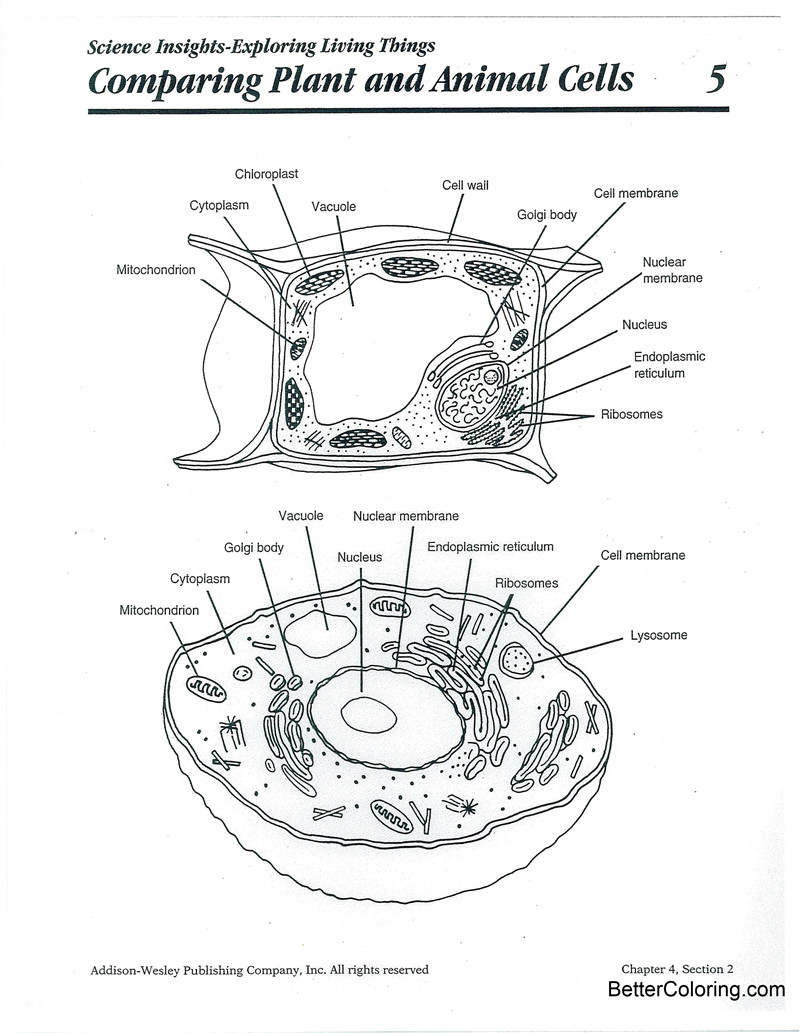
- Cell Membrane: The outer boundary, like a security guard.
- Nucleus: The control center, housing the DNA.
- Cytoplasm: The jelly-like substance filling the cell.
- Mitochondria: The powerhouses, producing energy.
- Ribosomes: Protein factories.
- Endoplasmic Reticulum (ER): A network of membranes involved in protein and lipid synthesis. (Smooth ER and Rough ER – remember the difference!)
- Golgi Apparatus: Packages and modifies proteins.
- Lysosomes: Clean-up crew, breaking down waste.
Plant Cells have all of the above, PLUS:
- Cell Wall: A rigid outer layer providing support. (Made of cellulose – fun fact!)
- Chloroplasts: Where photosynthesis happens – making food from sunlight!
- Vacuole: A large storage sac, often filled with water.
See? Not that scary. And coloring it all in? Actually kind of relaxing. (Maybe I'll make it a new hobby. "Adult Cell Coloring Books" – I'm onto something!) Just remember that a good plant and animal cell coloring page answer key is about more than just matching colors to labels. It's about understanding the function of each structure and how they all work together to keep the cell alive and kicking.
So, grab your crayons, fire up Google, and get coloring! You might just learn something. And if all else fails, just tell Lily that the mitochondria are always orange. She'll probably believe you. (Just kidding… mostly.)