
Physical And Chemical Properties Of Iron Metal
Ever think about what your frying pan, your car, or even the towering skyscrapers in a city are made of? Chances are, iron plays a starring role! It's a super common metal, but it's also surprisingly fascinating. Let's dive into the world of iron and explore its properties in a way that's, well, not boring at all!
Physical Properties: The Iron You Can See and Touch
Let's start with the stuff you can easily observe. These are iron's physical properties – things you can see, feel, and measure without changing what iron is. Think of it like describing a friend's appearance without knowing their personality.
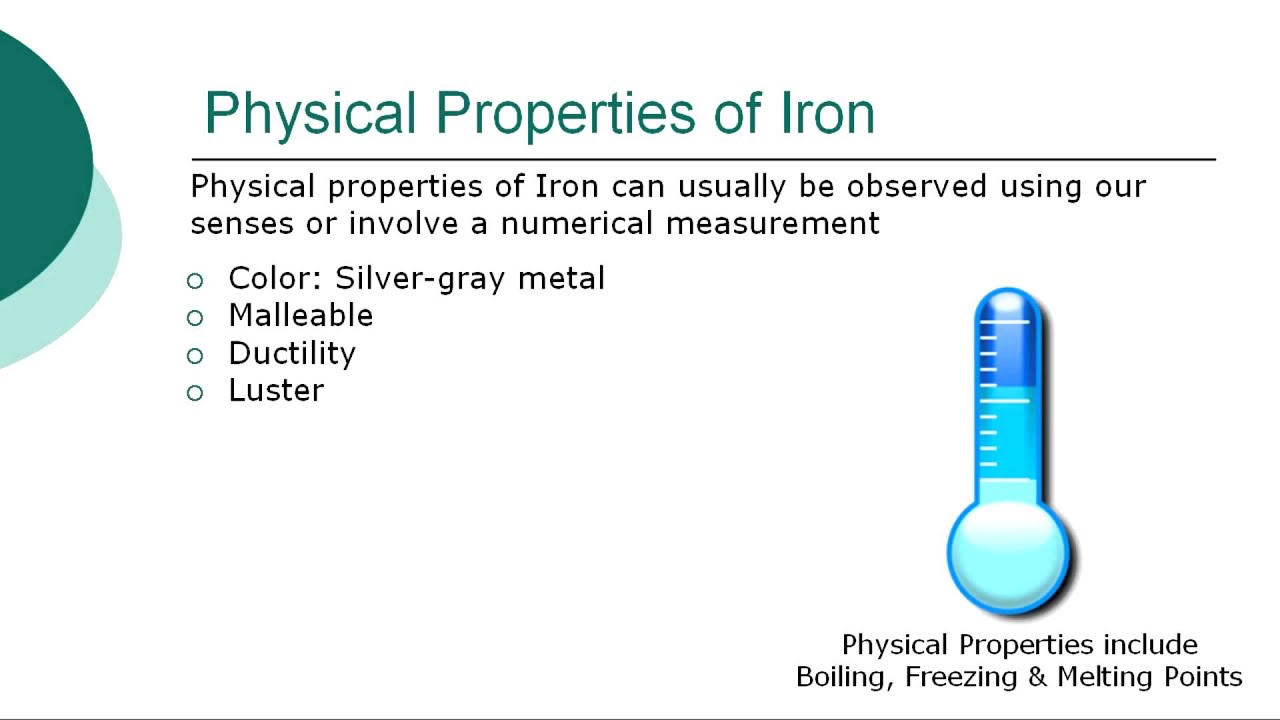
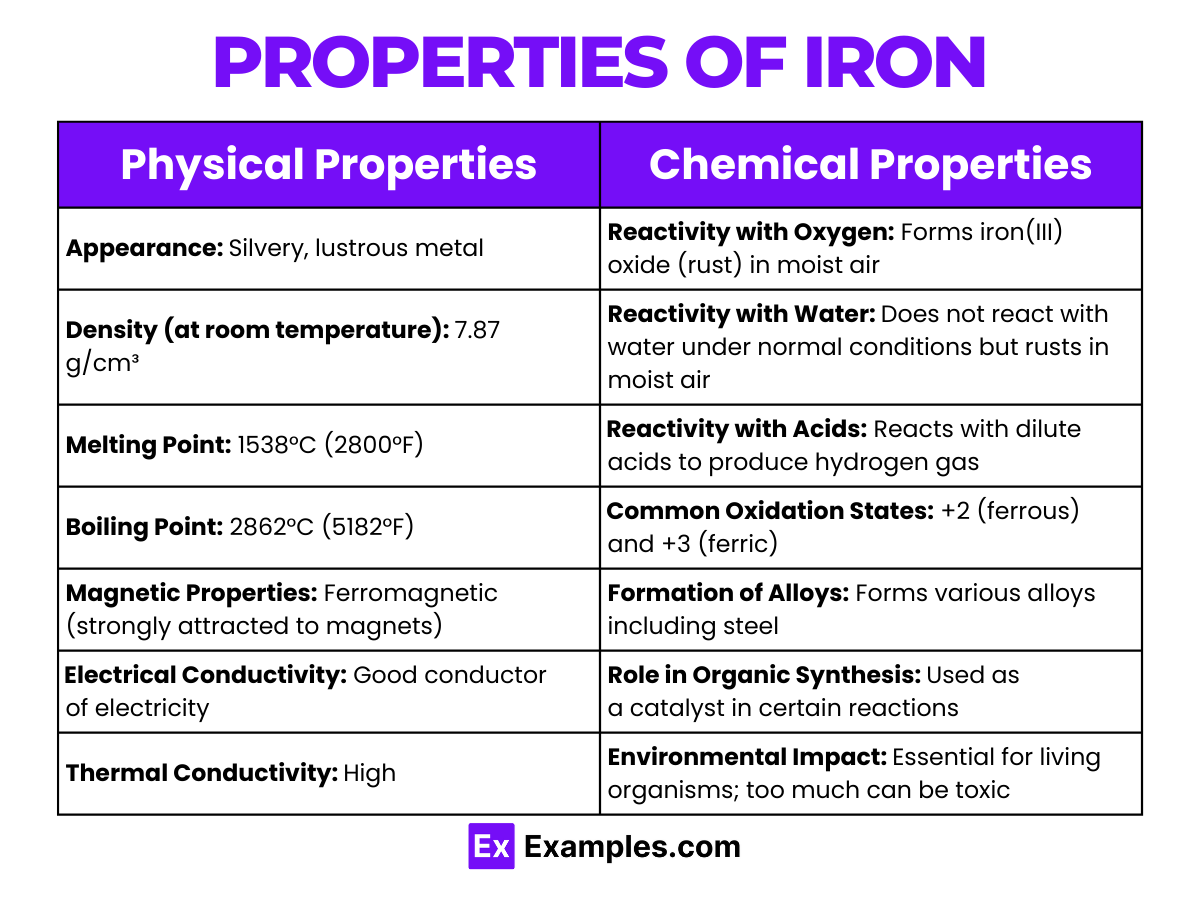
First off, iron is known for its signature silvery-gray color. It's not the shiniest metal out there (think more dull silver than dazzling chrome), but it has a certain understated elegance. Have you ever noticed how cast iron skillets have that slightly darker, almost blackish-gray look? That's still iron, just with a bit of oxidation (more on that later!).
Must Read
Iron is a solid at room temperature. Imagine trying to build a car out of a metal that melts at room temp! It wouldn’t work, right? Iron's high melting point (around 1538°C or 2800°F) makes it incredibly useful for things that need to withstand high heat, like engines or industrial machinery.
Speaking of strength, iron is known for its malleability and ductility. Okay, those are big words! Malleability means you can hammer it into thin sheets. Think of the iron sheets used in roofing back in the day! Ductility means you can draw it into wires. The electrical wiring in your home? Yeah, iron plays a big part in getting the copper wire refined and to your house!

Another important property is that iron is ferromagnetic. This means it's strongly attracted to magnets. Ever played with magnets as a kid? Many of those were sticking to iron or steel (which is mostly iron!). This property is crucial for things like electric motors, generators, and, of course, those cute magnetic fridge decorations.
Chemical Properties: Iron's Reactions and Transformations
Now for the fun part – how iron reacts with other substances. These are iron's chemical properties, and they describe how iron changes its identity when it interacts with the world around it. Think of it like learning about a friend's personality – how they react in different situations reveals their true nature.
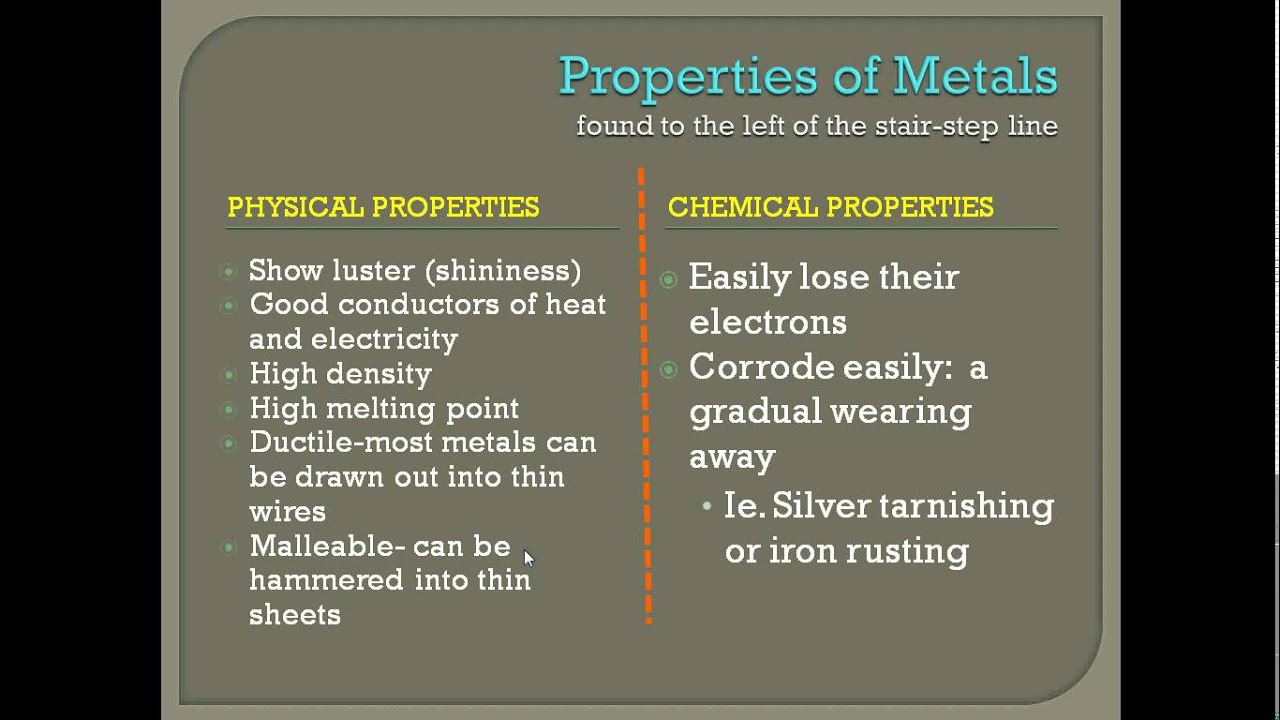
The most famous chemical property of iron? Rusting! It's technically called oxidation, and it happens when iron reacts with oxygen and water in the air. That reddish-brown flaky stuff that forms on old metal? That's iron oxide, or rust. While rust is a nuisance, it's a perfect example of iron's reactivity. Think of it as iron's way of saying, "Hey, I'm not invincible!"
But don't worry, we can protect iron from rusting. Think about the shiny chrome on some car parts. That's often a thin layer of chromium that prevents the iron underneath from reacting with oxygen. Painting iron also acts as a protective barrier, shielding it from the elements. So next time you see a freshly painted fence, remember it's not just for looks; it's a shield against rust!
Iron also reacts with acids. If you've ever seen a science experiment where metal dissolves in acid, chances are iron was involved. This reaction is used in various industrial processes, like cleaning metal surfaces or extracting iron from its ore (the rock it's found in).

Why Should You Care? Iron's Everyday Impact
Okay, so we've talked about physical and chemical properties. But why should you, a regular person, care about all this? The answer is simple: Iron is everywhere! It's a fundamental building block of our modern world.
Think about your home. Your refrigerator, oven, washing machine, and countless other appliances all rely on iron or steel components. The pipes that carry water to your faucet? Often made of iron. The tools you use for gardening or home repairs? Most likely iron-based.
Outside your home, iron's presence is even more pronounced. Cars, trains, bridges, buildings – iron is a key structural material in all of them. It's durable, relatively inexpensive, and can be molded into various shapes, making it ideal for large-scale construction and manufacturing.
Beyond the practical stuff, iron is also essential for your health! It's a crucial component of hemoglobin, the protein in red blood cells that carries oxygen throughout your body. Iron deficiency can lead to anemia, a condition that causes fatigue and weakness. So, eating your leafy greens and iron-fortified foods is vital for staying healthy and energetic.
So, the next time you encounter something made of iron, take a moment to appreciate its remarkable properties. It's not just a dull, gray metal; it's a versatile, essential element that shapes our world in countless ways. From skyscrapers to sandwiches, iron is a silent hero in our everyday lives!