
Phosphorylation Of A Protein
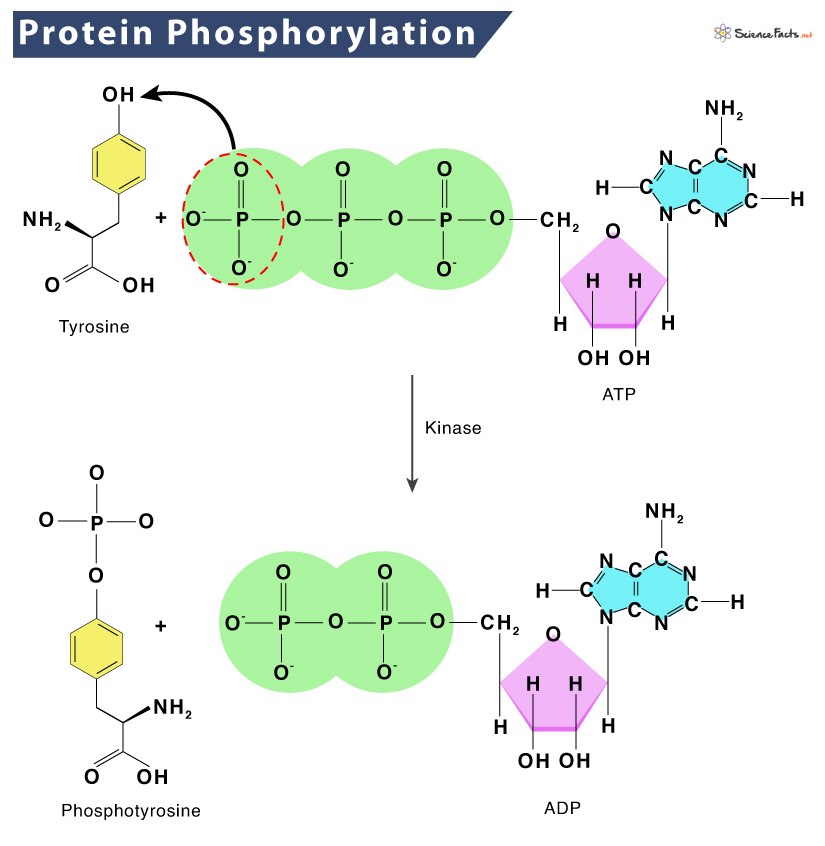
Ever wonder how your cells know what to do? It's like they're tiny computers, constantly receiving and processing signals. One of the coolest ways they do this is through a process called phosphorylation. Think of it as a cellular light switch – flicking proteins 'on' and 'off' to trigger different actions. It might sound complicated, but understanding the basics of phosphorylation opens a window into the amazing world of how our bodies work! We're going to break it down in a way that's easy to grasp and hopefully, even fun!
So, why should you care about phosphorylation? Well, it depends on who you are!
For Beginners: Imagine you're building with LEGOs. Phosphorylation is like adding or removing a special brick that changes the whole structure and function of your LEGO creation. It's a simple way to control complex processes within your cells. It helps them grow, divide, and communicate with each other. Without it, things would be chaotic! Think of it as the cellular equivalent of using a remote control to change channels on your TV – it sends a quick signal to make something happen.
Must Read
For Families: Understanding phosphorylation can help you appreciate the complexity and resilience of the human body. When you get sick, phosphorylation plays a vital role in your immune system's response. It’s involved in everything from fighting off infections to repairing damaged tissues. Knowing this can make you feel more connected to your own health and well-being. Plus, you can explain to your kids how their bodies are constantly working hard to keep them healthy, all thanks to processes like phosphorylation!

For Hobbyists (Gardeners, Foodies, etc.): Even outside of the human body, phosphorylation is essential. In plants, it helps regulate photosynthesis and nutrient uptake. So, a thriving garden relies, in part, on this process! In food science, phosphorylation can affect the texture and stability of food products. It's involved in everything from making cheese to brewing beer. So, the next time you enjoy a delicious meal or a refreshing drink, remember that phosphorylation played a role!
There are many variations of phosphorylation, each with its own specific effect. The most common type involves adding a phosphate group (a small molecule containing phosphorus and oxygen) to a protein. This phosphate group acts like a molecular tag, changing the protein's shape and activity. Different kinases are responsible for adding these tags, and phosphatases remove them, creating a dynamic balance. For example, adding a phosphate might activate an enzyme to break down sugar for energy, while removing it might stop that process.

Getting started with understanding phosphorylation doesn't require a science degree! Here are a few practical tips:
- Watch videos online: There are tons of great animations that explain the process visually.
- Read simple articles: Many science websites offer accessible explanations of complex topics.
- Focus on the bigger picture: Don't get bogged down in the details. Understand the basic principle of "on/off" switching.
- Relate it to real-world examples: Think about how phosphorylation might be involved in your daily life, from exercising to digesting food.
Phosphorylation is a fascinating and fundamental process that underlies many aspects of life. While the scientific details can be complex, the core concept is surprisingly straightforward. By understanding this simple "light switch," you can gain a deeper appreciation for the incredible complexity and elegance of the biological world. So, go ahead, dive in and explore the world of phosphorylation! You might just find it as engaging and useful as we do!

