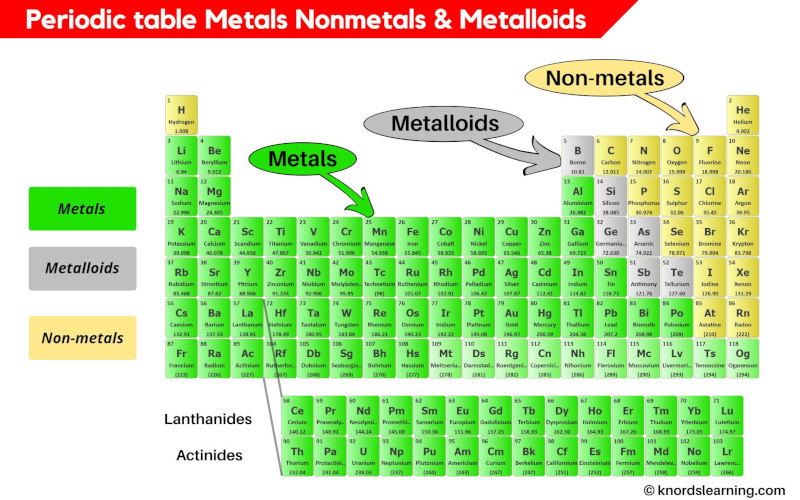
Periodic Table Metalloids Metals And Nonmetals
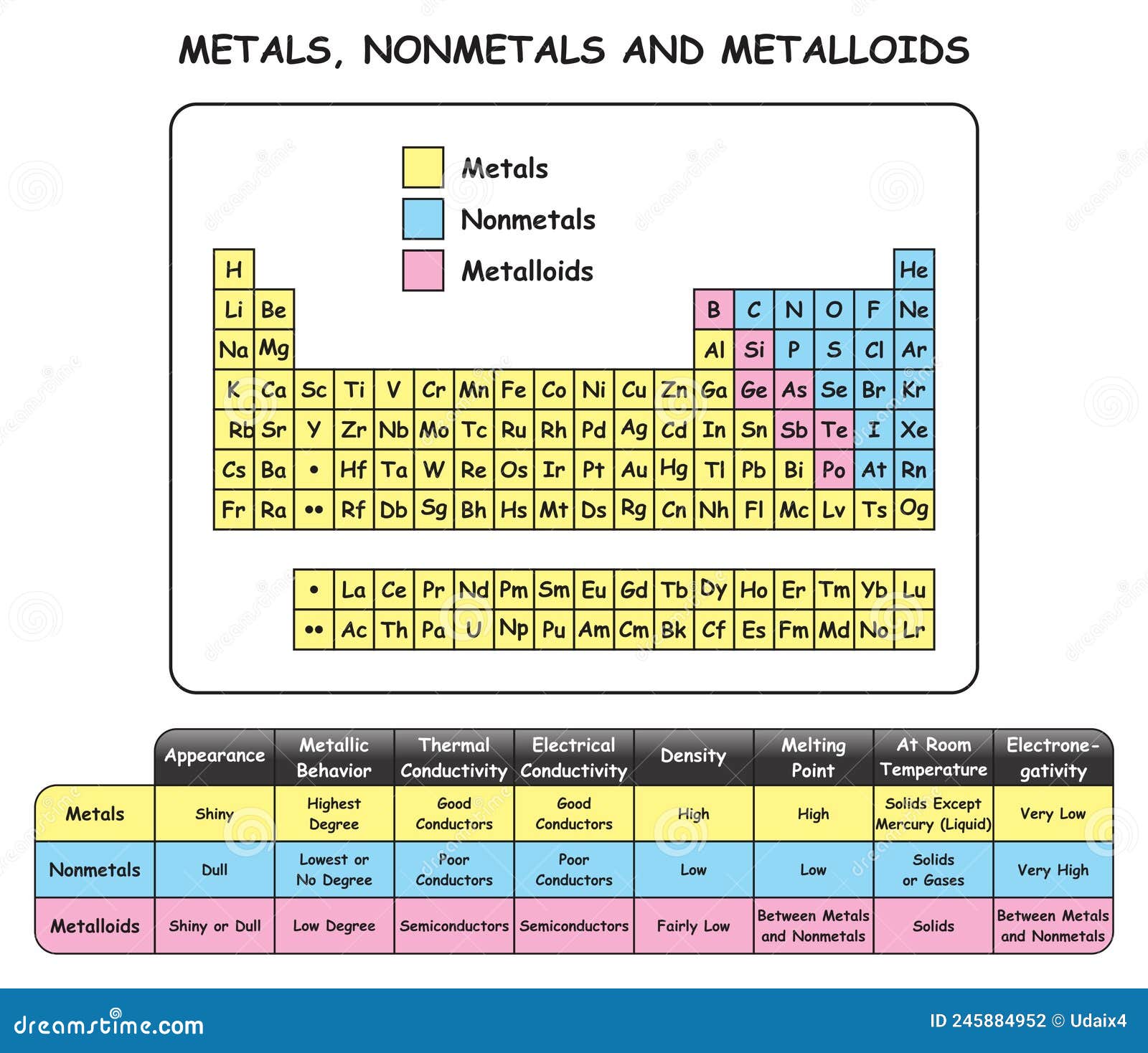
Ever stare at that colorful chart in the science classroom, the one that looks like a bizarre collection of alphabet soup, and think, "Ugh, the Periodic Table"? Well, prepare to be surprised! It's not just a bunch of squares; it's a story! A story about the fundamental building blocks of everything, told by a cast of quirky characters: the Metals, the Nonmetals, and the oh-so-ambiguous Metalloids.
The Metals: Shiny Superstars
Think of Metals as the rock stars of the element world. They're the headliners. They’re shiny, they conduct electricity like it's their job (because it is), and they're generally pretty agreeable. Think of gold, silver, and copper – all gleaming, valuable, and useful. They're the ones who make your jewelry sparkle, your phone work, and your car go.
They’re also surprisingly reactive. Sodium, for example, is so eager to bond with other elements that it explodes on contact with water! (Don't try this at home, kids!). Potassium is another firecracker. It just shows that beneath that metallic sheen, there's a lot of pent-up energy. These metals are like the celebrities who are always getting into trouble, but we still love them anyway.
Must Read
And let's not forget iron! Our blood needs it to carry oxygen, and it's the backbone of skyscrapers. We quite literally wouldn't be standing without the Metals. Talk about carrying the weight of the world!
The Nonmetals: Mysterious Misfits
Now, let's talk about the Nonmetals. These are the introverts of the element world. They're not shiny, they don't conduct electricity very well (sorry, no glowing nonmetal lights anytime soon!), and they can be downright antisocial. Oxygen, however, while a nonmetal, is absolutely critical for life, that is, breathing. Nitrogen, the dominant gas in our atmosphere, is also a nonmetal. Without those two nonmetals, life as we know it wouldn't exist.
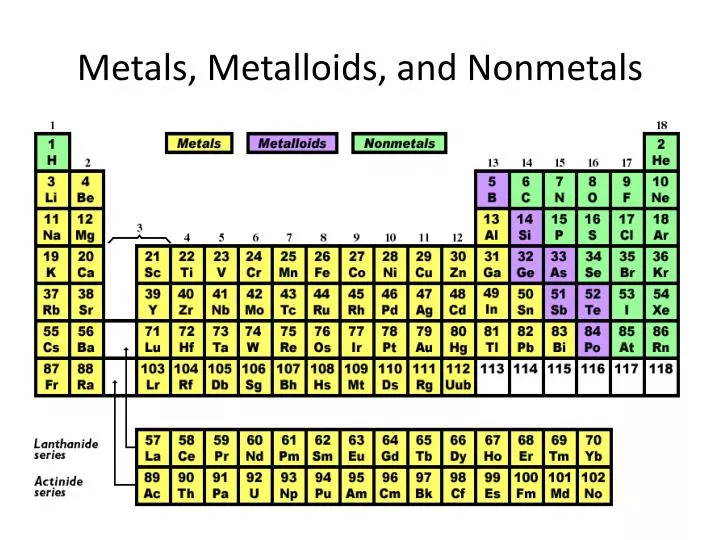
Some nonmetals exist as gases, some as liquids, and some as solids. Sulfur, for instance, is that yellow stuff with a pungent smell. And carbon? Carbon is the superstar element that makes up life. We are all carbon based lifeforms. You are made up of carbon. Graphite, a form of carbon, is used in pencils. It is also used as a component of some lubricant.
While the Metals are busy hogging the spotlight, the Nonmetals are quietly holding everything together, like the stage crew making sure the show runs smoothly.
The Metalloids: The In-Betweeners
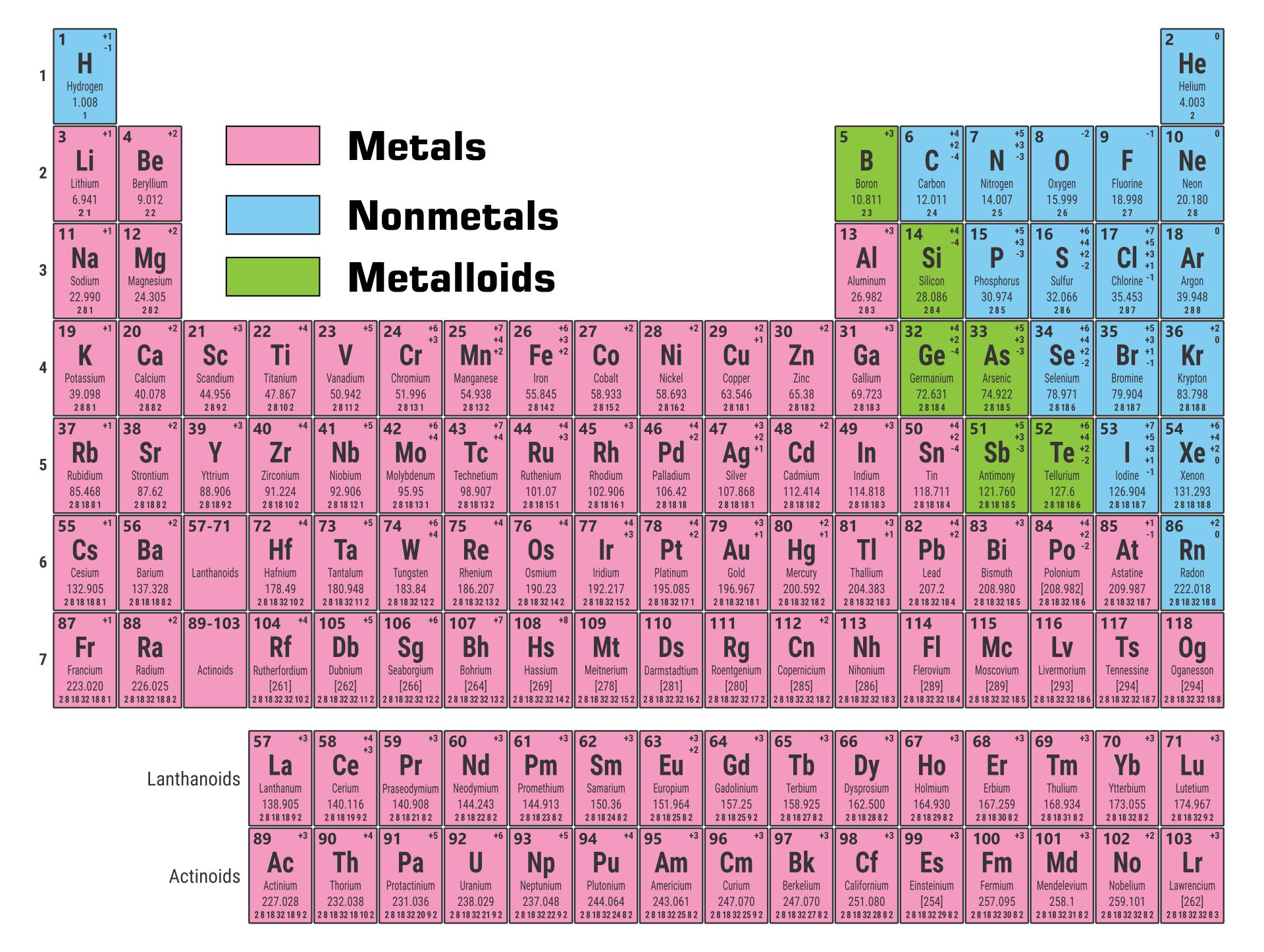
And then we have the Metalloids. These are the enigmatic ones, the rebels who don't fit neatly into either category. They have properties of both Metals and Nonmetals, making them incredibly useful (and a little confusing).
Silicon is the star of the Metalloid group. It's the backbone of the computer industry! You're reading this article because of silicon. It acts as a semiconductor, meaning it can conduct electricity under certain conditions. Think of them as the ultimate diplomats, bridging the gap between the Metals and the Nonmetals.

"The Metalloids are the 'it depends' of the element world," a whimsical chemist once said.
Metalloids also show us that things aren't always black and white. Sometimes, the most interesting qualities arise from being a little bit of both.
So, the next time you glance at the Periodic Table, don't just see a chart. See a family portrait of elements, each with its own unique personality and contribution to the grand story of the universe. The rock-star Metals, the quiet Nonmetals, and the flexible Metalloids – they all have their part to play in making up everything around us. From the air you breathe to the screen you’re reading this on, it’s all thanks to this incredible team of elements working together!