
Pathophysiology Of Congestive Heart Failure Pdf
Okay, so picture this: you're your heart. You're a pump, a real go-getter, circulating blood throughout the entire body. You’re feeling good, you’re keeping things moving. Think of it like being a DJ at the world's most important party. Everyone needs you!
But then, BAM! Life throws a curveball. Suddenly, you're not feeling so hot. Maybe you've been working too hard, or maybe someone’s been throwing metaphorical (or literal!) stones at you. Whatever it is, you're starting to falter. This, my friends, in a nutshell (a very, very simplified nutshell), is the beginning of congestive heart failure, or CHF. We're basically talking about a pump that's lost its mojo. Let’s dive in!
The Plumbing Problem: What’s Actually Going On?
Think of your heart like a house with four rooms: two atria (the receiving rooms upstairs) and two ventricles (the pumping powerhouses downstairs). Now, CHF isn't one specific disease, but rather the end result of several problems. It's like a domino effect that messes with the entire plumbing system of your circulatory system.
Must Read
Essentially, your heart can't pump enough blood to meet your body's needs. It’s like trying to fill a swimming pool with a garden hose – it’s technically possible, but you'll be there for a very long time. And everyone will be mad at you for not filling the pool faster.
There are two main ways this can happen. The heart can be too weak to pump properly (systolic failure), or it can be too stiff to fill properly (diastolic failure). Imagine trying to squeeze water out of a rock versus trying to pump jello – both are equally frustrating, just in different ways!

Systolic failure is when the heart muscle is weak and can't contract forcefully enough. The heart chambers get bigger, like stretching out an old rubber band. It can’t snap back. The ejection fraction - the percentage of blood pumped out with each beat - goes down. It’s like your heart is saying, "I’m trying, I really am, but I just don't have the oomph!"
Diastolic failure is where the heart muscle becomes stiff and doesn’t relax properly between beats. The ventricles can't fill with enough blood because they're so rigid. Think of it like trying to inflate a tire that’s already rock hard. This means the blood backs up, often into the lungs, causing shortness of breath. Fun times!
The Body's Hilarious (and Horrifying) Response
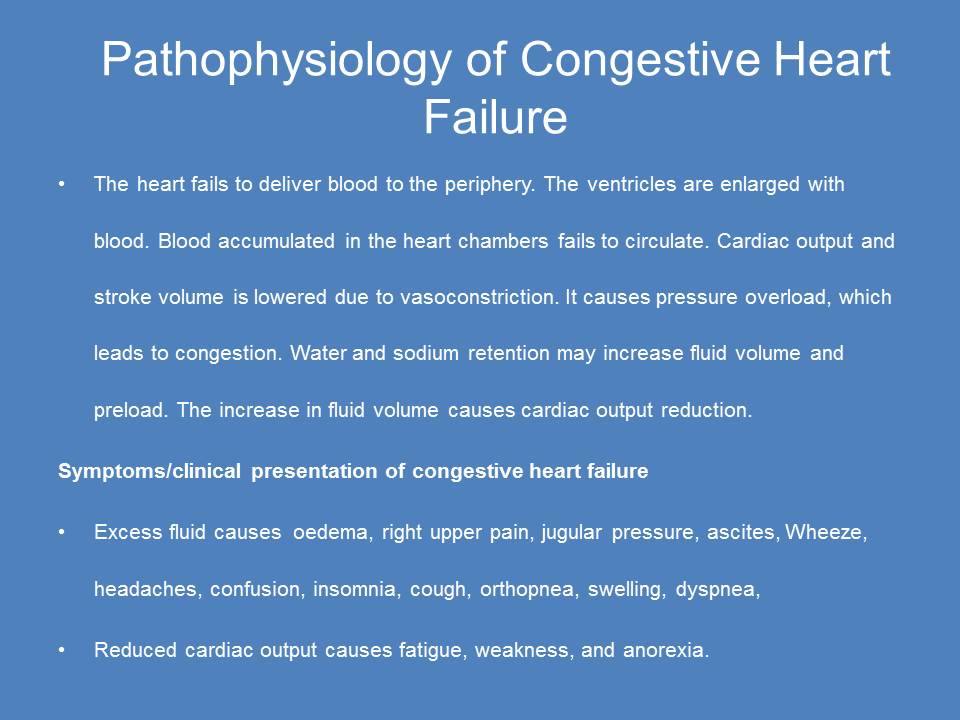
Your body, being the resourceful thing that it is, tries to compensate. It's like when your car starts sputtering, and you try everything – changing gears, yelling at the dashboard, maybe even kicking the tires (don't do that).
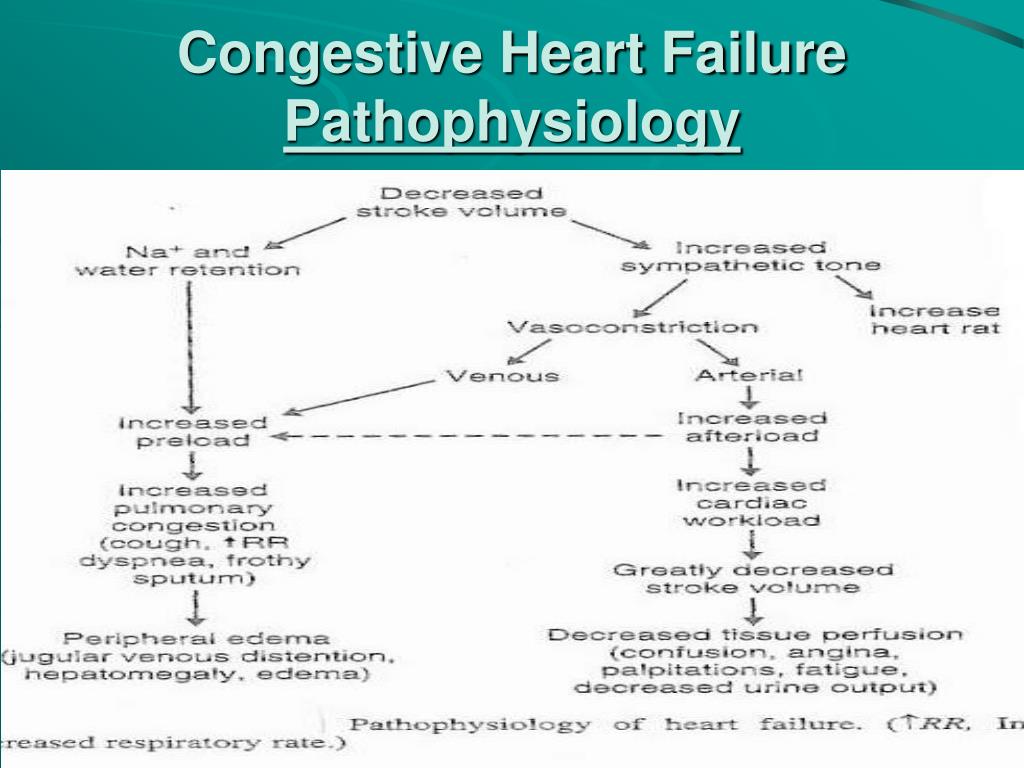
One of the ways your body tries to help is by releasing hormones that make your heart beat faster and stronger. This is great in the short term! It’s like giving your heart a double espresso. But over time, this extra workload just tires your heart out even more. Imagine running a marathon fuelled only by coffee. You’d crash and burn eventually!

Another thing your body does is retain more fluid. Think of it like trying to increase the water pressure in your garden hose by... adding more water to the lake. Sure, it technically increases the amount of water available, but it also makes everything much, much heavier. This extra fluid can back up into your lungs (hello, shortness of breath!) and cause swelling in your legs and ankles (edema). Now you have a really good reason to avoid wearing shoes.
Your body also activates something called the renin-angiotensin-aldosterone system (RAAS). This system increases blood pressure and fluid retention. It’s like your body is panicking and turning everything up to eleven! Again, this helps in the short term, but in the long term, it just makes things worse for your already struggling heart. It’s like trying to fix a leaky faucet with a fire hose.
The Downward Spiral (with a Hint of Hope)
So, what causes this whole mess in the first place? Common culprits include: high blood pressure, coronary artery disease (blocked arteries), heart valve problems, and cardiomyopathy (disease of the heart muscle itself). Basically, anything that damages or weakens your heart can lead to CHF. It's like a domino effect that ends with a very tired and grumpy heart.
The sad part is that CHF is a progressive condition, meaning it tends to get worse over time. The good news? With proper treatment – including medication, lifestyle changes (like diet and exercise), and sometimes even surgery – people with CHF can live longer and healthier lives. It’s not a cure, but it’s a way to manage the symptoms and slow down the progression of the disease. Think of it as giving your heart a vacation, a personal trainer, and a really good therapist all rolled into one!
The key takeaway here is that CHF is a complex condition with a variety of causes and consequences. Understanding the underlying pathophysiology – the plumbing problems and the body's attempts to fix them – is essential for effective treatment and management. So, take care of your heart! It's the DJ of your life, and you want it to keep the party going for as long as possible.