
Near The Ceiling Of A Room The Air Is Warmer

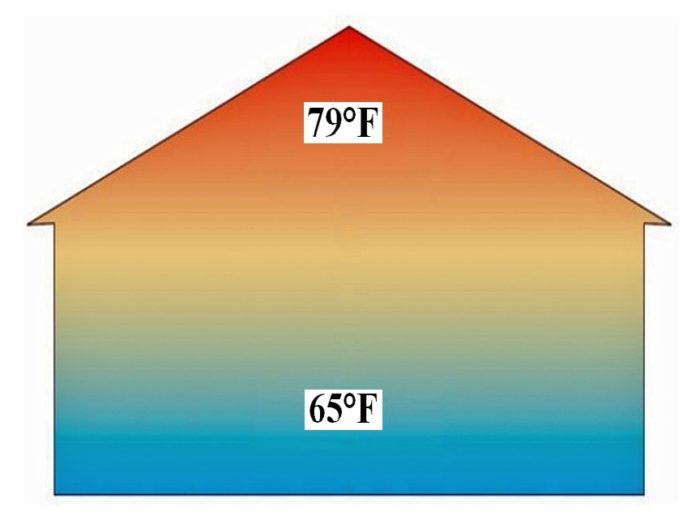
Ever walked into a room and thought, "Man, it feels a little stuffy up here"? Or maybe you've noticed your cat inexplicably perched on top of the bookshelf? There's a simple, everyday explanation for that: Near the ceiling, the air is warmer.
Yeah, yeah, you might be thinking, "Okay, science lesson. Wake me when it's over." But hold on! This isn't some dry physics lecture. Understanding this simple fact can actually make your life a little more comfortable (and maybe even save you some money!). Think of it as a superpower: "The Amazing Ability to Understand Air Temperature!" (Okay, maybe not that amazing, but still pretty useful.)
Why is it Warmer Up There? The Cozy Explanation
It all boils down to something called convection. Imagine your room is a giant pot of soup. You turn on the stove (your heater), and the soup (air) at the bottom gets hot. Hot soup (air) is less dense, so it rises to the top. As it rises, it cools down and eventually sinks back down, creating a circular motion.
Must Read
That's basically what's happening in your room! Your heater (or even the sun shining through the window) warms the air near the floor. This warm air rises, carrying its heat with it. So, all that warm air tends to accumulate near the ceiling, making it the warmest spot in the room.
Think of it like a little party going on above your head, and you're invited (sort of).

Relating it to Your Daily Life: Practical Examples
So, why should you care about this temperature difference? Here are a few relatable scenarios:
- Your Thermostat Placement: Where's your thermostat located? If it's near the floor, it's measuring the cooler air. The ceiling might be toasty warm, but your thermostat thinks it's still freezing! This can lead to over-heating and higher energy bills. Placing it higher up can give you a more accurate reading of the room's overall temperature.
- Baby's Room Temperature: Are you constantly checking the temperature in your baby's room? Remember that what you feel at your height might be different from what your baby feels near their crib, which is closer to the floor. Make sure the room is comfortably warm at their level, not just at yours.
- Loft Bedrooms: Ever slept in a loft bedroom and felt like you were in a sauna? Now you know why! All the warm air from downstairs rises and gets trapped up there, making it significantly warmer than the rest of the house. A fan can help circulate the air and even things out.
- High Ceilings: Got a house with cathedral ceilings? They're beautiful, but they can also contribute to heat loss. All that warm air rises to the top, leaving the lower parts of the room feeling chilly. Ceiling fans are a must to push that warm air back down.
- Why Cats Love High Places: Remember that cat on the bookshelf? They're not just being aloof (okay, maybe a little). They're also enjoying the warmest spot in the room! Smart kitty.
A Little Story: The Case of the Mysterious Draft
I once had a friend who swore there was a draft in their living room. They spent weeks trying to find the source, sealing windows and doors, but nothing seemed to work. Turns out, the "draft" was just the difference in temperature between the ceiling and the floor! The cool air near the floor felt like a draft in comparison to the warmer air above.

The solution? A strategically placed fan to circulate the air and even out the temperature.
Why You Should Care: Comfort and Savings!
Understanding that warm air rises might seem like a minor detail, but it can have a significant impact on your comfort and your wallet! By considering this simple principle, you can:
- Improve your home's energy efficiency
- Create a more comfortable living environment
- Avoid unnecessary heating costs
- Understand your cat's strange behavior (maybe)
So, the next time you walk into a room, take a moment to consider the temperature at different levels. You might be surprised at what you discover!
Remember: a little bit of knowledge can go a long way (especially when it comes to staying warm and saving money!). Now go forth and conquer the mysteries of indoor air temperature!
