Metal Finishing For The Biotechnology Industry

Ever wonder why that fancy stainless steel water bottle keeps your water so clean and doesn't leach weird tastes? Or why medical implants are so incredibly smooth? Well, a big part of that is thanks to the magic of metal finishing. And when it comes to the biotechnology industry, metal finishing becomes absolutely critical. Think of it as the superhero behind the scenes, ensuring our medicines, medical devices, and research tools are safe and effective.
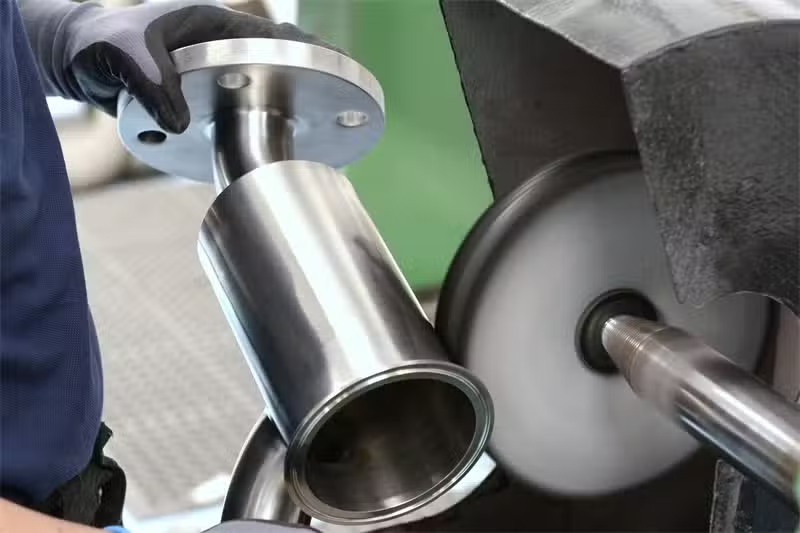
Okay, metal finishing might sound like something straight out of a sci-fi movie, but it's actually a very down-to-earth process. Simply put, it's about enhancing the surface of metal objects – making them stronger, smoother, more resistant to corrosion, and even more visually appealing. Imagine your kitchen sink. If it wasn't properly finished, it would probably rust and become a breeding ground for bacteria. Yuck!
Why Does Biotechnology Need Super-Shiny Metal?
So, why is all this important for biotechnology? Well, the biotech industry relies on incredibly precise and sensitive processes. Any contamination could throw off research, ruin a batch of medicine, or even put patients at risk. Imagine baking a cake with a dirty pan – not exactly appetizing, right? Similarly, using improperly finished metal equipment in biotech could lead to disastrous results.
Must Read
Here are a few key reasons why metal finishing is a big deal in biotechnology:
- Purity is paramount: Biotech processes require extremely pure substances. Metal finishing helps create surfaces that are inert, meaning they won't react with or contaminate the materials being processed. No unwanted chemical reactions allowed!
- Corrosion resistance: Harsh chemicals and rigorous cleaning procedures are common in biotech. Metal finishing protects equipment from corrosion, ensuring it lasts longer and maintains its integrity. Think of it as sunscreen for metal – protecting it from the harsh rays of the environment (in this case, aggressive chemicals).
- Cleanability: Sterility is non-negotiable. Metal finishing creates smooth, easy-to-clean surfaces that prevent bacteria and other microorganisms from clinging and multiplying. It’s like having non-stick cookware – everything slides right off!
- Precision and accuracy: Many biotech instruments require incredibly precise measurements and movements. Metal finishing helps ensure that components fit together perfectly and function smoothly, like a well-oiled machine.
Some Common Metal Finishing Techniques in Biotech
So, how do they actually do this magic? There are several techniques used in metal finishing for biotechnology, each with its own set of advantages:
- Electropolishing: This is like a spa treatment for metal. It uses an electrical current to remove a thin layer of metal, creating a super-smooth, ultra-clean surface. Think of it as exfoliating the metal, revealing its best self.
- Passivation: This process forms a protective layer on the metal surface, preventing corrosion. It's like applying a sealant to your deck, protecting it from the elements.
- Coatings: Special coatings can be applied to metal surfaces to enhance their properties, such as increasing wear resistance or reducing friction. Imagine coating your frying pan with Teflon – everything cooks easier and nothing sticks!
For example, imagine the bioreactors used to grow cells for producing life-saving medications. These reactors are often made of stainless steel and undergo rigorous electropolishing and passivation to ensure they are free of contaminants and can withstand repeated sterilization cycles. It's a lot of work, but it's absolutely essential for patient safety.
Why Should You Care?
Now, you might be thinking, "This all sounds interesting, but why should I care about metal finishing in the biotech industry?" Well, consider this: Metal finishing plays a crucial role in ensuring the safety and efficacy of the medicines you take, the medical devices you rely on, and the diagnostic tests that help doctors make informed decisions. It's a silent guardian, working behind the scenes to protect your health and well-being.

Furthermore, advancements in metal finishing techniques are constantly improving the quality and affordability of biotech products. By making manufacturing processes more efficient and reliable, metal finishing helps to drive innovation and lower costs, ultimately benefiting everyone.
So, the next time you see a gleaming piece of medical equipment or take a life-saving medication, remember the unsung hero of the biotech industry: metal finishing. It's more than just making things shiny; it's about protecting our health, advancing scientific discovery, and making the world a better place, one meticulously finished surface at a time.