
Locations Of Nuclear Power Plants In Us
Okay, so picture this: You’re on a road trip, windows down, blasting some questionable 90s pop (don’t lie, we all do it). You’re cruising through some seemingly nowhere town, maybe cornfields on one side, a forgotten diner on the other, when suddenly, on the horizon, you see them. Not mountains, not skyscrapers, but these enormous, often elegant, concrete cooling towers, usually billowing a little harmless steam. Your first thought might be, “Whoa, what is that?” And your second, probably, “What in the world is that doing here?”
Trust me, I’ve been there. That moment sparked a tiny, nerdy obsession in me: where exactly are all these nuclear power plants hiding in the US? Because let’s be real, they’re not exactly next door to your local Starbucks. Or are they? (Spoiler: mostly no, but sometimes surprisingly close to something.)
Most of us probably don't give a second thought to where our electricity comes from, as long as the lights turn on, right? But these colossal feats of engineering are powering millions of homes, quietly humming away in their designated spots. And those spots aren't random. Oh no, my curious friend, there's a whole science (and a hefty dose of common sense) behind their placement.
Must Read
It's All About That H2O (and Not Dying)
First off, the absolute, non-negotiable, numero uno requirement for a nuclear power plant is water. And I mean lots of it. Think about it: nuclear fission generates immense heat, and all that heat needs to be cooled down, often by turning water into steam to spin turbines, and then cooling that steam back into water. So, if you’re looking for a plant, your best bet is near a major river, a large lake, or a coastline.
That's why you'll find them sprinkled along the mighty Mississippi River and its tributaries, gracing the shores of the Great Lakes, or nestled on the Atlantic and Pacific coasts. It’s not just a nice view for the engineers; it’s a critical operational necessity. No water, no reactor. Simple as that.
Secondly, and perhaps more obviously, they need to be in areas that are geologically stable. Nobody wants a nuclear reactor sitting smack dab on an active fault line. Earthquakes and nuclear power plants? Not a match made in heaven. Extensive geological surveys are done before a single shovel hits the dirt, making sure the bedrock is as solid as a rock (pun absolutely intended).
Not In My Backyard... But Close Enough
Here’s the interesting paradox: nuclear plants need to be far enough from dense population centers for safety and evacuation purposes, but close enough to actually serve those centers. They're often in relatively rural areas, but connected by massive transmission lines to the grid that powers your city. They need big, empty tracts of land, not just for the plant itself, but for significant buffer zones around it.
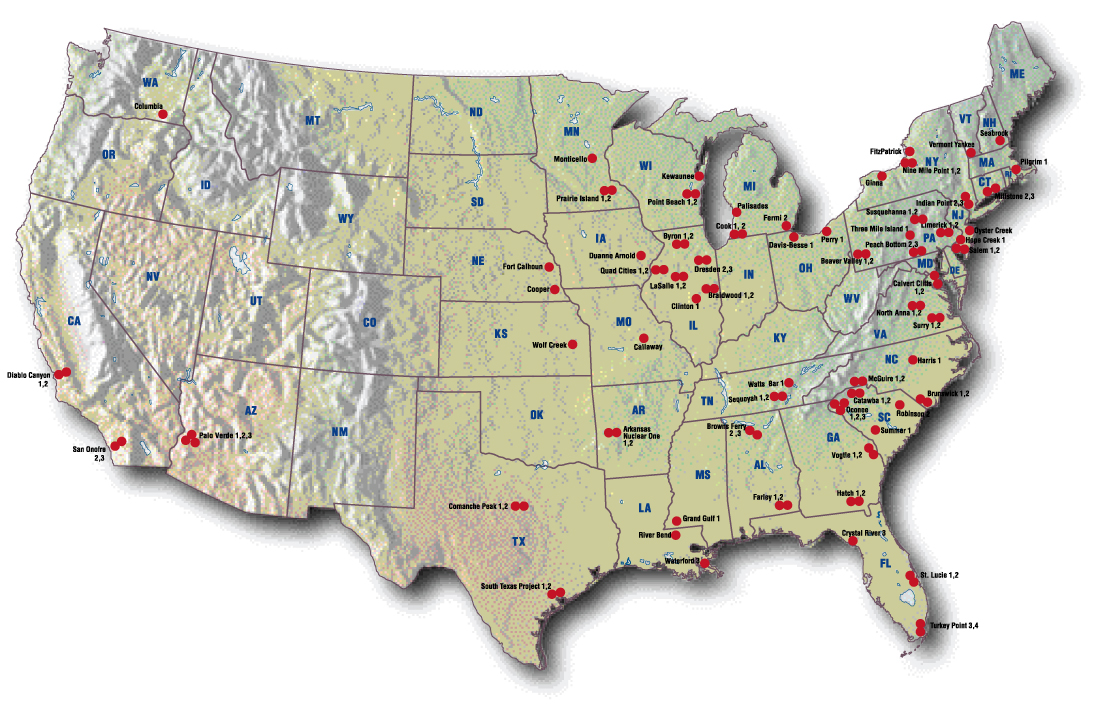
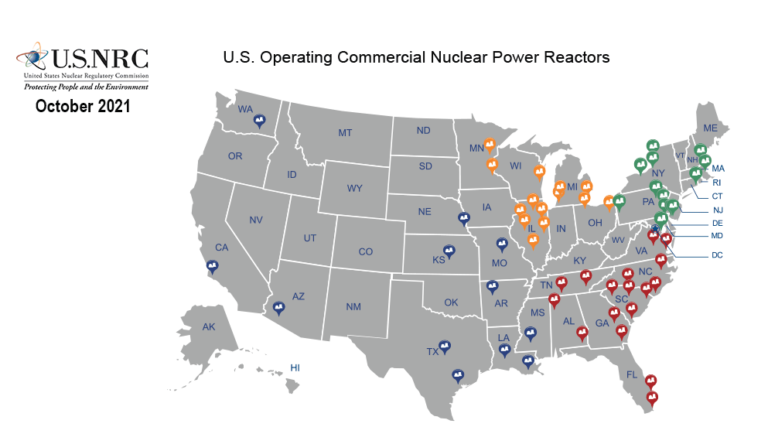
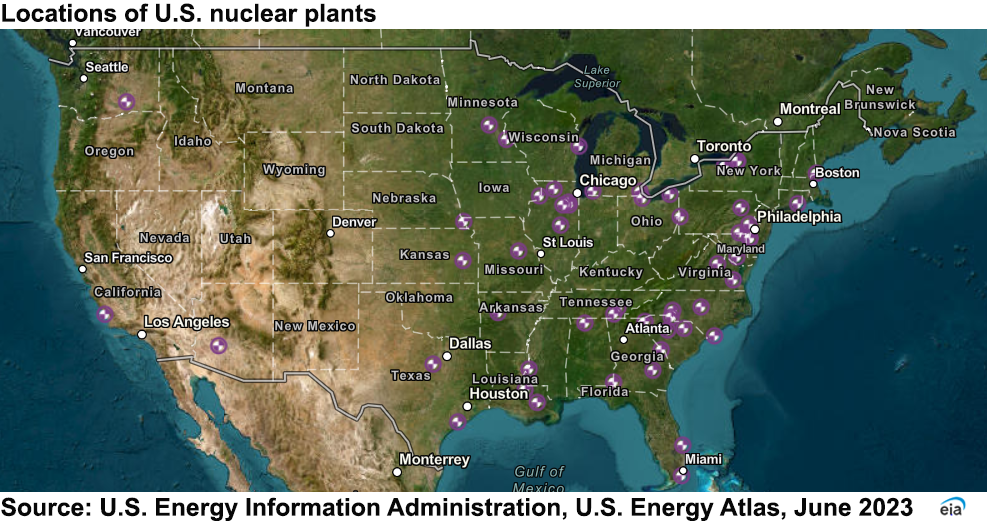
So, where does this leave us geographically? If you look at a map, you’ll notice a pretty heavy concentration in the eastern half of the US, particularly in the Southeast and Midwest. States like Illinois, Pennsylvania, South Carolina, and Georgia are big players. Why? Ample water sources (rivers like the Susquehanna, Savannah, and Ohio, plus the Great Lakes), good land availability, and established industrial infrastructure.
The West Coast has fewer, largely due to a combination of stricter seismic concerns and, frankly, California’s tendency to be... California. (Though Diablo Canyon in California has been a significant coastal plant, it’s slated for closure. Things are always changing in the energy world, folks!)

The Unsung Giants of the Landscape
Think about it: these aren't exactly glamorous tourist destinations, though some do have visitor centers. They’re usually just there, a massive, undeniable presence on the landscape for the communities around them. For many locals, those cooling towers are just as much a part of the horizon as the local water tower or grain silo.
So, the next time you're on a cross-country drive, or even just looking at a map of the US, keep an eye out. Those distinctive cooling towers, or even just the tell-tale grid of massive power lines converging in a seemingly random spot, might just be hinting at one of these silent, powerful giants. It's a fun little game of "I spy" that reveals a lot about how our world is powered. You might be surprised where you find them!
