
Location Of Carbon Monoxide Detectors
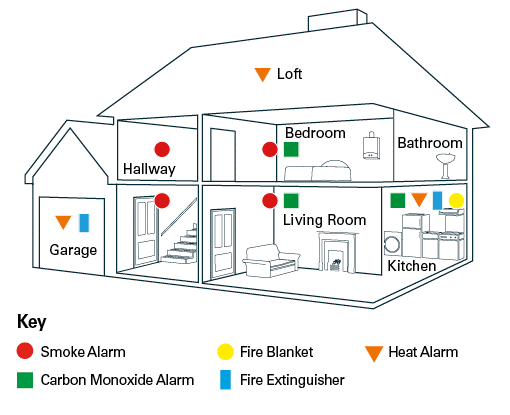
Hey there, safety superstar! Ever thought about the humble carbon monoxide detector? No? Most people don't! But trust me, once you dive into the quirky world of these little guardians, you’ll find it’s surprisingly… well, fun. Like a game of hide-and-seek, but with way higher stakes and no actual hiding. Let’s unmask the mysteries of CO detector placement, shall we?
The Sneaky Guest: What Even IS Carbon Monoxide?
First off, let’s talk about our invisible villain: carbon monoxide, or CO. It’s a colorless, odorless, tasteless gas. Pretty rude, right? No warning bells, no flashing lights, just... poof. It's often called the "silent killer," which sounds a bit dramatic, but it’s accurate. It’s a byproduct of incomplete combustion, meaning when things like furnaces, gas stoves, or cars burn fuel, if they don’t do it perfectly, CO pops out. Think of it as the unwanted party crasher at your combustion party.
And here’s the kicker: it’s really, really good at being sneaky. Because you can’t see, smell, or taste it, you won't know it's there until it's too late. That’s why these little detectors are so crucial. They’re basically your home’s personal CO detective, sniffing out trouble before it becomes a full-blown emergency.
Must Read
Not Your Average Smoke Detector!
Now, here’s where things get interesting and a little bit quirky. You know how smoke rises, right? Like a dramatic exit from a bad movie. So, smoke detectors usually hang out on the ceiling, judging everything from above. But CO? Oh no, CO is too cool for that. It doesn’t necessarily rise, and it doesn't sink either. It actually has a density very similar to air. So, what does it do? It mixes evenly with the air around it!
Imagine CO as that incredibly well-blended smoothie. It just disperses throughout the room, hanging out wherever it pleases. This key fact is super important for figuring out where to put your detector. You can’t just stick it on the ceiling like its smoky cousin and call it a day. That would be like putting a lifeguard only in the deep end when most people are splashing in the shallow part!
The "NO" Zones: Where Not to Put Your CO Detector (Unless You Want a Comedy Show)
Let’s have some fun with the places where your CO detector definitely shouldn’t be. Because nobody wants a detector that’s constantly crying wolf or, even worse, taking a nap when danger calls!
First up: too close to fuel-burning appliances. We’re talking within 15-20 feet of your furnace, water heater, or gas stove. Why? Because these things produce tiny, harmless bursts of CO during normal operation. Your detector will be screaming "false alarm!" and you’ll be pulling your hair out.
Next: in direct sunlight or near heat sources. Like a grumpy toddler, your detector doesn’t like extreme temperature fluctuations. The sensors get confused, and you might get inaccurate readings. Keep it out of sunbeams and away from heat vents, please!
And definitely not in damp, humid spots. Think kitchens or bathrooms. Steam and humidity can mess with the sensors, leading to more false alarms or, even worse, it failing to detect anything when it should. It's like asking your phone to work perfectly after a swim – not ideal.

Oh, and this is a big one: inside your attached garage. Your car’s exhaust naturally contains CO. If you put a detector in there, it’ll be blaring every time you start your engine. You’ll become the neighborhood alarm-sounder, and not in a good way!
Finally, avoid "dead air" spaces. Don't hide it behind curtains, in a corner, or inside a cabinet. CO needs to be able to reach the detector. Give it some breathing room!
The "YES" Zones: Becoming a CO Placement Pro!
Alright, now for the good stuff! Where do these little heroes truly shine? It's all about strategic placement. Think of yourself as a super-spy, planning the perfect surveillance operation.
Near Sleeping Areas: Your First Line of Defense!
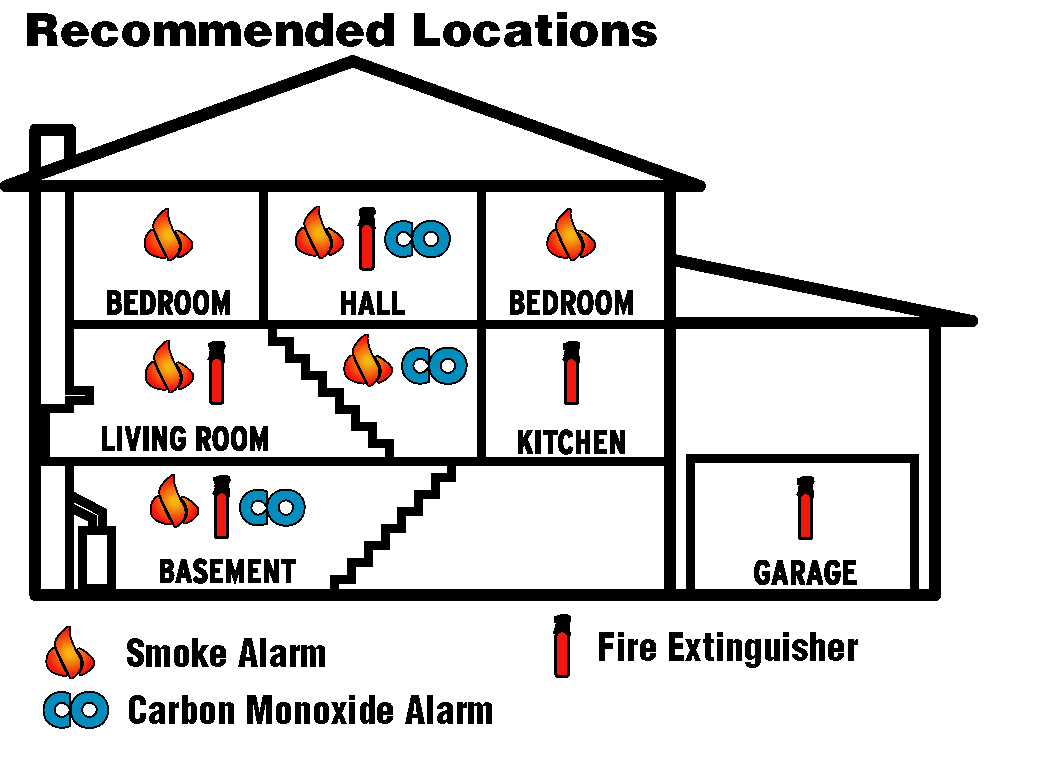
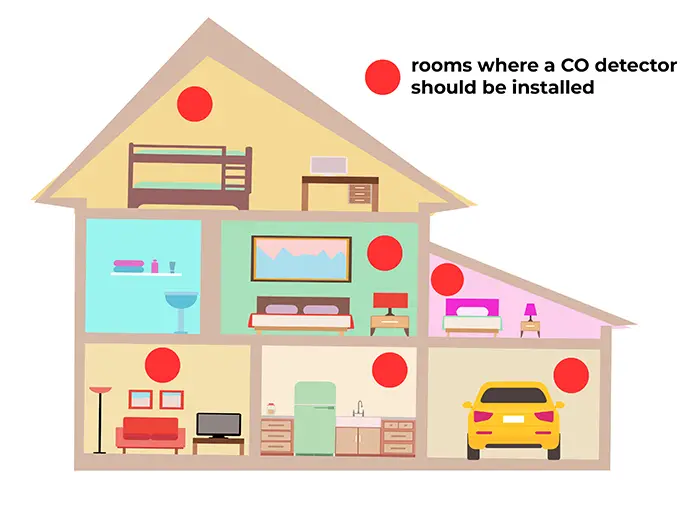
This is probably the most critical spot. You want a CO detector near, or ideally in, every sleeping area. Why? Because you’re most vulnerable when you’re asleep. You can’t smell, see, or taste CO, so you won’t wake up if it’s silently creeping into your bedroom. A detector here is your alarm clock for actual danger.
On Every Level: A Home-Wide Safety Net!
CO isn't going to politely stay on one floor. It’s an explorer! So, you need a detector on every single level of your home. That means basement, main floor, and upper levels. Even if your basement is just for laundry, or your attic is purely for storage, if there's any chance CO could accumulate, get a detector in a central spot.
Outside Attached Garages: Catching the Escape Artists!
Remember how we said not inside the garage? Well, CO from a running car can sneak into your living space, especially if there's an open door or a shared wall. So, place a detector just inside your home, right outside the entry door from the attached garage. It's like having a bouncer checking IDs for unwanted gases!
Central Hallways: The Neighborhood Watch!
For general coverage, placing detectors in central hallways on each level, especially near bedrooms, is a solid plan. These spots are usually good for air circulation, making them prime locations for detecting CO that has spread throughout the home.
The Goldilocks Height: Not Too High, Not Too Low!
This is where the "CO mixes with air" fact really pays off. Unlike smoke detectors, which are ceiling dwellers, CO detectors don't have a super strict height requirement. Most manufacturers recommend installing them on the wall, about chest height, or roughly 5 feet off the floor. But truly, anywhere between knee-height and ceiling-level is generally okay.
Think of it like this: if CO is mixing evenly, it doesn't matter too much if it’s a little higher or lower. You just need it somewhere it can consistently "breathe" the air in the room. Just make sure it’s not so low that pets or kids can easily tamper with it!
Pets Know Best (Sometimes)!
Here's a slightly unsettling, but also kinda sweet, fun fact: sometimes, our furry friends are the first to show symptoms of CO poisoning. Because they're smaller and breathe faster, they can be affected quicker. So, if your pet is suddenly acting super lethargic or unwell, and you can’t figure out why, always check your CO detectors. They might be trying to tell you something with their fuzzy little faces!
Your Home, Your Detective Story!
See? Who knew talking about carbon monoxide detectors could be so… engaging? It’s all about understanding a gas that plays by its own rules and giving your home the right tools to fight back. By placing your detectors wisely, you’re not just installing a gadget; you’re becoming a safety detective, ensuring your home is always a safe, breathable sanctuary. So go forth, check those locations, and breathe easy, you marvelous safety expert!