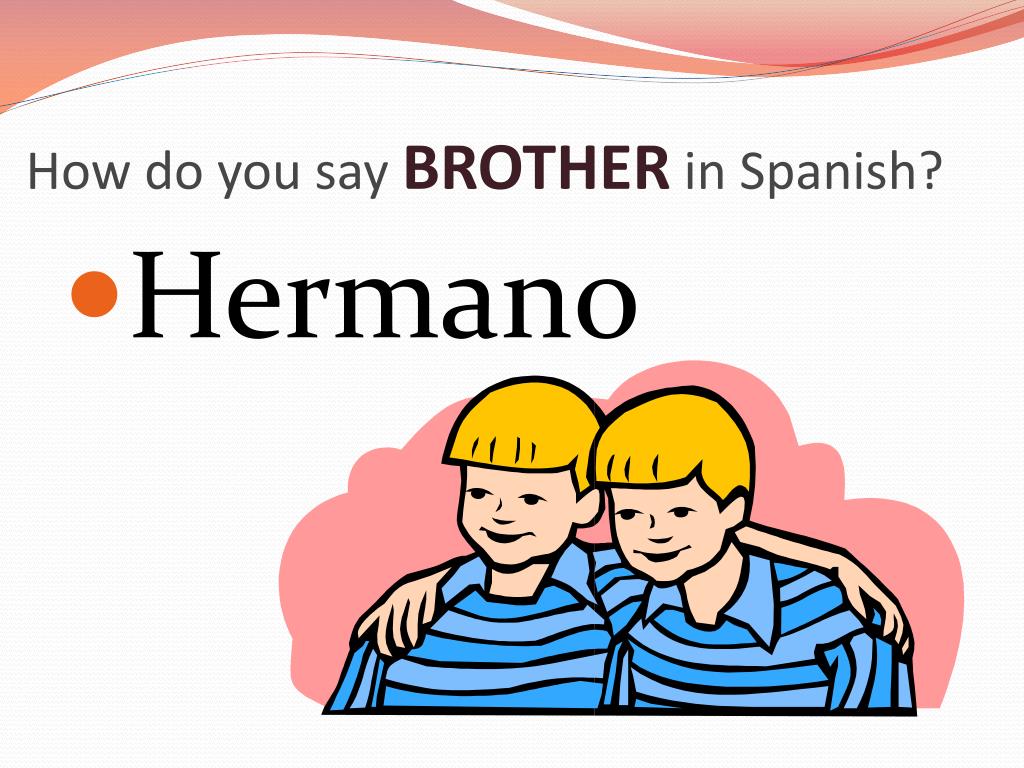
Little Brother In Spanish

Learning a new language is like unlocking a secret code to a whole new world! And even the simplest phrases can be incredibly useful and fun. Take, for instance, learning how to say "little brother" in Spanish. It's more than just vocabulary; it's a little peek into the culture and how family ties are expressed. It's a small step that can lead to bigger conversations and deeper connections!
So, why learn how to say "little brother" in Spanish? Well, firstly, think about all the times you might use it! Maybe you're chatting with someone who's mentioned their younger sibling. Maybe you're watching a Spanish-language TV show and want to understand the family dynamics. Or maybe you're just expanding your vocabulary for the fun of it! The beauty is that learning even simple words and phrases like this gives you a solid foundation to build upon.
The most common way to say "little brother" in Spanish is hermanito. It's a diminutive of the word hermano, which simply means "brother." The "-ito" ending is a common suffix in Spanish used to show endearment, smallness, or sometimes even affection. Think of it as adding a cute factor! So, hermanito literally translates to "little brother" but it also implies a sense of affection or closeness.
Must Read
There's also another way to say it, though it's less common. You could use hermano menor. This translates more directly to "younger brother." While grammatically correct, hermanito is generally preferred because it carries that extra layer of warmth and familiarity. Think of hermano menor as the formal, slightly less personal option.
Why is knowing the difference important? Because language is all about nuance! Using hermanito shows you understand the cultural preference for a more affectionate term when talking about a younger sibling. It’s a small detail, but it demonstrates a deeper understanding and respect for the Spanish language and culture.
Beyond just knowing the words, consider the context. Are you talking about your little brother to a friend? Are you talking to your little brother? In the latter case, you might even use his name with the "-ito" ending. For example, if his name is Juan, you might affectionately call him Juanito.
Learning simple phrases like "little brother" in Spanish is a great way to boost your confidence and motivation for learning more. It's a practical, everyday phrase that you can actually use! Plus, it's a reminder that language learning doesn't have to be daunting. It can be fun, accessible, and even a little bit cute. So go ahead, try it out! The next time you're talking about a younger brother, impress your friends with your newfound Spanish vocabulary. Who knows, it might just spark a whole new linguistic adventure!