Largest Natural Disasters In Us History
Okay, so let's talk about "big." We all think we know big, right? You get a giant pizza, or your internet bill suddenly doubles. That feels pretty big. Maybe your car breaks down right before vacation. That's a huge problem! But here’s my unpopular opinion. We, as humans, really don’t grasp true "big." Not when it comes to nature, anyway. And definitely not when we look back at some of the most jaw-dropping natural disasters in U.S. history. They make our daily "big" look like a tiny hiccup.
The Galveston Hurricane of 1900
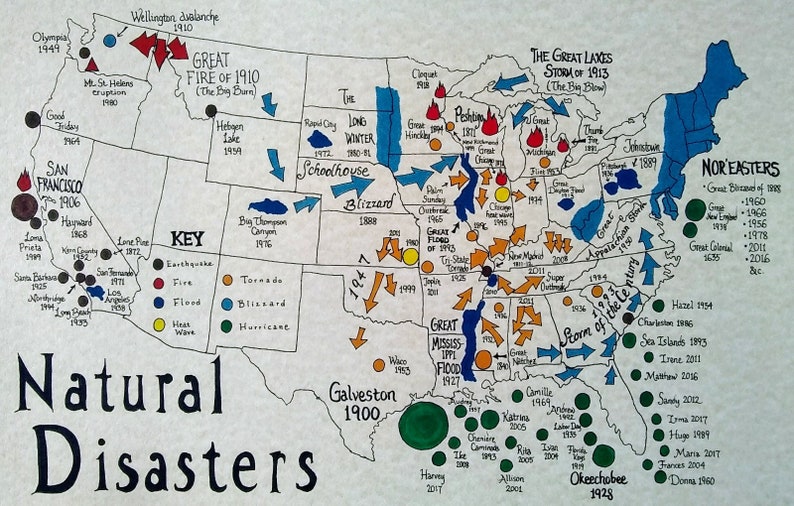
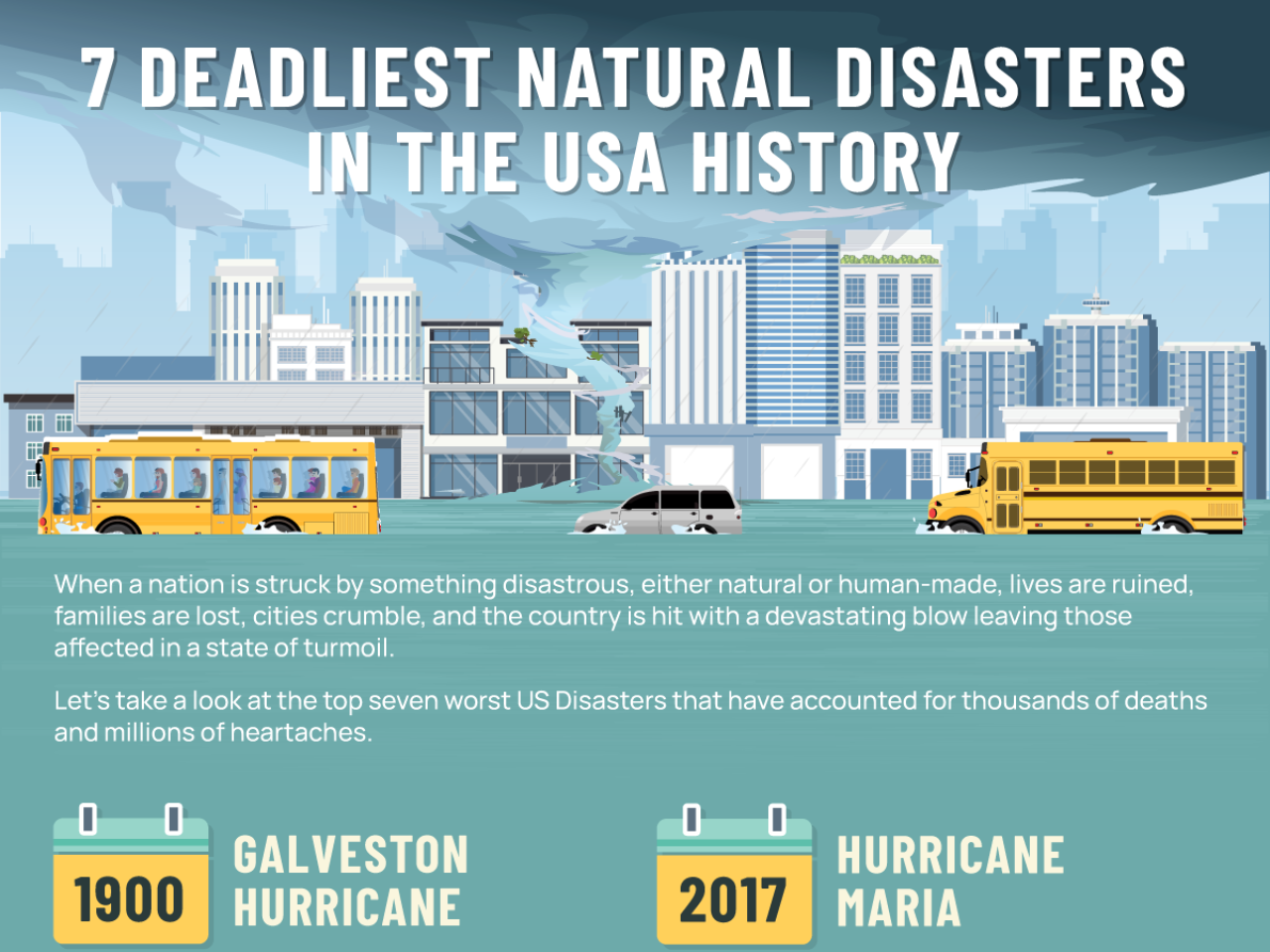
Let’s start way back in 1900. Picture Galveston, Texas. A bustling island city, full of life. Then, bam! The Great Galveston Hurricane hit. This wasn't just a bad storm. This was a force of nature saying, "Hold my beer." It ripped through the city with winds over 145 mph. But the real villain? A massive storm surge. It swept right over the island. Think about a giant ocean wave, but it just keeps coming.
The sheer scale of loss is tough to imagine. Between 6,000 and 12,000 people lost their lives. That’s a staggering number. It’s still the deadliest natural disaster in U.S. history. The city was basically wiped clean. Houses, businesses, everything just… gone. It truly reshaped how coastal cities thought about protection. Galveston literally rebuilt itself with a massive seawall and raised the entire city's elevation. Talk about a glow-up from pure destruction!
Must Read
The San Francisco Earthquake of 1906
Next up, let's hop to 1906. Morning in San Francisco. People are just waking up. Then the ground starts to dance. And not a fun kind of dance. The Great San Francisco Earthquake hit. It was around an 8.0 magnitude. Pretty beefy, right? But the shaking wasn't even the worst part.
What came next was the real kicker. Fires! Everywhere. Broken gas lines ignited. Water mains burst, so firefighters had no water. Imagine trying to put out hundreds of fires with no water. It was a nightmare. The fires raged for days. They basically incinerated 80% of the city. We’re talking over 3,000 deaths. And about 225,000 people were left homeless. That’s more than half the city’s population!
"The City That Knows How"suddenly had to figure out how to rebuild, from scratch, after Mother Nature's cruel trick.
The Mississippi River Flood of 1927
Alright, time for a little water fun. Or not so fun, really. The Great Mississippi River Flood of 1927. This one wasn't a quick smash and grab. This was a slow, creeping monster. Months of heavy rain in the Mississippi basin. The river just swelled. And swelled. And swelled some more. It spilled over its banks. Levees broke.
The flood covered about 27,000 square miles. That’s an area roughly the size of several states combined! Over 700,000 people were displaced. Imagine trying to evacuate an area that big. People lived on rooftops for weeks. Entire towns disappeared underwater. It was the most destructive river flood in U.S. history. Over 246 deaths, sure, but the economic impact was catastrophic. It really showed us that rivers, even calm ones, can become terrifying beasts.

The Tri-State Tornado of 1925
Now, for something that came and went in a horrifying flash. The Tri-State Tornado of 1925. This wasn't just a tornado. This was the tornado. It ripped through Missouri, Illinois, and Indiana. One continuous storm. For over three and a half hours. It traveled 219 miles. That’s unheard of for a single tornado!
It basically obliterated everything in its path. Towns like Murphysboro, Illinois, were wiped off the map. This EF5 monster killed 695 people. It injured over 2,000 more. This makes it the deadliest tornado in U.S. history. Think about it: a monster wind funnel, wider than a mile at times, moving faster than a car, just tearing across three states. Like a disaster movie, but tragically real.
Hurricane Katrina of 2005
Let's fast forward to a disaster many of us remember: Hurricane Katrina in 2005. This monster roared into the Gulf Coast. New Orleans bore the brunt. The levees, meant to protect the city, failed. Water poured in. Imagine seeing your city slowly vanish under a sea of dark, polluted water. It’s a truly gut-wrenching image.
Katrina was hugely destructive. Over 1,800 people died. Billions and billions of dollars in damage. It became a harsh reminder that even with all our modern tech, nature can still humble us. It highlighted issues of infrastructure, evacuation, and social inequalities. It showed us that "big" disasters aren't just history. They can happen now.
So, next time your internet goes out for five minutes, or you spill coffee on your new shirt, remember these tales. Your "bad day" might feel huge to you. And that's okay! But my playful unpopular opinion stands. We often forget just how truly, epically, earth-shatteringly big some of these natural events were. They weren't just big; they were history-changing. They were reminders that Mother Nature always has the final, most dramatic word. And sometimes, that word is a roar. Let's appreciate our small, manageable problems, shall we? Because history shows us it can always, always be bigger. And that, my friends, might just make you smile. Or shiver. Maybe both.