
Is Selective Hearing A Real Thing
Ever find yourself completely deaf when your partner asks you to take out the trash, but you can hear the ice cream truck three blocks away? You might be suffering from… selective hearing! (Dun dun dunnn!)
Selective Hearing: Fact or Fiction?
Is selective hearing a real thing, or are we just really good at pretending? Well, the answer is a bit of both, actually. It's not a medical diagnosis, more like a super-relatable human experience.
Think of it as your brain's very own personal DJ, deciding which tracks to play and which ones to mute. Some signals get the VIP treatment, while others are politely escorted out the back door. It's like your brain has a bouncer, but instead of checking IDs, it's checking how interesting something is!
Must Read
The Case of the Missing Chores
Let's paint a picture, shall we? You’re engrossed in a nail-biting movie scene. Suddenly, your name is uttered... but it sounds like a distant whisper. You swear, you heard nothing.
Meanwhile, your partner is standing there, arms crossed, silently fuming because you “conveniently” missed their request to unload the dishwasher. Sound familiar? You’re not alone! This is a classic case of selective hearing in action.
It's not that you're intentionally ignoring them. It's just that your brain decided that ninjas and explosions were way more important at that particular moment. Priorities, people, priorities!
The Ice Cream Truck Phenomenon
Now, let's flip the script. You're engrossed in a serious conversation about, say, the existential dread of tax season. Suddenly, a faint melody drifts through the air.
It’s the ice cream truck! Your ears perk up, your eyes widen, and suddenly, taxes are the last thing on your mind. You can hear the sweet siren song of a Bomb Pop from what feels like a mile away.
Why? Because your brain has identified ice cream as a high-priority, extremely important matter. Obviously. Forget responsible adulting; it's time for frozen deliciousness!

How Does Selective Hearing Work (Kind Of)?
Okay, so while selective hearing isn't a formal medical term, there are some real psychological concepts at play. Things like attention, focus, and cognitive filtering all contribute.
Essentially, our brains are constantly bombarded with information. If we tried to process everything, we'd short-circuit! So, our brains have evolved to filter out the "noise" and prioritize what's most relevant or interesting.
Think of it like this: your brain is a search engine. It's constantly scanning for keywords that match your current interests or needs. If something matches, it gets bumped to the top of the results page. If not, it gets buried on page 5,000.
Attention, Please!
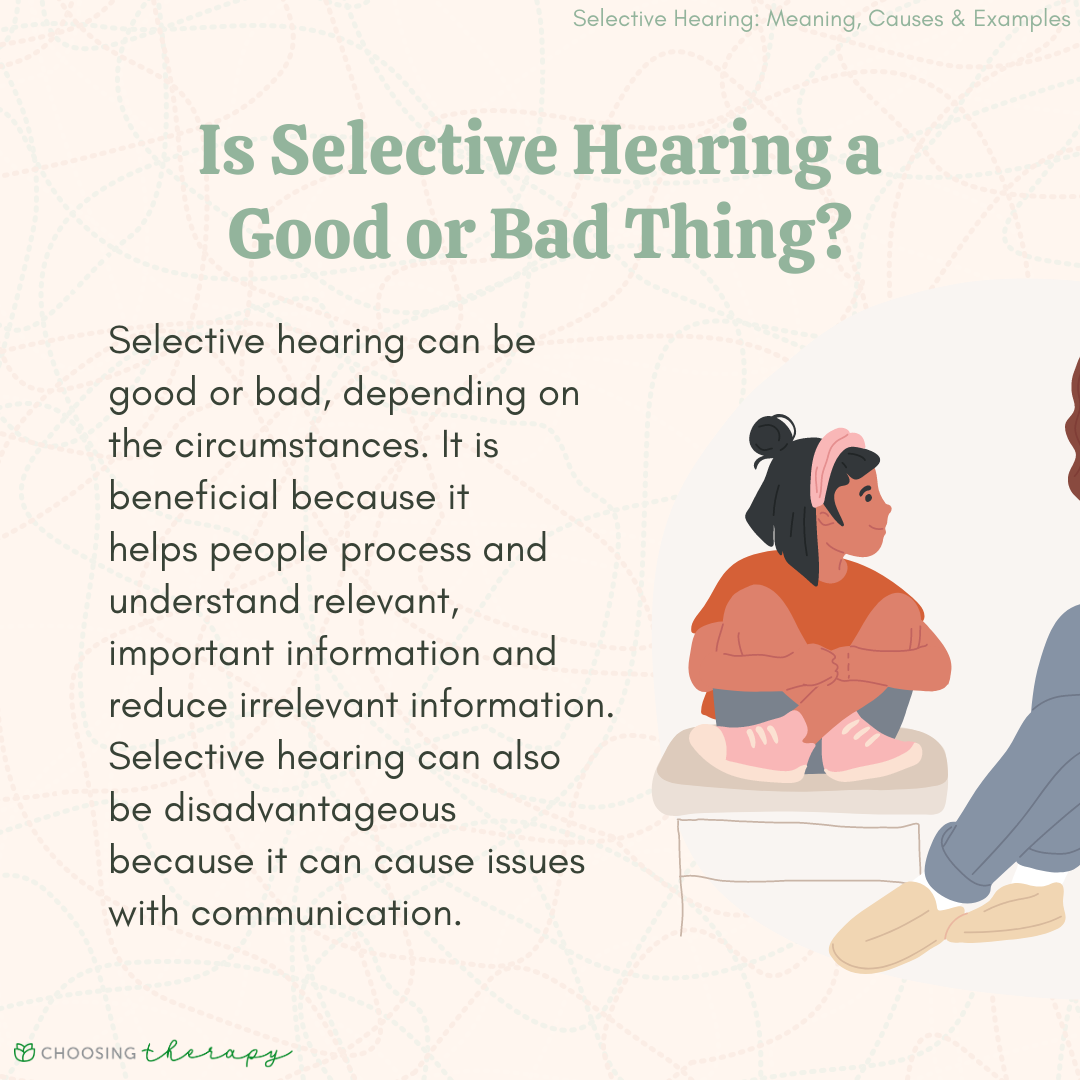
Attention is key. If you're deeply focused on something, your brain is less likely to register other stimuli. This is why you might not hear someone calling your name if you're engrossed in a good book or a video game.
It's like having tunnel vision for your ears. Everything outside of your narrow focus gets blurred out. Suddenly, you're living in your own little soundproof bubble.
So, next time your significant other accuses you of ignoring them, just blame it on your intense focus. It's practically a scientific excuse!
The Power of Interest
Another factor is interest. We're more likely to hear things that we find engaging or enjoyable. This is why you can hear your favorite song playing faintly in a crowded room, even when you can't hear your friend talking right next to you.
It's all about what tickles your brain's fancy. If something sparks your curiosity or triggers a positive emotion, your brain is going to amplify that signal. Think of it like a volume knob that only works on things you like.
So, if you suddenly develop super-hearing when someone mentions pizza, don't be alarmed. It just means your brain has excellent taste!
Selective Hearing: The Upside and the Downside
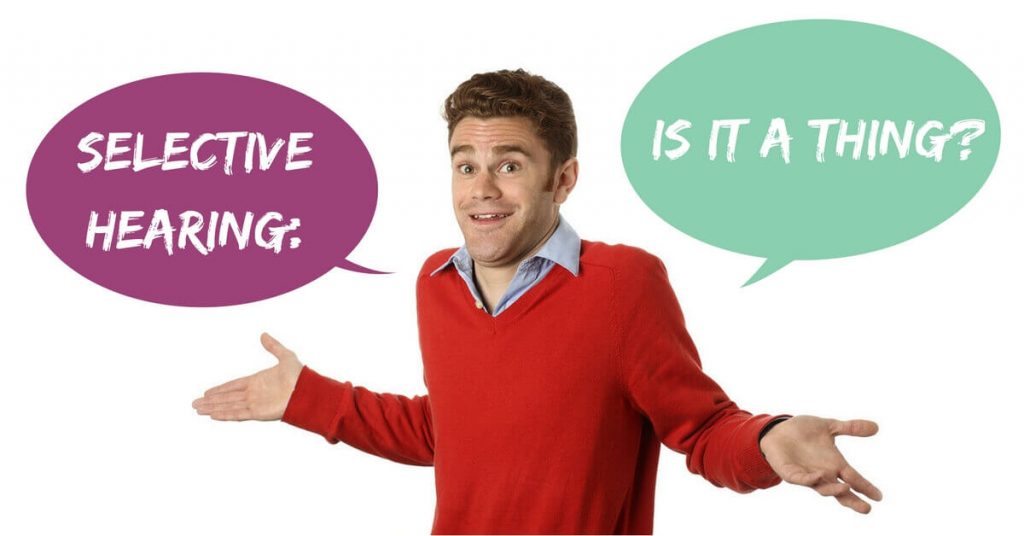
While selective hearing can be a source of amusement (and marital discord), it's not all bad. In fact, it can be quite useful! It helps us filter out distractions and focus on what's important.
Imagine trying to concentrate on a work project while also processing every conversation, every phone ringing, and every notification on your phone. You'd never get anything done!
Selective hearing allows us to create our own little bubble of concentration, where we can shut out the world and get things done. It's like having a superpower, but instead of flying, you're just really good at ignoring things.
The Dark Side of Selective Hearing
Of course, selective hearing also has its downsides. It can lead to misunderstandings, missed opportunities, and even hurt feelings. Imagine constantly tuning out your loved ones, because you're only interested in the latest episode of your favorite show.
That's not a recipe for a happy relationship! Communication is key, and selective hearing can get in the way. It's like building a wall between you and the people you care about, one ignored request at a time.
It can also make you seem rude or inconsiderate. If you're constantly ignoring people, they might start to think you don't value their opinions or feelings. Nobody wants to be the person who's always zoning out!
Tuning In: How to Improve Your Listening Skills
So, how can you harness the power of selective hearing for good, while avoiding the pitfalls? The key is to be more mindful of your listening habits and make a conscious effort to tune in to the people around you.
Start by minimizing distractions. Put away your phone, turn off the TV, and find a quiet place to talk. It's hard to listen when you're surrounded by competing stimuli.
And here is the most important thing: Show that you are actively engaged. Nod, make eye contact, and ask clarifying questions. This shows the speaker that you're paying attention and that you care about what they have to say.
Practice Active Listening
Active listening involves truly focusing on what the other person is saying, rather than just waiting for your turn to speak. Try to understand their perspective and empathize with their feelings.
It's like putting yourself in their shoes and listening from their point of view. This can help you connect with them on a deeper level and avoid misunderstandings.
Don't interrupt, don't judge, and don't offer unsolicited advice. Just listen and let them know you're there for them. Sometimes, that's all people need.

The Power of Empathy
Empathy is another crucial ingredient for good listening. Try to understand the other person's emotions and perspectives. Ask questions and be genuinely curious about what they have to say.
It's easy to get caught up in your own thoughts and feelings, but taking the time to understand someone else's experience can make a big difference in your relationship.
So, next time someone is talking to you, try to really listen with your heart, as well as your ears.
The Verdict: Selective Hearing is Real (Kind Of)
So, is selective hearing a real thing? The answer is a resounding "sort of." It's not a medical condition, but it is a very real and relatable human experience. We all do it, to varying degrees.
It is NOT a license to ignore your responsibilities or tune out your loved ones. Instead, it should be a reminder to be more mindful of our listening habits and to make a conscious effort to connect with the people around us.
Think of it as a superpower that needs to be wielded responsibly. With great hearing comes great responsibility… to actually listen!
So, the next time you "conveniently" miss your partner's request to do the laundry, remember this article. And maybe, just maybe, go do the laundry. Your ears (and your partner) will thank you for it!