Is Nuclear Energy Bad Or Good
Ah, nuclear energy! Just the phrase itself can spark a lively debate at any dinner table. It’s a topic that often conjures images straight out of science fiction – glowing green rods, enormous cooling towers, and perhaps a cartoon character with too many eyes. But beyond the dramatic headlines and the occasional blockbuster movie, nuclear energy is a fascinating powerhouse that quietly plays a significant role in our modern world, sparking both awe and apprehension in equal measure.
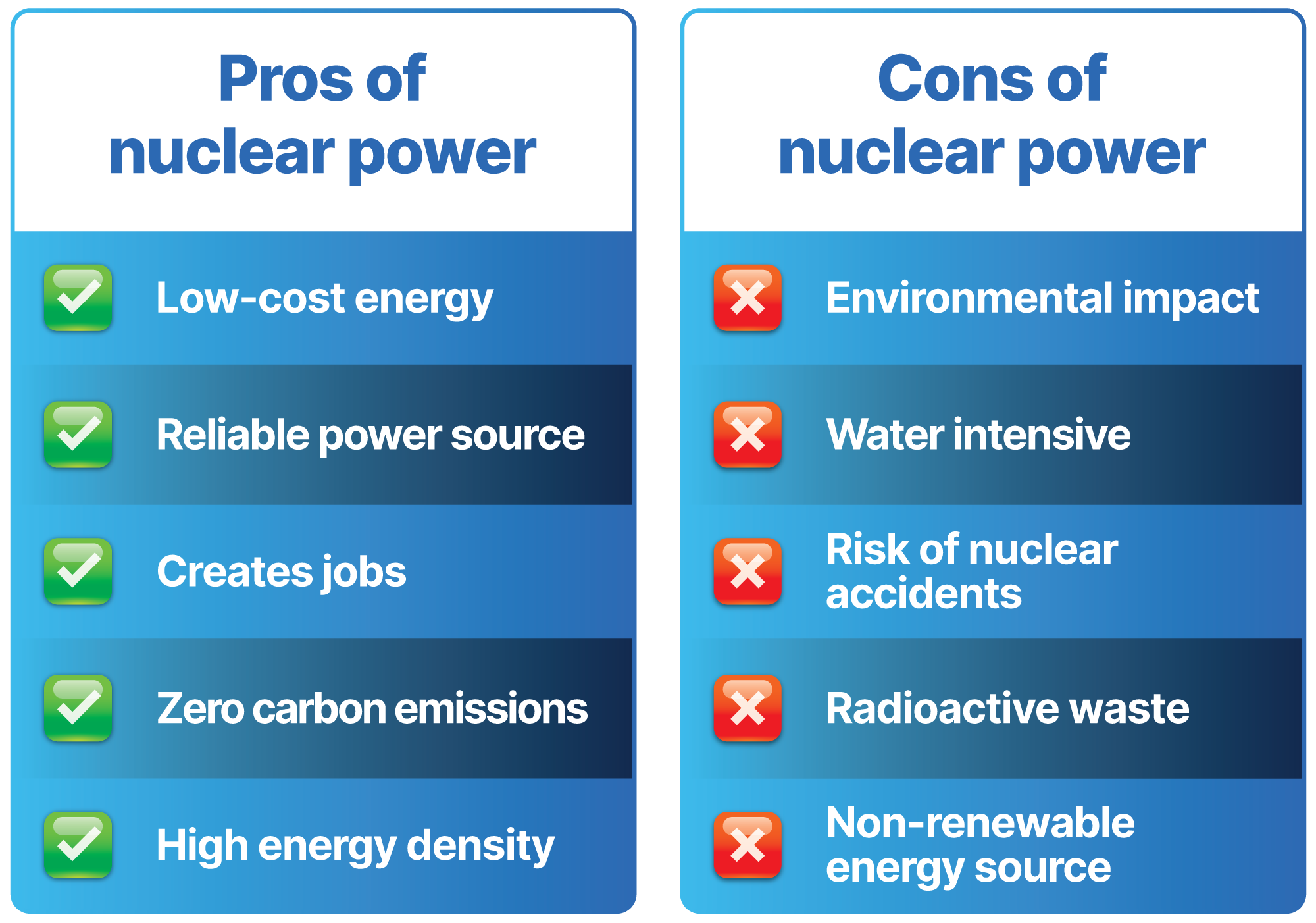
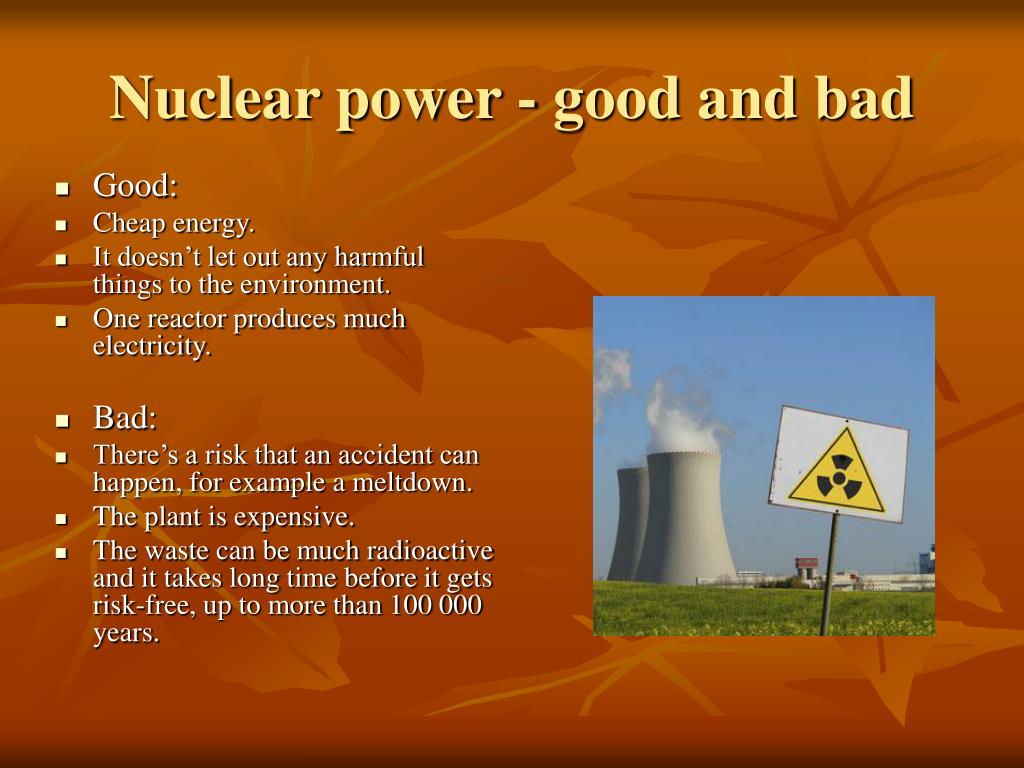
So, why do we even bother with something so complex and often misunderstood? Simply put, nuclear energy is a colossal workhorse for electricity generation. Its primary benefit? It’s a zero-emission power source during operation, meaning it doesn't pump greenhouse gases into the atmosphere like burning fossil fuels does. This makes it a crucial tool in the fight against climate change. Imagine powering millions of homes, hospitals, and businesses around the clock, with a tiny carbon footprint. That’s the promise of nuclear. It provides reliable, baseload power – meaning it can run consistently for months or even years without interruption, unlike intermittent sources like solar and wind.
Where does this powerful force show up in our lives? Most commonly, it's fueling the grid. Countries like France, for instance, rely on nuclear power for a vast majority of their electricity, keeping homes lit and industries humming. But its applications extend far beyond just turning on your lights. Nuclear technology gives us medical isotopes for diagnosing and treating diseases like cancer, helping doctors peer inside the human body or target stubborn tumors. It propels submarines and aircraft carriers silently through the oceans, giving them incredible range and endurance. Even space exploration benefits, with radioisotope thermoelectric generators (RTGs) powering distant probes like Voyager and Curiosity, allowing them to explore the farthest reaches of our solar system for decades.
Must Read
Of course, no discussion of nuclear energy is complete without acknowledging the elephant in the room – the concerns. Questions about safety, especially after events like Chernobyl or Fukushima, and the challenge of safely disposing of radioactive waste that can remain hazardous for millennia, are legitimate and important. There’s also the significant upfront cost of building these massive plants. These are the aspects that give many people pause and contribute to the "bad" side of the nuclear debate.
So, how can you "enjoy" this complex topic more effectively and contribute to an informed discussion? First, educate yourself beyond the sensational headlines. Learn about the different types of reactors, including newer, smaller modular reactors (SMRs) designed with enhanced safety features. Understand the difference between nuclear power plants and nuclear weapons. Engage with reliable scientific sources to grasp the realities of waste management and safety protocols. Most importantly, recognize that nuclear energy isn't a silver bullet, but it is a powerful tool with both immense potential and significant challenges. By staying informed and engaging thoughtfully, you can better appreciate its intricate role in our quest for a sustainable and electrified future, moving beyond simple good or bad to a more nuanced understanding.