
Is Nuclear A Renewable Or Nonrenewable Resource
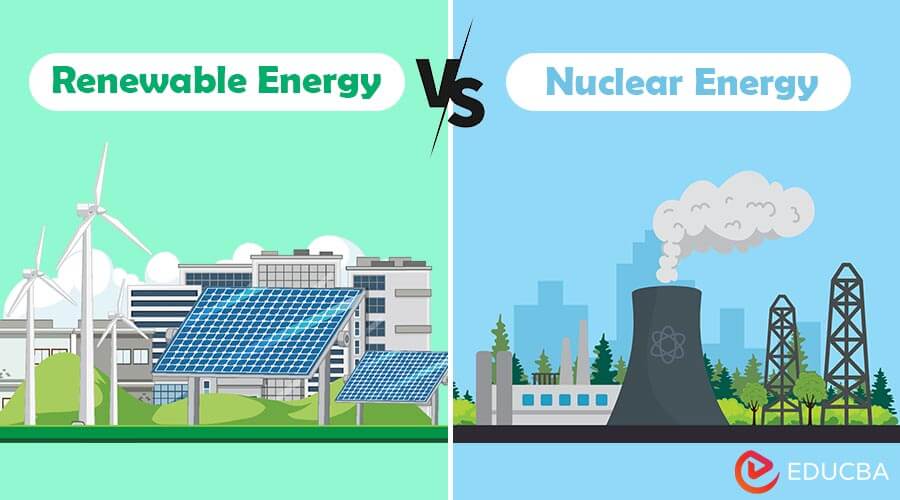
Hey everyone! Ever found yourself pondering the big questions? Like, is pizza a vegetable? Or maybe, a bit more relevant these days, is nuclear power a renewable or nonrenewable resource? It's a head-scratcher, right? Let's dive in and see what's what. No lab coats required, just a curious mind!
So, the million-dollar question: Is nuclear power renewable? The short answer? It's a bit complicated. Buckle up, because we're about to untangle some threads.
The Uranium Factor: Earth's Hidden Treasure
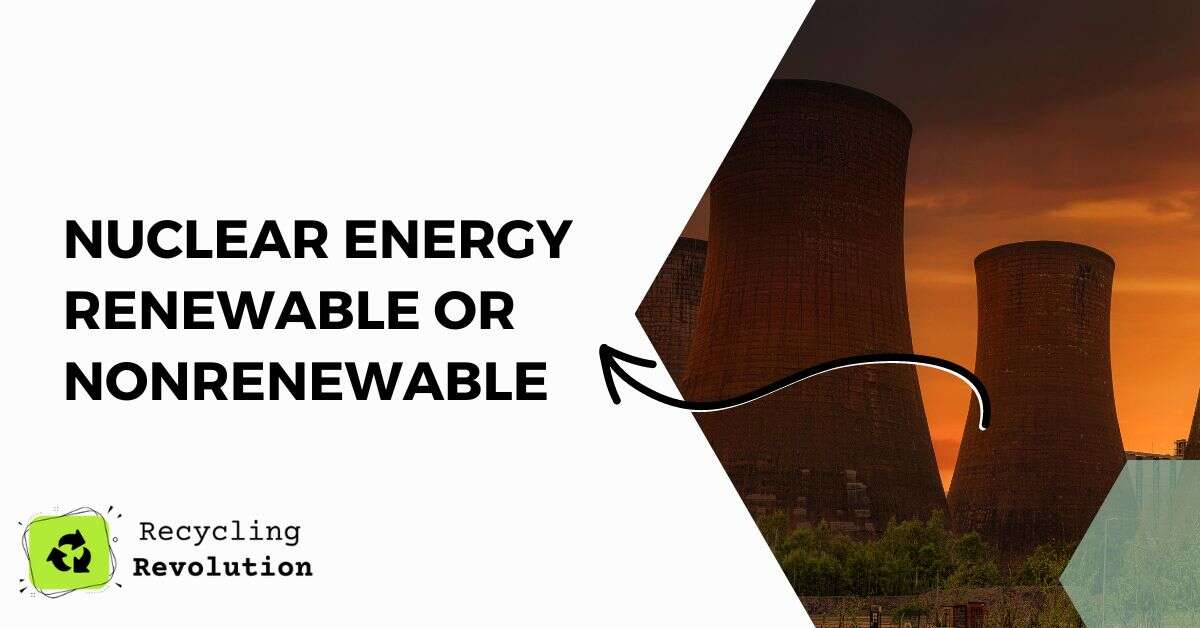
Nuclear power plants, at their core, use uranium as their fuel. Think of uranium as a super-dense, energy-packed rock. When uranium atoms are split in a process called nuclear fission, they release a ton of energy – heat, which boils water, creates steam, and spins turbines to generate electricity. It’s basically like a really, really powerful steam engine.
Must Read
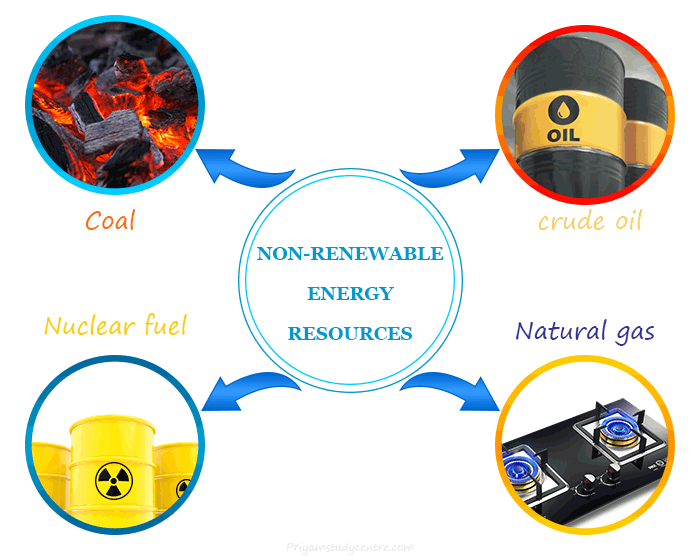
Now, here's the kicker: Uranium is a naturally occurring element found in the Earth's crust. But, like oil and coal, it's finite. Meaning there's only so much of it. We mine it, process it, and use it to power our cities. Once we've used it all up (or the readily accessible stuff, anyway), well, that's that. It’s not like trees that grow back, or the sun that shines daily. This finite aspect is the main argument for labeling it a nonrenewable resource.
Think of it like a giant candy jar filled with your favorite sweets. You can happily munch away, but eventually, the jar will be empty. The candies aren't magically reappearing. Same with uranium – eventually, the Earth's "uranium jar" will be depleted (though, thankfully, that's a long way off!).
![Is Nuclear Energy Renewable? [Our EASY In-Depth Guide]](https://greenbuildingelements.com/wp-content/uploads/2021/03/BFP_IsNuclearEnergyRenewable.jpg)
Breeder Reactors: A Plot Twist!
But wait! There's a twist in our nuclear narrative! Enter: Breeder reactors. These aren't your run-of-the-mill reactors. They're like the science fiction version of nuclear power plants.
Breeder reactors are designed to produce more fuel than they consume. Yes, you read that right! They convert non-fissile isotopes (like uranium-238, which is far more abundant than the commonly used uranium-235) into fissile materials (like plutonium). It’s kind of like taking less desirable ingredients and transforming them into something delicious.
If breeder reactors become widely adopted (and that's a big "if" due to various technical and safety considerations), the amount of available nuclear fuel would increase dramatically. Some argue this could make nuclear power practically renewable, since we'd essentially be creating more fuel as we go.
Imagine a magical garden where you plant a seed, and not only does it grow into a fruit-bearing tree, but it also creates more seeds in the process. That's the potential of breeder reactors. Pretty cool, huh?
Thorium: The Abundant Cousin
And there's another potential game-changer: Thorium. Thorium is another radioactive element that can be used as nuclear fuel. And here's the best part: It's far more abundant than uranium. Some estimates suggest that thorium is three to four times more plentiful in the Earth's crust.
Thorium reactors also offer potential safety advantages and produce less radioactive waste compared to conventional uranium reactors. So, why aren't we using thorium everywhere? Well, it's complicated. Thorium technology is still under development, and there are various technical hurdles to overcome before it can become a mainstream energy source. But the potential is definitely there!
Think of uranium and thorium as two flavors of ice cream. Uranium is like your classic vanilla, while thorium is like a slightly more exotic and readily available flavor. Both are delicious, but one is far easier to come by.
The Verdict: Renewable-ish?
So, where does that leave us? Is nuclear power renewable or nonrenewable? The honest answer is: It's complicated and depends on how we do it. If we stick to current uranium-based reactors, then nuclear is definitely nonrenewable. However, if we embrace breeder reactor technology or switch to thorium-based reactors, the argument for "practically renewable" becomes much stronger.
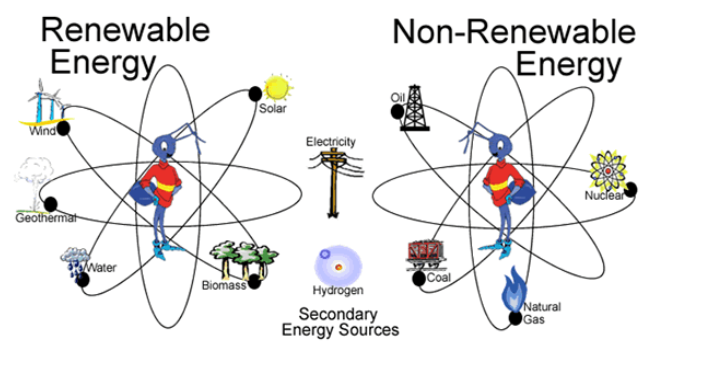
Ultimately, the debate hinges on the longevity of the fuel supply. Can we create enough fuel to power our planet for centuries or even millennia to come? If so, then maybe we can start thinking of nuclear power in a different light.
Regardless of how you classify it, nuclear power is a fascinating and complex energy source. It's a technology with the potential to provide clean, reliable power, but it also presents some significant challenges. As we continue to explore new energy options, it's crucial to have informed and open discussions about the role nuclear power can play in our future.
What do you think? Is nuclear power a valuable tool in our fight against climate change? Or are the risks too great? Let me know your thoughts!