Is Lactose Free Milk Good For You

Alright, let's talk about lactose-free milk! Is it some kind of weird science experiment gone right (or wrong)? Is it only for those poor souls who can't enjoy a normal glass of moo juice? Or is it actually… dare I say… good for everyone?
The Great Lactose Debate (Or, Why My Stomach Does the Tango)
First things first, let's address the elephant (or maybe it's a lactose-intolerant cow?) in the room. Lactose. It's a sugar naturally found in milk. Some of us (a LOT of us, actually!) have trouble digesting it. Our bodies don't produce enough of the enzyme lactase, which is like the tiny Pac-Man that gobbles up lactose and makes it easier to process. When we don't have enough Pac-Man, the lactose throws a party in our gut, and nobody wants that party. Trust me.
Symptoms include, but are definitely not limited to: bloating that makes you look three months pregnant after a single latte (even if you’re a dude!), gas that could power a small city, and… well, let's just say frequent trips to the restroom become your new hobby.
Must Read
Enter the Hero: Lactose-Free Milk
This is where lactose-free milk swoops in, cape flapping in the dairy aisle breeze. It's essentially regular cow's milk that has had the lactose pre-digested. How? They add lactase! That's it! It’s like they're giving your gut a head start on the lactose-gobbling process. Consider them your personal dairy digestive assistants.
But Is It Really Good For You?
Okay, let’s get down to brass tacks. Is lactose-free milk some kind of nutritional impostor? The answer is a resounding NO! Here’s the deal:

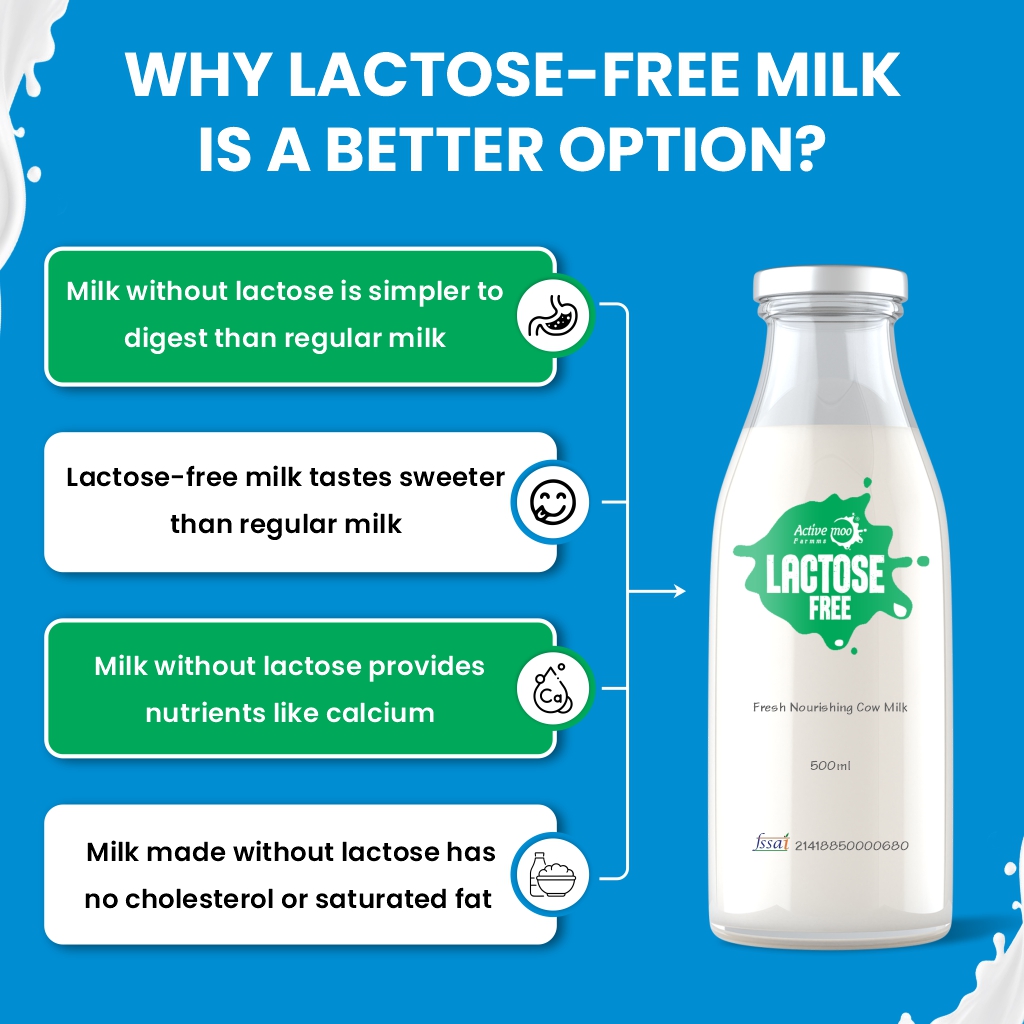
- Same Nutrients, Less… Drama: Lactose-free milk has the same vitamins, minerals, and protein as regular milk. We're talking calcium for strong bones, vitamin D for immune support, and protein for building those magnificent muscles. You’re not missing out on anything!
- Happy Gut, Happy Life: If you're even slightly lactose intolerant, switching to lactose-free milk can be a total game-changer. Say goodbye to the bloat, the gurgling, and the emergency bathroom sprints. Think of all the extra time you'll have! You can finally finish that jigsaw puzzle! Learn to play the ukulele! Write a novel! (Okay, maybe that's a bit much, but you get the idea.)
- Sweetness Boost (But Not in a Bad Way): Here's a fun fact: when lactase breaks down lactose, it turns it into two simpler sugars: glucose and galactose. These are sweeter than lactose, so lactose-free milk often tastes a little sweeter than regular milk. It’s a subtle difference, but some people find it makes their coffee or cereal taste even better! Think of it as a little bonus!
- Versatility King: Use it exactly as you would regular milk! Baking, cooking, smoothies, cereal, straight from the glass – the possibilities are endless! It's like the Swiss Army knife of the dairy world.
"But," you might be saying, "Isn't it more processed?" Well, yes, technically. But the process is super simple. They literally just add an enzyme. It’s about as scary as adding yeast to bread.
Who Should Consider Lactose-Free Milk?
The obvious answer is anyone who suspects they're lactose intolerant. But even if you don't think you are, it's worth trying! Maybe you have a mild intolerance and you're just used to feeling a little… off after eating dairy. Switching to lactose-free might just be the key to unlocking your optimal digestive happiness!
Ultimately, whether or not lactose-free milk is "good for you" is a personal decision. But if you're looking for a delicious, nutritious, and easily digestible alternative to regular milk, it's definitely worth a try. Your gut (and your social life!) will thank you.