
Is Glucose Oxidized Or Reduced In Cellular Respiration

Imagine your body is a tiny, bustling city. It needs power, right? And where does that power come from? From the food you eat, specifically, from glucose, a simple sugar!
Now, think of glucose as a tiny, energy-packed chocolate bar. Your cells are craving that energy, but they can't just gobble it down whole. They need to break it down first.
This breakdown process is called cellular respiration. It's like a carefully choreographed dance of molecules, all working together to unlock the energy hidden within the glucose.
Must Read
The Great Giveaway: Oxidation or Reduction?
So, here's the big question: during this cellular respiration dance, is glucose being oxidized or reduced? Don't worry; it's not as scary as it sounds.
Think of oxidation and reduction as a give-and-take relationship. One molecule loses something (usually electrons), while another molecule gains it.
To help you remember, just think of "LEO the lion says GER!" LEO stands for Lose Electrons Oxidation, and GER stands for Gain Electrons Reduction.
The Unveiling: Glucose's Role
Here comes the reveal! During cellular respiration, glucose is oxidized. Yes, that's right, glucose bravely loses its electrons.
It's like glucose is generously donating little energy packets to other molecules. It's becoming less electron-rich, hence, oxidation!
Poor glucose, you might think. It's losing all its precious electrons! But don't worry, this electron loss is what fuels the entire process.

These electrons don't just disappear into thin air. They are eagerly accepted by other molecules, primarily oxygen. This is why we breathe! Oxygen is the electron's new home.
Oxygen's Electron Feast
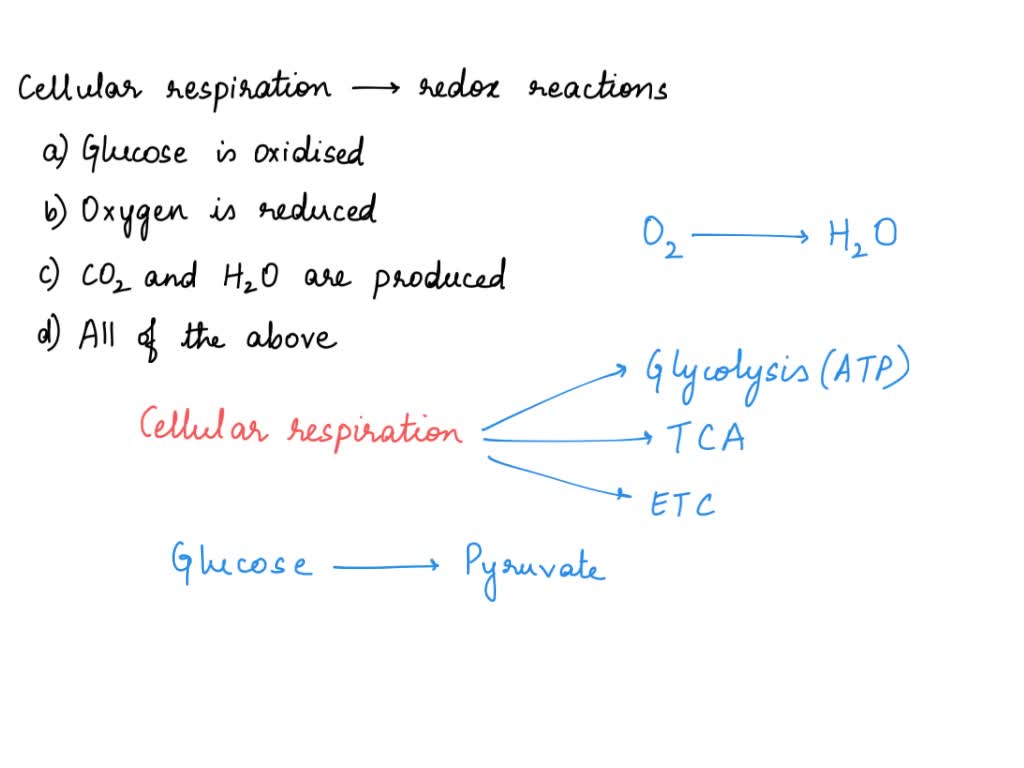
As glucose is being oxidized, something else must be reduced. Enter our good friend, oxygen! It's the eager recipient of glucose's lost electrons.
Oxygen happily accepts these electrons, becoming more electron-rich, and therefore, reduced. Think of it as oxygen getting a little electric boost.
This electron transfer to oxygen is crucial. It's like passing the baton in a relay race, ensuring the energy continues to flow through the system.
And what happens to oxygen after it's reduced? It combines with hydrogen ions to form water (H2O), a byproduct of cellular respiration.
A Cellular Symphony
Cellular respiration is like a perfectly orchestrated symphony, with each molecule playing its part.
Glucose, the generous donor, is oxidized, releasing electrons and energy. Oxygen, the eager recipient, is reduced, accepting those electrons.
This dance of oxidation and reduction is the engine that powers our cells, keeping us alive and kicking. All thanks to glucose.
The oxidation of glucose doesn't happen in one giant leap. It happens in a series of small, controlled steps. This is like taking small, manageable bites of that chocolate bar instead of trying to swallow it whole.
Each step releases a little bit of energy, which is then captured and used to create ATP (adenosine triphosphate), the cell's energy currency.
Think of ATP as tiny batteries that power all the cellular activities, from muscle contractions to nerve impulses. It’s all thanks to the sacrificial oxidation of glucose.
The Aftermath of Oxidation
After glucose has been oxidized, it's not quite the same. It transforms into other molecules, ultimately becoming carbon dioxide (CO2) and water (H2O).
We exhale the carbon dioxide, and the water is either used by the body or eliminated as waste. It's all part of the cycle of life.
The carbon dioxide we exhale is then used by plants for photosynthesis, where they use it to create more glucose! Talk about a full circle!
It's a beautiful example of how everything in nature is interconnected. Glucose, the star of our show, is constantly being created, broken down, and recycled.
Surprising Implications
The oxidation of glucose during cellular respiration isn't just a scientific fact; it has profound implications for our understanding of life.
It highlights the fundamental role of energy in all living organisms. Without the energy released from glucose oxidation, life as we know it wouldn't exist.
It also demonstrates the importance of electron transfer in biological processes. This seemingly simple process is the foundation of energy production in cells.
Next time you're feeling energetic, remember the tiny, selfless act of glucose oxidation that's happening in your cells right now. It's a true marvel of nature!
And remember, it's not just about glucose. Other molecules, like fats and proteins, can also be oxidized to produce energy. But glucose is the primary fuel for many cells.
A Parting Thought
So, the next time you hear the term "cellular respiration," don't let it intimidate you. Remember the story of glucose, the generous molecule that sacrifices its electrons to power your life.
It's a tale of oxidation and reduction, of give and take, of energy and life. It's a reminder that even the most complex processes can be understood with a little curiosity and a bit of imagination.
And remember, glucose being oxidized isn't a sad story; it's a story of empowerment. It’s the fuel that keeps you going, laughing, loving, and living your best life. So, thank you, glucose!
The process also show that life is a contsant energy transfer.
Next time you take a breath, remember to thank oxygen, the electron acceptor.
Cellular respiration: It's not just science; it's life!