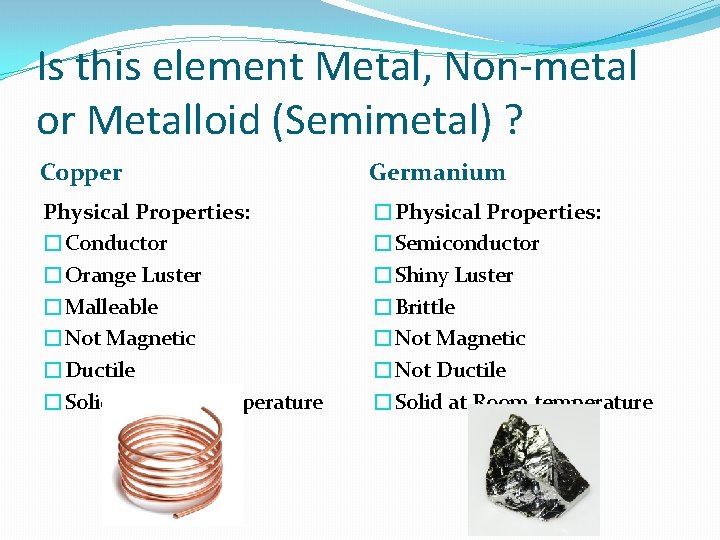
Is Germanium A Metal Nonmetal Or A Metalloid
Okay, so picture this: I'm at a ridiculously nerdy science fair (yes, I actually volunteered to be there, don't judge), and this kid, bless his heart, is showing off his… germanium crystal collection. Beautiful, shiny things, but he keeps calling them "metals." Now, I wasn't about to crush a child's dreams right there, but it got me thinking: is germanium actually a metal? Or is it something else entirely? And honestly, if you're reading this, you've probably wondered the same thing. So, let's dive in, shall we?
The Great Element Classification Game
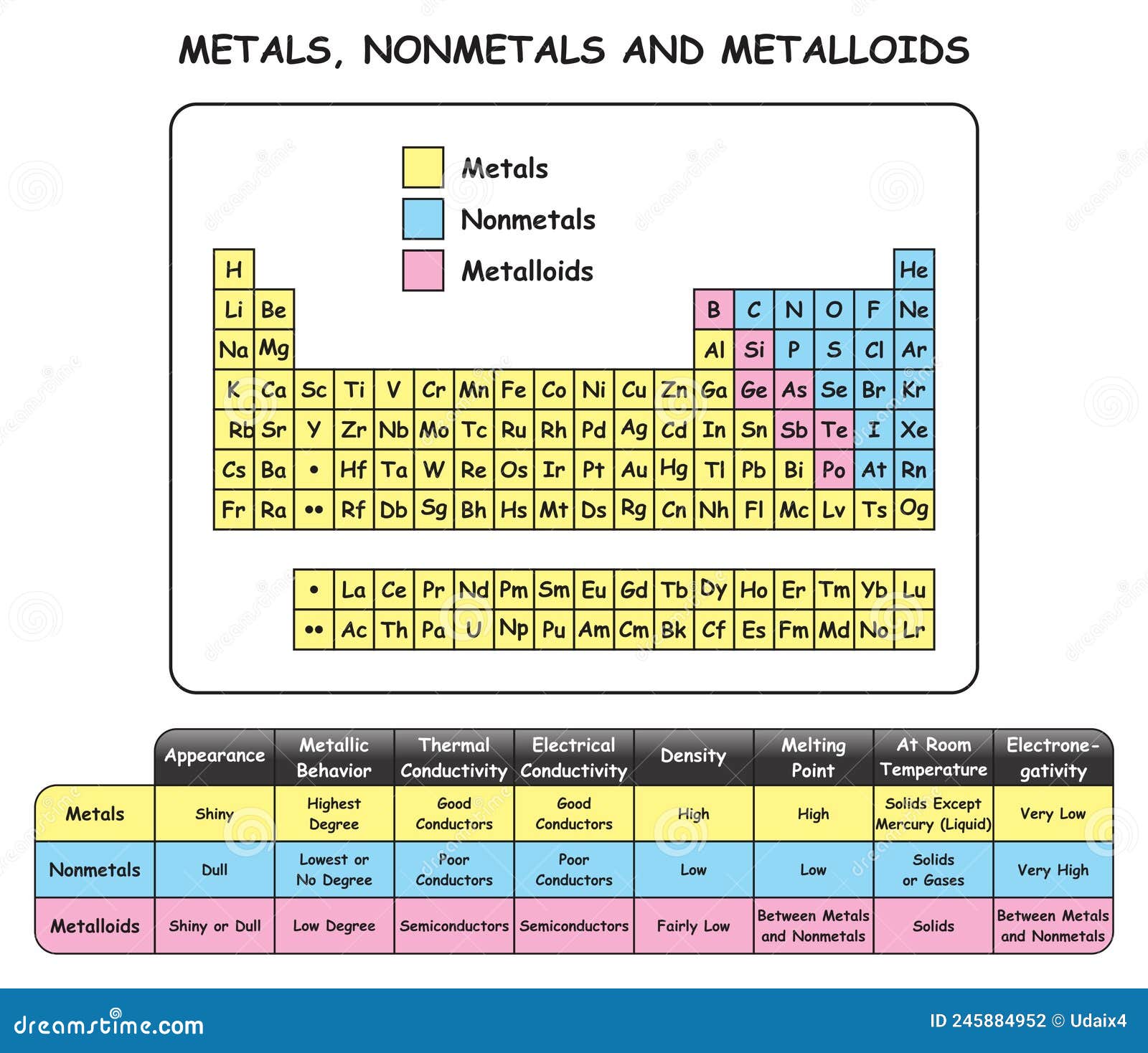
We all remember the periodic table from high school, right? That big, intimidating chart covered in abbreviations and numbers. Well, that's where our quest begins! Elements, the fundamental building blocks of everything, are generally classified into three main categories: metals, nonmetals, and… wait for it… metalloids. Yeah, it sounds like something out of a sci-fi movie, doesn't it?
Metals, generally speaking, are shiny, conduct electricity and heat well, and are usually malleable and ductile. Think gold, silver, copper – the usual suspects. Nonmetals, on the other hand, tend to be dull, poor conductors, and often brittle. Like sulfur, oxygen, and that pesky chlorine that burns your eyes in the pool (okay, maybe that’s just me).
Must Read
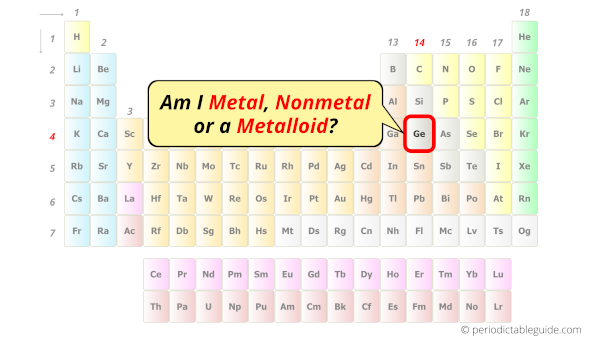
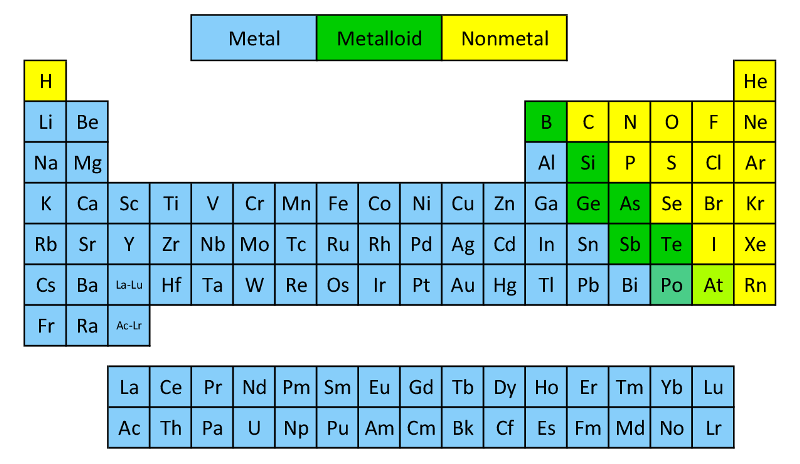
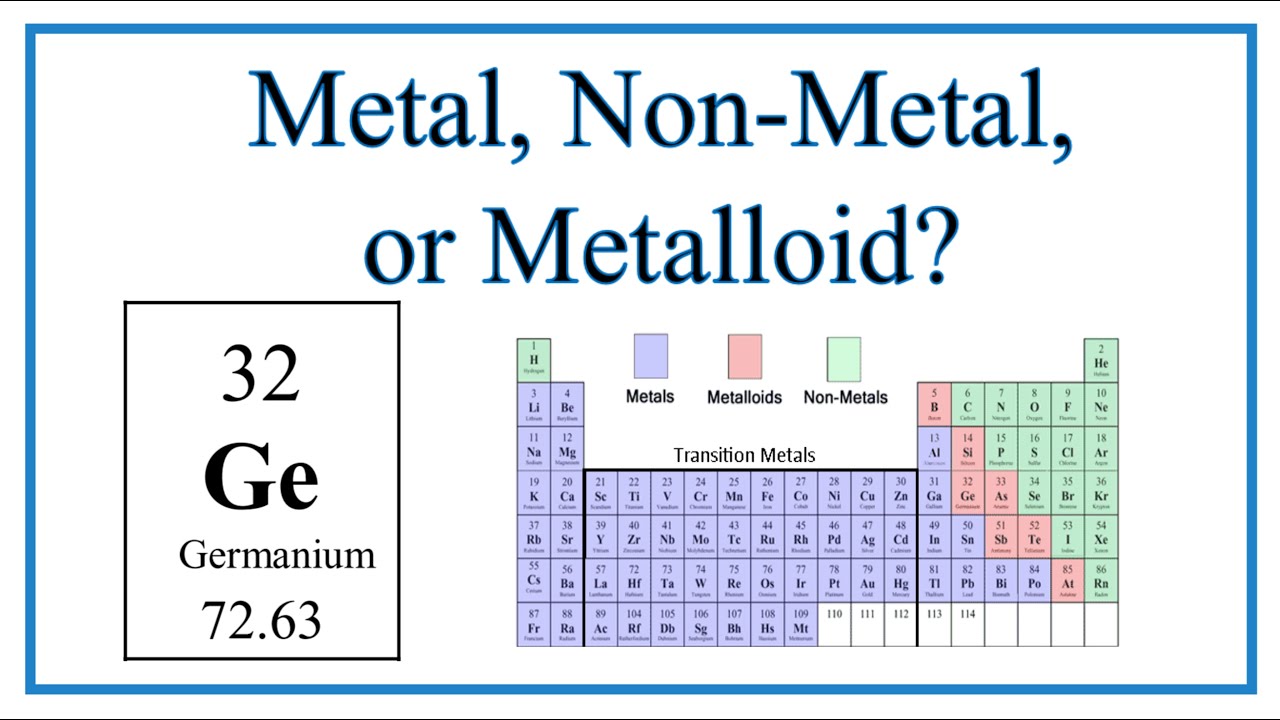
But what about those elements that don't quite fit neatly into either category? That's where the metalloids, also known as semimetals, come in. And guess what? Germanium is chilling right there in the metalloid section! See? Told you the kid was… misguided. (Okay, maybe I should have gently corrected him).
Germanium: The In-Between Element
So, why is germanium a metalloid? Well, it's all about its properties. Germanium has some metallic characteristics and some nonmetallic ones. It's kind of like that friend who’s always on the fence about everything – can't commit, gotta stay neutral. (We all have one, right?).
For instance, germanium looks like a metal. It has a silvery-gray, shiny appearance. Pretty metal-like, huh? But when it comes to conductivity, it's more of a "sometimes" conductor. It's a semiconductor, meaning its ability to conduct electricity falls somewhere between a metal and a nonmetal. This is actually super useful, because we can control how well it conducts electricity by adding impurities (a process called doping). That’s why it's such a vital component in electronics!
Think about it this way: a metal is like a wide-open highway for electrons, nonmetals are like a completely blocked road, and germanium is like a toll road where we can decide when and how many electrons get through. (Okay, maybe that's a terrible analogy, but you get the gist!).
Why Does It Matter?
Okay, so maybe you’re thinking, "Who cares if germanium is a metalloid or not? Does it really matter?" And the answer is a resounding YES! Its unique semiconducting properties are what make it so important in the world of electronics. Remember that smartphone you’re probably holding right now? Yeah, germanium helped make that happen (though silicon is more common now, germanium paved the way!).
Without metalloids like germanium, we wouldn't have transistors, integrated circuits, and all sorts of other electronic devices that we rely on every single day. So, the next time you're binge-watching Netflix, take a moment to thank germanium (and, you know, all the other elements that make modern life possible).
In Conclusion (and a little bit of irony)
So, there you have it. Germanium is a metalloid, not a metal or a nonmetal. It's the quirky, in-between element that helps power our modern world. And who knows, maybe after reading this, you can finally win that argument with your know-it-all uncle at Thanksgiving dinner! (Just kidding… maybe don’t bring up element classifications at Thanksgiving. Unless, you know, you want to…).
And as for that kid at the science fair? Well, hopefully, he's now a little bit wiser about the wonderful world of elements. And maybe, just maybe, he'll be the one writing articles like this someday. Until then, keep questioning, keep learning, and keep exploring the fascinating world around us!