Is Clf3 Polar Or Nonpolar
Ever had that moment when you're trying to hang a picture, and no matter how much you adjust it, it just looks…off? Like it's leaning to one side, destined to plummet to the floor the moment you turn your back? That's kind of how we can think about molecules and their polarity. Some molecules are nice and balanced, perfectly aligned, like a well-centered painting. Others? Well, they're a bit like that precariously balanced picture – always threatening to tilt.
Today, we're talking about one of those potentially tilting molecules: Chlorine trifluoride (ClF3). Sounds fancy, right? Don't let the name intimidate you. We're going to break it down in a way that's easier to swallow than that suspiciously green smoothie you tried last week.
What even is Polarity Anyway?
Think of polarity as a measure of how evenly electrons are shared in a molecule. If everyone's playing fair, and each atom is pulling on the electrons with the same strength, you've got a nice, nonpolar molecule. Like a perfectly balanced seesaw with two equally sized kids on each side. Everything's calm, cool, and collected.
Must Read
But what happens when one kid is secretly stuffing rocks into their pockets? Suddenly, the seesaw tips! That's what happens with polar molecules. One atom hogs the electrons more than the others, creating a slightly negative charge on that end and a slightly positive charge on the other. It's like having a tiny battery with a plus and minus end.
So, Is ClF3 That One Kid with the Rocks?
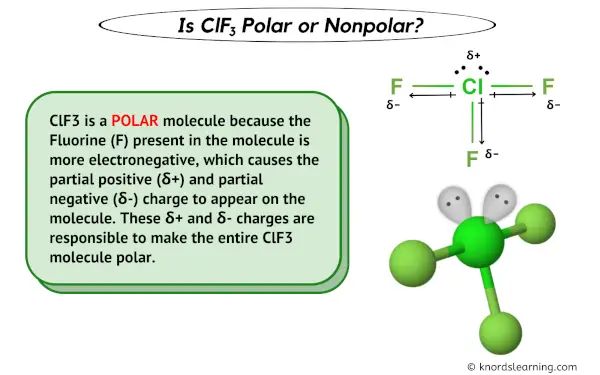
Okay, let's get to the meat of the matter. Is ClF3 polar or nonpolar? The answer, my friend, is a resounding YES, it's polar! Why? Because fluorine is a greedy little electron hog. It's way more electronegative than chlorine. That means it pulls on the electrons in the Cl-F bonds much, much harder than chlorine does.
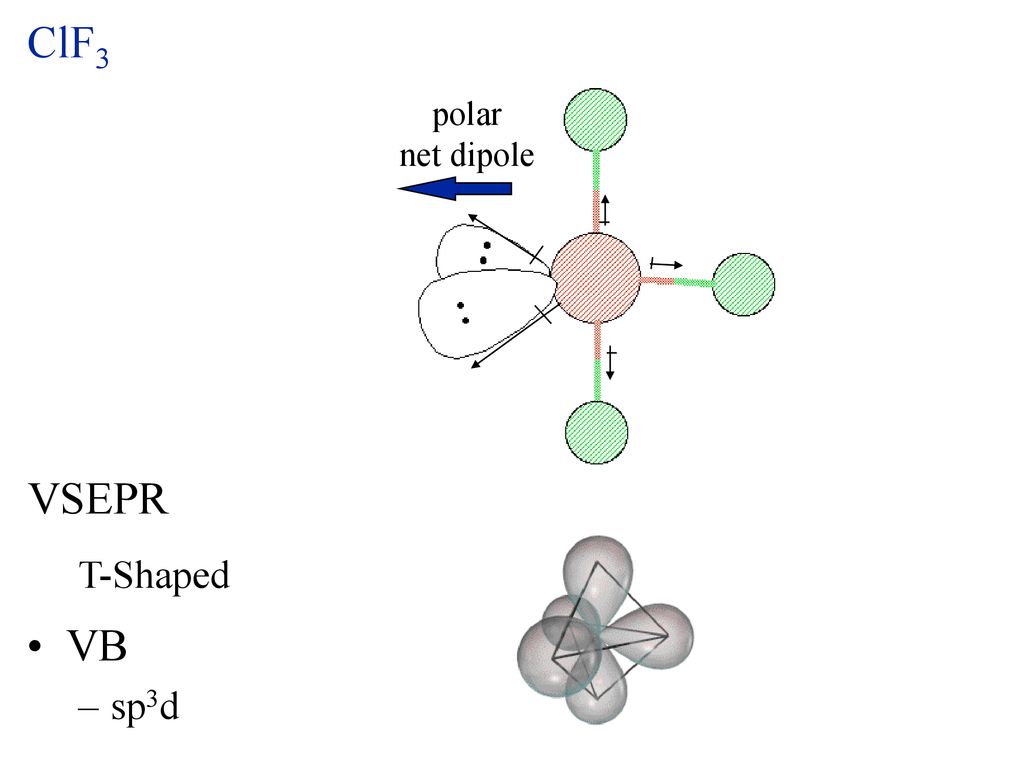
But it's not just about the difference in electronegativity. It's also about the shape of the molecule. ClF3 has a T-shaped molecular geometry. Picture a capital T. The chlorine atom is in the middle, with three fluorine atoms branching out. This T-shape is key.
If the molecule were linear (a straight line), and those fluorines were pulling equally in opposite directions, their pull would cancel out, and we'd have a nonpolar molecule. Think of a tug-of-war where both teams are perfectly matched in strength. No one wins!
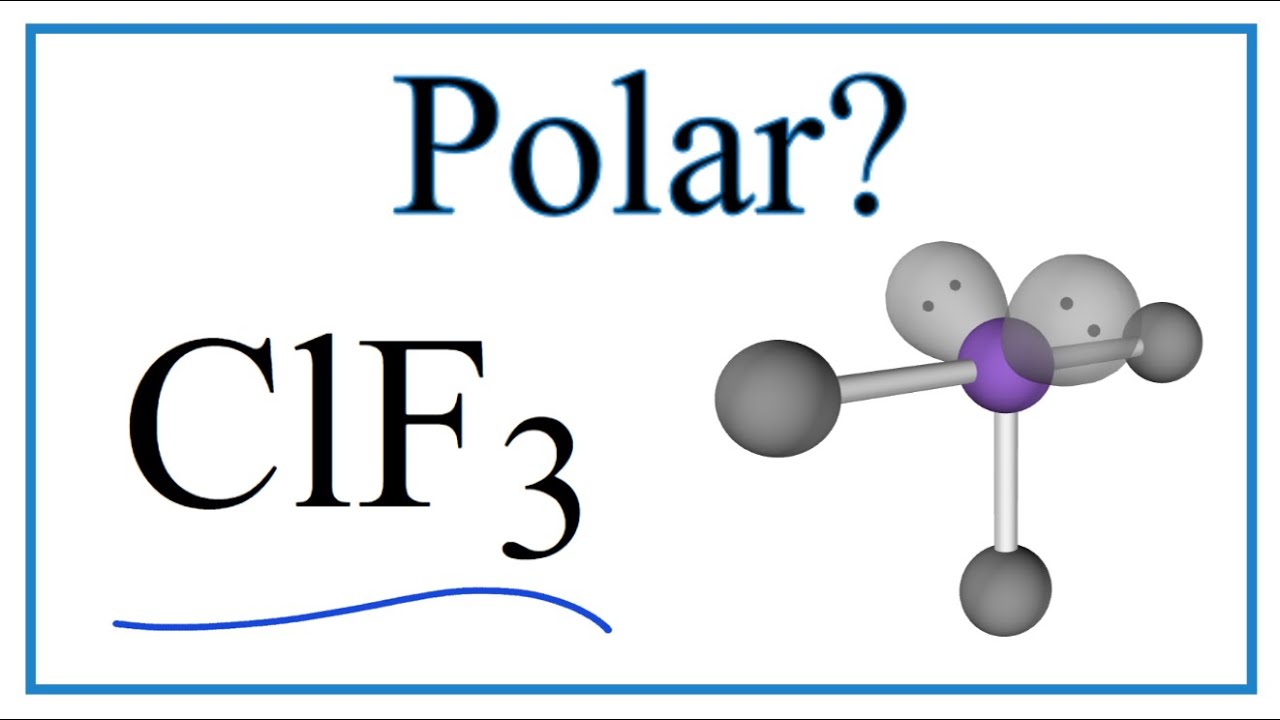
But because of that T-shape, those fluorine pulls don't cancel each other out. There's a net dipole moment – a fancy term for the overall direction of electron pull – pointing towards the fluorine atoms. This uneven distribution of charge makes ClF3 polar.
The Lone Pairs: The Secret Ingredient
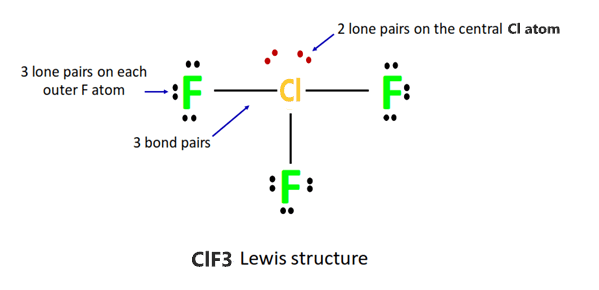
And here's a fun little secret: the chlorine atom in ClF3 also has two lone pairs of electrons hanging around. These lone pairs are like tiny invisible balloons, pushing those fluorine atoms into that T-shape and adding to the overall asymmetry of the molecule. They're like the quirky aunt who always brings an unusual dish to the potluck, changing the entire flavor profile of the party.

These lone pairs are highly electronegative, which means they demand even more space. It's like they're hoarding all the legroom on a long flight. This is one of the reasons why ClF3 has this unique T-Shape.
Why Should I Care If ClF3 Is Polar?
Okay, maybe you're not planning on using ClF3 anytime soon. But understanding polarity is important because it affects how molecules interact with each other. Polar molecules tend to stick together more strongly than nonpolar molecules. This impacts things like boiling points, solubility, and even how well a cleaning product works. Polar solvents love to dissolve polar molecules, while nonpolar solvents love dissolving nonpolar molecules. Ever tried to wash oil (nonpolar) off your hands with just water (polar)? Yeah, doesn't work so well, does it?
So, next time you're struggling to hang that picture straight, remember ClF3. Just like that off-kilter painting, ClF3’s asymmetrical shape and greedy fluorines create a molecule with a definite lean – a polar molecule. Hopefully, though, unlike that painting, you now have a firm grasp on the topic!