
Is Carbon Monoxide A Mixture Or Pure Substance

Hey there, fellow curious mind! Ever looked at something seemingly simple, like a puff of smoke or the air you breathe, and wondered, "What's actually in there?" You're not alone! Our world is a spectacular blend of amazing stuff, and understanding it, even just a little bit, can make life so much more interesting. Today, we're diving into a question about a molecule you've definitely heard of, but might not know intimately: Carbon Monoxide. Is it a mixture? Or a pure substance? Let's unravel this chemical mystery with a smile!
First off, let's talk about Carbon Monoxide, or CO for short. It's often called the "silent killer" because it's invisible, odorless, and tasteless, but highly toxic. Yikes! That sounds serious, right? And it is. But knowing what it is helps us understand why it's dangerous and how to stay safe. It’s a fantastic example of how basic science empowers us in everyday life.
The Great Divide: Pure Substances vs. Mixtures
To understand CO, we first need a quick, fun chemistry lesson. Don't worry, no pop quizzes here! Think of it like a culinary adventure. You're either making something from a single, perfect ingredient, or you're whipping up a delightful combination.
Must Read
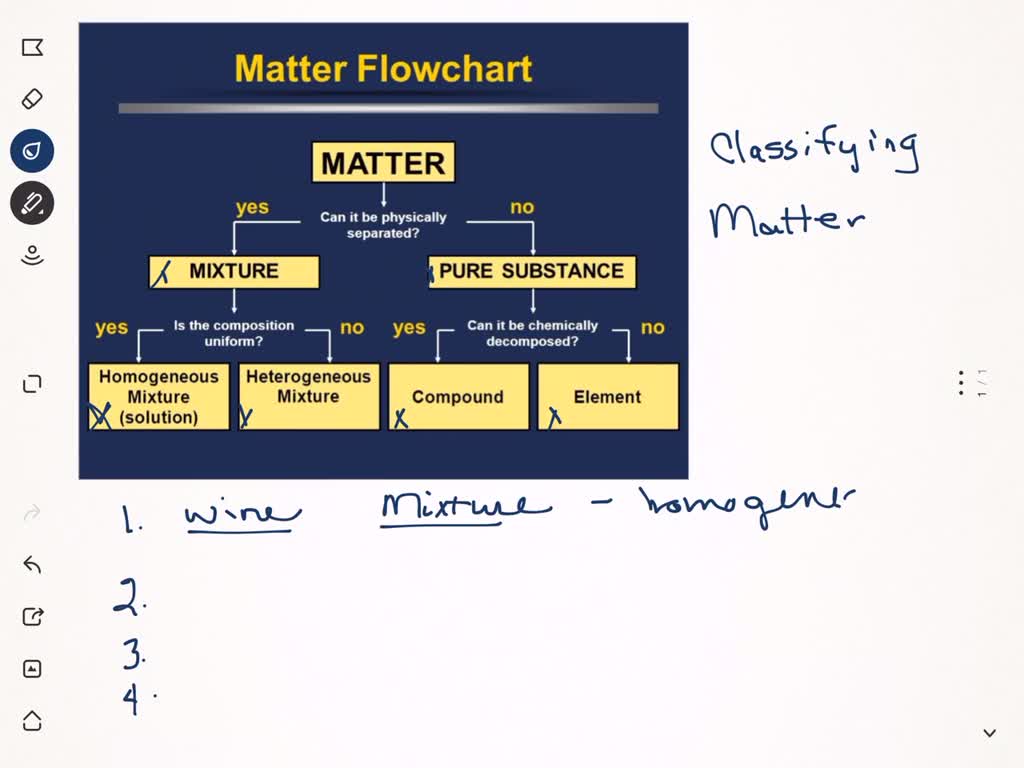
A pure substance is like a single, perfectly ripe apple. Every bite is identical. It's made of only one type of atom or one type of molecule, and its properties are consistent throughout. Think of plain old table sugar (sucrose) – every granule is exactly the same, chemically speaking. Or distilled water – just H2O molecules, nothing else. Simple, elegant, pure.
On the other hand, a mixture is like a fruit salad! You've got apples, bananas, grapes – all together, but each fruit retains its own identity. You can often see the different components, or at least imagine them. Air, for example, is a mixture of nitrogen, oxygen, argon, and a bunch of other gases. Each gas keeps its own properties, even when they're all hanging out together. Another great example? Saltwater. It’s a mix of water and salt, but you could, in theory, separate them.

So, What's the Verdict for Carbon Monoxide?
Now, back to our star, Carbon Monoxide. If you look at its name, "Carbon Monoxide," you get a hint. "Mono" means one. This particular molecule is made up of one carbon atom bonded to one oxygen atom. Always one carbon, always one oxygen, in that precise, unchanging ratio. It’s like a tiny, perfect chemical duo, always dancing together.
Because every single particle of Carbon Monoxide is identical – a C bonded to an O – it fits perfectly into the definition of a pure substance! It's not a bunch of different things mixed together. It's one specific type of molecule, consistently and uniformly. Pretty neat, right? It might seem simple, but understanding this fundamental fact is the cornerstone of so much more complex chemical knowledge.
Think about it: when you detect Carbon Monoxide, you're detecting that specific molecule. You're not detecting a blend of different things where some are CO and some aren't. You're detecting only CO. This uniformity is precisely what makes it predictable in its reactions and, sadly, in its toxicity.
Why Does This Make Life More Fun?
Okay, so Carbon Monoxide is a pure substance. Big deal, you might think. But here's where the fun really begins! Understanding this simple distinction is like gaining a superpower. It allows you to:
1. See the World with New Eyes: Once you grasp pure substances vs. mixtures, you start categorizing everything around you! The juice you're drinking? A mixture! The gold in your jewelry? Hopefully a pure substance (or close to it!). The air in your tires? Definitely a mixture. It's like unlocking a secret level of perception for the everyday world.
2. Boost Your Problem-Solving Skills: Chemistry isn't just for scientists in lab coats. It's about understanding how things work. Knowing CO is a pure substance, for example, helps us understand why CO detectors are designed to specifically look for that one molecule, rather than a general "bad air" sensor. This practical application of knowledge is incredibly empowering!
3. Spark Endless Curiosity: Every answer in science often leads to ten more questions. Knowing that CO is C+O, you might then wonder, "What about CO2? Is that also a pure substance? (Spoiler: yes!) What makes CO so dangerous and CO2, while not harmless, so much less acutely toxic?" These questions are the fuel for lifelong learning and discovery!

4. Feel Empowered, Not Intimidated: Science can sometimes feel overwhelming, full of complex jargon. But by breaking it down into simple, understandable concepts like pure substances and mixtures, you realize that chemistry is just about asking "what if?" and "how does that work?" It's accessible, fascinating, and incredibly rewarding.
So, the next time you hear about Carbon Monoxide, you won't just hear "dangerous gas." You'll hear "a pure substance, a specific molecule of one carbon and one oxygen, whose uniformity is both its identity and its peril." You'll have a deeper, more nuanced understanding, and that, my friend, is incredibly cool!
Our world is teeming with incredible scientific wonders, just waiting to be explored. From the tiniest atom to the vastness of space, every little piece of knowledge we gain helps us appreciate the intricate beauty and logic of everything around us. So go ahead, stay curious, keep asking questions, and never stop discovering. Who knows what amazing insights you'll uncover next?