
Is An Atom Smaller Than A Cell

Imagine you're baking a cake. A really, really, really complicated cake. Think layers upon layers, intricate frosting designs, maybe even edible glitter in the shape of tiny spaceships. That cake, in this slightly bizarre analogy, is a cell.
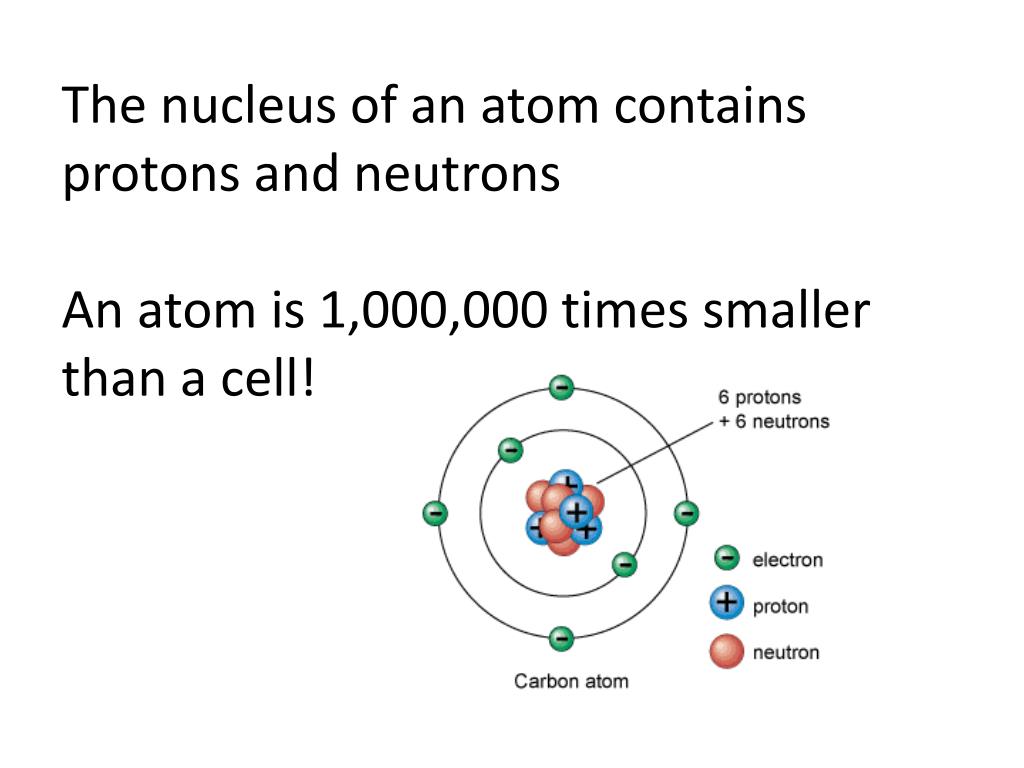
Now, imagine the individual grains of sugar you used to make that cake. Tiny, right? Almost invisible when scattered on the counter. Those little sugar crystals? They're kind of like atoms.
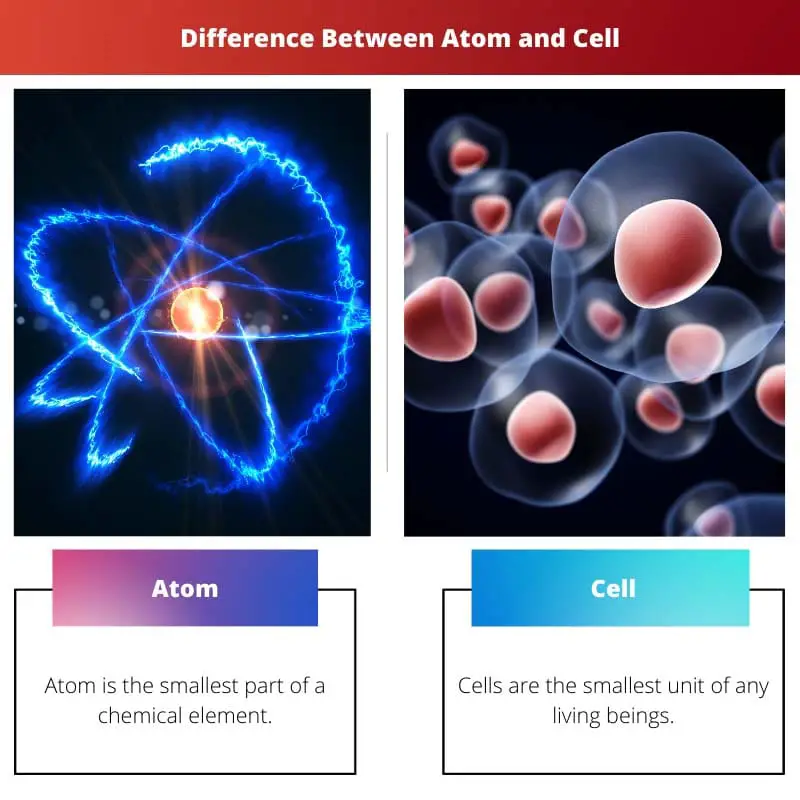
So, is an atom smaller than a cell? Well, let's just say it's like asking if one grain of sugar is smaller than a whole cake. The answer is a resounding, "Yes, absolutely!"
Must Read
But How Much Smaller Are We Talking?
We're not talking about a little bit smaller. We're talking about mind-blowingly, "hold-on-to-your-hat" smaller. A cell, even a tiny one, is still a complex structure containing millions, even billions, of atoms. Think of it! Billions of these incredibly small things all working together, humming along, to keep that cell (and ultimately, you!) alive and kicking.
It's like building a house out of LEGO bricks. Each LEGO brick is like an atom, a fundamental building block. The entire house, with its walls, roof, and maybe even a little LEGO garden, is like a cell. You'd need a whole lot of LEGO bricks to build even the tiniest LEGO house, wouldn't you?

Why Should I Care About Tiny Things?
You might be thinking, "Okay, atoms are small. Cells are bigger. So what? I've got breakfast to eat and Netflix to binge." But understanding this difference in scale unlocks a whole new level of appreciation for the world around you.
Consider this: you are made up of trillions of cells. Trillions. And each of those cells is a buzzing metropolis of activity, powered by the interactions of millions of atoms. It's a level of complexity that's almost impossible to grasp, but it's happening inside you, right now, as you read this.

It's like realizing that your body isn't just one solid thing, but a vast and intricate ecosystem. That feeling when you truly understand it? That's science-induced awe, my friend. And it's pretty darn awesome.
A Little Humorous Perspective
Imagine trying to use atoms to build a house... a real, human-sized house. You'd need so many! You'd be there for... well, forever. It's like trying to empty the ocean with a teaspoon. Possible in theory, but practically, you'd run out of teaspoons (and probably patience) long before you made a dent.
And that's why cells are so impressive. They've figured out how to organize all those atoms into functional structures. They're like tiny, highly efficient construction crews, building and maintaining the incredibly complex machine that is life.
The Heartwarming Part
Ultimately, the relationship between atoms and cells is a story of teamwork. It's a reminder that even the smallest things can come together to create something amazing. It's a testament to the power of cooperation and the beauty of complexity.
Think about it: Those tiny atoms, blindly following the laws of physics, somehow manage to create something as incredible as a living cell. And those cells, working together, create you. It’s a beautiful chain reaction, starting with the infinitesimally small and culminating in something capable of love, laughter, and the ability to appreciate the sheer wonder of existence.
So, the next time you're eating that cake (or building that LEGO house), take a moment to appreciate the tiny building blocks that make it all possible. Remember the atoms, the unsung heroes of the microscopic world. They may be smaller than cells, but they're essential to everything.
As the great, and slightly fictional, scientist Professor Bumblebottom once said, "Never underestimate the power of small things! Especially when there are billions of them!"