Is Air Traffic Control A Federal Job

Ever looked up at a plane soaring through the sky and wondered, "Who's making sure that thing doesn't bump into another one?" Well, that's where air traffic controllers (ATCs) come in. They're the unsung heroes, the silent conductors of our skies, and they play a crucial role in keeping us safe. But have you ever stopped to think about who actually employs them?
So, let's get right to the point: Is air traffic control a federal job? The short answer is a resounding YES! But hold on, before you picture everyone wearing government-issued beige suits, let's dive a little deeper and see why that's kind of a big deal, and actually, pretty cool.
The FAA: Uncle Sam's Air Traffic Wing
The vast majority of air traffic controllers in the US work for the Federal Aviation Administration (FAA). Think of the FAA as the air traffic control equivalent of the Department of Transportation, but specifically focused on all things aviation. They’re the ones setting the rules, maintaining the equipment, and, most importantly, employing the amazing people who guide planes safely through the heavens.
Must Read
Why is the FAA a federal entity? Well, imagine if each state had its own entirely different set of air traffic rules. Chaos, right? It would be like driving on a highway where every state had its own traffic signals and speed limits. Yikes! Having a single, unified system overseen by the federal government ensures standardization and efficiency across the entire country. This unified approach is absolutely paramount for safety and for the seamless flow of air travel.
Why a Federal Gig is Kind of a Big Deal (and Awesome)
Being a federal employee comes with certain perks, and the air traffic control world is no exception. Think of it as the benefits package version of in-flight entertainment – you get some pretty good stuff!

Here are a few reasons why this federal connection makes the job so appealing:
- Job Security: While no job is ever 100% guaranteed, federal jobs tend to be more stable than many private sector positions. Flying is a huge part of our lives, and we always need skilled people to manage air traffic.
- Competitive Salaries and Benefits: Let’s be honest, knowing you’re going to get fairly compensated is very reassuring. ATC positions generally have very attractive salaries with great healthcare and retirement packages.
- Training: Becoming an air traffic controller isn't just a matter of filling out an application and showing up. You need serious training. The FAA provides extensive (and often paid!) training to ensure their controllers are top-notch. It’s like getting a full scholarship to learn how to play the most complex, high-stakes video game in the world.
- Opportunity for Advancement: Like any large organization, the FAA offers opportunities to move up the ranks, specialize in different areas, and even contribute to policy-making.
Beyond the FAA: A Few Exceptions
While the FAA is the dominant player, there are a few exceptions to the "all air traffic controllers are federal employees" rule.

Think of it like this: most orchestral musicians play in a symphony orchestra (the FAA), but some might also play in smaller chamber ensembles or independent groups. Similarly, some air traffic controllers might work for:
- The Military: The armed forces have their own airfields and need controllers to manage military air traffic. While technically federal employees, their roles and training are specific to the military's needs.
- Contract Towers: These are smaller air traffic control facilities that, instead of being staffed by the FAA, are operated by private companies under contract with the FAA. While the controllers themselves are not federal employees, they still adhere to FAA regulations and procedures. It's like ordering takeout – the restaurant might be privately owned, but they still have to follow health codes.
So, You Want to Be an Air Traffic Controller?
Hopefully, this has given you a clearer picture of the role of the federal government in air traffic control. It's a complex but fascinating world, filled with dedicated professionals ensuring the safety and efficiency of air travel.
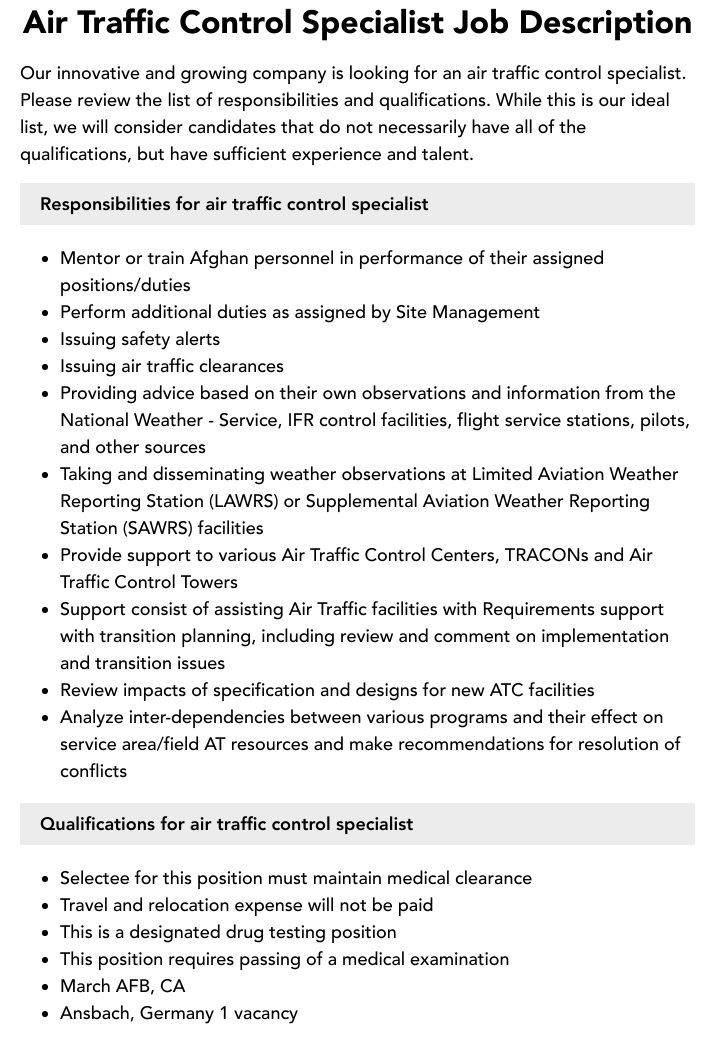
Think you have what it takes to become an air traffic controller? It requires a sharp mind, excellent communication skills, the ability to handle pressure, and a knack for spatial reasoning. It's not for everyone, but for those who thrive in this environment, it can be a highly rewarding and fulfilling career.
So, next time you're on a plane, take a moment to appreciate the invisible network of air traffic controllers working tirelessly behind the scenes. They're the reason you can relax and enjoy your flight, knowing you're in safe hands. And remember, most of them are proud federal employees, working to keep our skies the safest in the world!