
Is 53 A Composite Or Prime Number
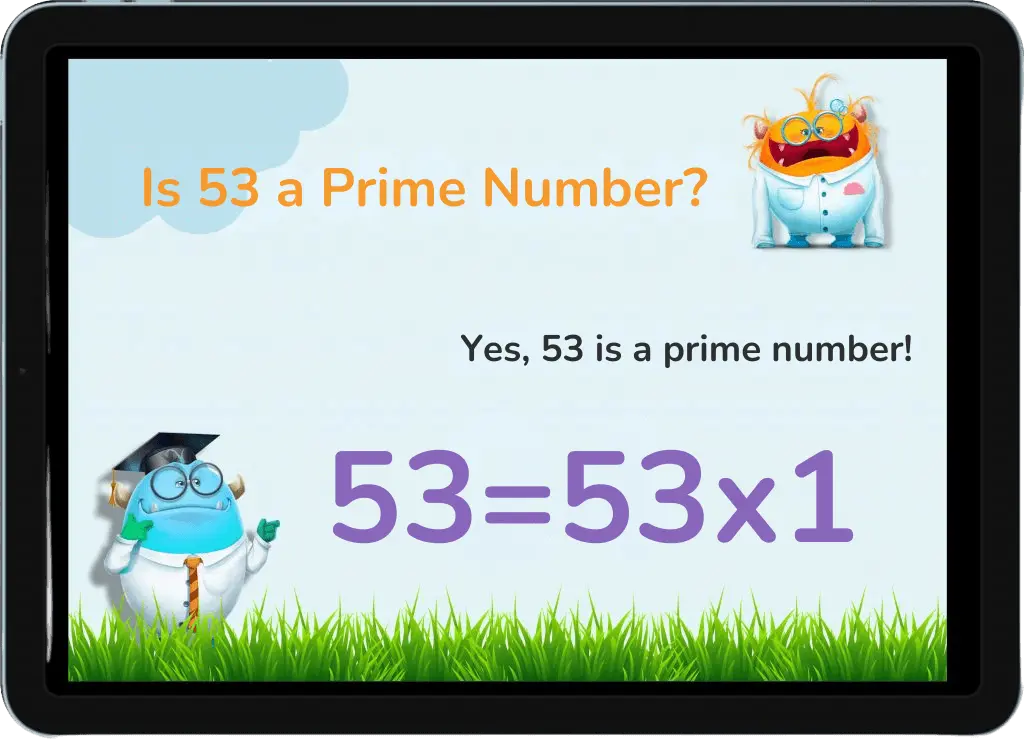
Numbers! They're everywhere. We use them every day, often without even thinking about it. But sometimes, a number pops up and makes you wonder: "Hey, what's your story?"
Let's talk about 53. It's a respectable number, isn't it? Not too big, not too small. But is it hiding a secret? Is it a prime number, living a solitary existence? Or is it a composite number, part of a bigger crowd?
Prime Time: The Exclusive Club
First, a little refresher. What exactly is a prime number? Well, a prime number is like a super exclusive club member. It can only be divided evenly by two numbers: 1 and itself.
Must Read
Think of the number 7. You can only divide 7 evenly by 1 and 7. No other numbers work! That makes 7 a prime number. It's a loner, in a good way.
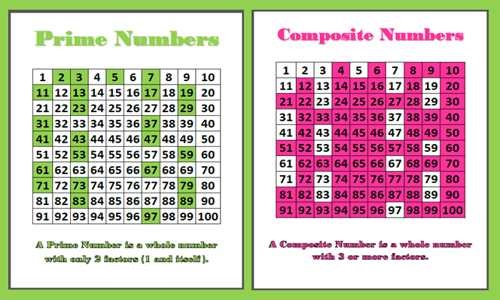
Other prime numbers you might know are 2, 3, 5, 11, 13, and so on. They're the building blocks of all other numbers. Pretty cool, right?
Composite Crew: The Social Butterflies
Now, let's talk about composite numbers. These numbers are the social butterflies of the number world. They can be divided evenly by more than just 1 and themselves.
Take the number 12. You can divide 12 by 1, 2, 3, 4, 6, and 12. That's a whole party of factors! That makes 12 a composite number.
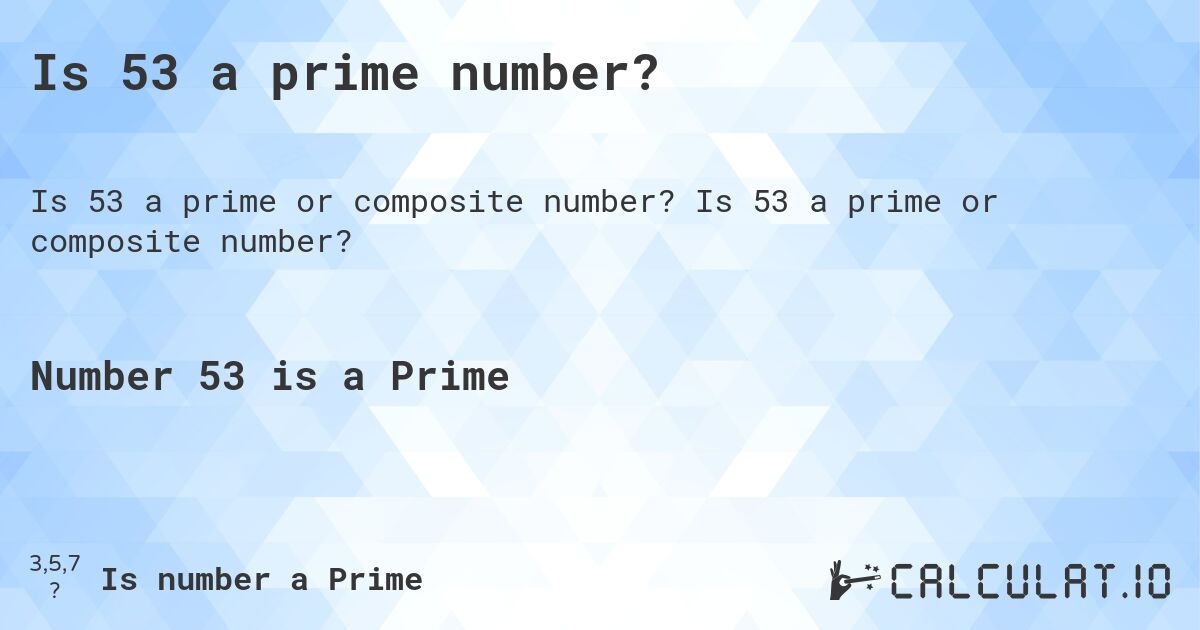
Examples of composite numbers are 4, 6, 8, 9, 10, 12, and so on. They are made up of prime numbers multiplied together.
The 53 Investigation: Is It Prime or Composite?
Okay, back to our main suspect: the number 53. Is it a loner prime number, or a social composite number?
Let's put on our detective hats and start dividing. Can 53 be divided evenly by 2? Nope. How about 3? Nope. 4? Nope. 5? Still no!
We could keep going, but there's a trick. We only need to check prime numbers up to the square root of 53. The square root of 53 is a little over 7.
Checking Our Suspects
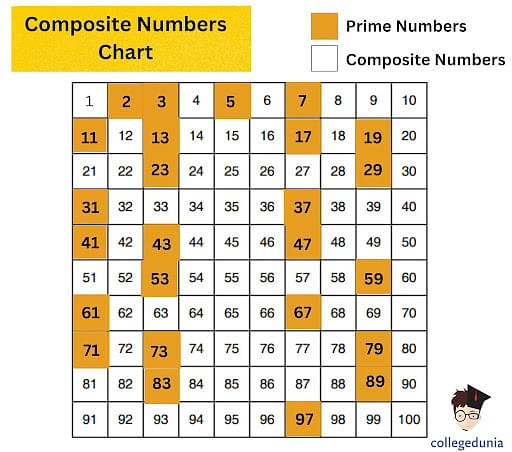
So, we only need to check if 53 is divisible by 2, 3, 5, and 7. We already know it's not divisible by 2, 3, or 5.
Let's try 7. Does 53 divide evenly by 7? Nope! 7 goes into 53 seven times with a remainder of 4.
That's it! We've exhausted all the possibilities. 53 can only be divided evenly by 1 and 53.
The Verdict: 53 is Prime!
Case closed! The verdict is in. 53 is a prime number! It's a member of the exclusive prime number club.

53 stands alone, proud and indivisible (except by 1 and itself, of course). It's a fundamental building block of the number world.
So, next time you see the number 53, give it a little nod of respect. It's a prime example of a number that likes to keep things simple.
Why Does This Matter?
Okay, you might be thinking, "So what? It's just a number." But prime numbers are super important in the world of mathematics and computer science.
They're used in cryptography, which is the art of keeping secrets safe. Prime numbers help to encrypt information and keep it secure.
So, understanding prime numbers like 53 isn't just a fun fact. It's a gateway to understanding some really cool and important technologies.
The Fun Never Ends
Exploring the world of numbers is like going on an adventure. There are always new things to discover and learn.
Maybe you'll be the next person to discover a giant new prime number! Or maybe you'll find a new way to use prime numbers to solve a problem.
So, keep exploring! Keep asking questions! And never stop being curious about the amazing world of numbers. Who knows what you might find?
The beauty of mathematics is that it is always there, waiting to be explored. It's a world of patterns, relationships, and endless possibilities.
So, is 53 a composite or prime number? Now you know! And hopefully, you've had a little fun along the way.