
How To Wire A Portable Generator To Your House

Okay, let's talk about generators! We all know the feeling: the lights flicker, the fridge starts to sweat like it's running a marathon, and suddenly, your internet connection vanishes faster than a free donut at a police convention. Power outage panic? Not anymore! We're going to chat about hooking up your portable generator to your house. Think of it as giving your home a temporary, gas-powered heart transplant. Sounds intense, but trust me, it's doable (and kinda fun!).
Gather Your Gear (Like You're Preparing for a Zombie Apocalypse, But with Less Brain-Eating)
First things first, you’ll need a few trusty companions. Think of it as assembling your power-restoring Avengers team. Here's the lineup:
- Your Generator: Obviously! Make sure it's fueled up and ready to rumble.
- A Transfer Switch: This is the real MVP. Without it, you're basically playing electrical roulette, and nobody wants that. It's like the bouncer at the power party, ensuring only the right energy gets in.
- Heavy-Duty Extension Cord: Think of this as your power umbilical cord. Get a thick, robust one that can handle the juice. We're talking serious amperage here, people!
- Safety Gear: Rubber gloves and eye protection. Looking cool is nice, but staying alive is cooler.
The Transfer Switch Tango: Let's Dance!
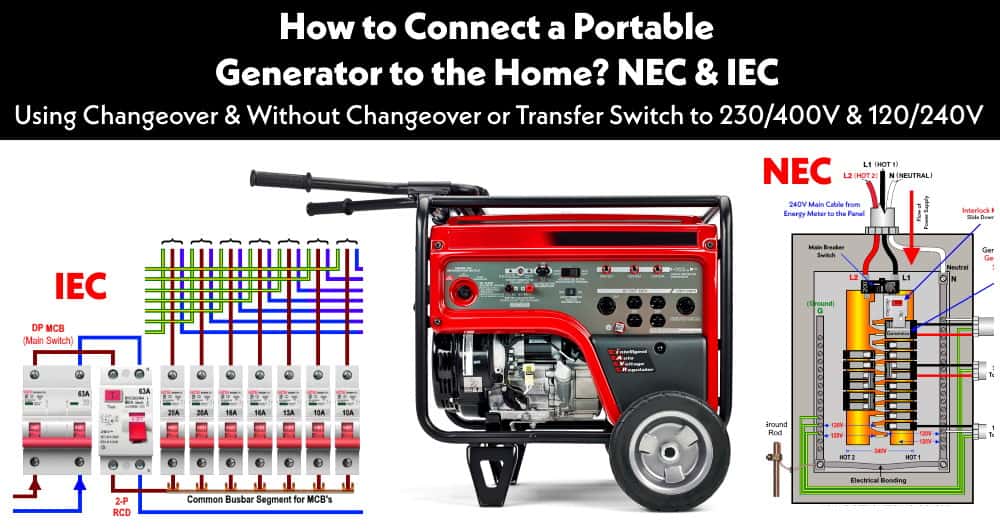
The transfer switch is the star of the show. Now, this little box of magic is usually installed near your main electrical panel. Installing a transfer switch can be a bit complicated, consider consulting a qualified electrician to install one. It keeps your generator's power separate from the utility company's power, preventing backfeeding – which is a big no-no (and potentially dangerous). Backfeeding is like accidentally sending your Amazon package to the wrong continent; things get messy.
Must Read
After installation, flipping the switch is where the magic happens! When the power goes out, you switch certain circuits from the utility company to the generator. It's like telling your refrigerator, "Don't worry, buddy, I got you covered!"
Plug It In, Plug It In! (But Do It Right!)
Grab that heavy-duty extension cord and connect it from your generator to the transfer switch's inlet box. This is like connecting the life-support system to your house. Make sure the connection is snug and secure. We don't want any accidental disconnections during the Super Bowl, do we?
Start 'Er Up! (Like a Lawn Mower, But More Important)
Now, fire up your generator! Let it warm up for a few minutes before you start flipping those transfer switch breakers. It's like letting a race car engine warm up before hitting the track. Give it a chance to stretch its electrical legs.
Once it's humming nicely, you can start switching over the circuits you want to power. Lights? Check! Refrigerator? Double-check! Television for emergency Netflix viewing? Triple-check!

Be a Power-Saving Superhero!
Generators aren't infinite sources of power. They have limits, just like your ability to resist that third slice of pizza. Be mindful of what you're running. Don't try to power your entire house all at once unless you have a generator the size of a small car. Prioritize the essentials: fridge, freezer, lights, and maybe, just maybe, the TV.
Turn off appliances you don't need. Conserving power is like conserving water in a desert – it's essential for survival (or at least for keeping your beer cold).

When the Lights Come Back On (The Sweetest Sound in the World!)
When the utility power returns (cue the angelic choir!), switch those breakers back to the utility power side before shutting down your generator. It is essential to switch back to the utility power first; turning the generator off before switching back to the power can damage your appliances.
Let your generator cool down, and then store it safely. You've just successfully performed open-heart surgery on your house! Give yourself a pat on the back (and maybe treat yourself to that third slice of pizza – you've earned it).
A Word of Caution (Because Electricity Is Serious Business)
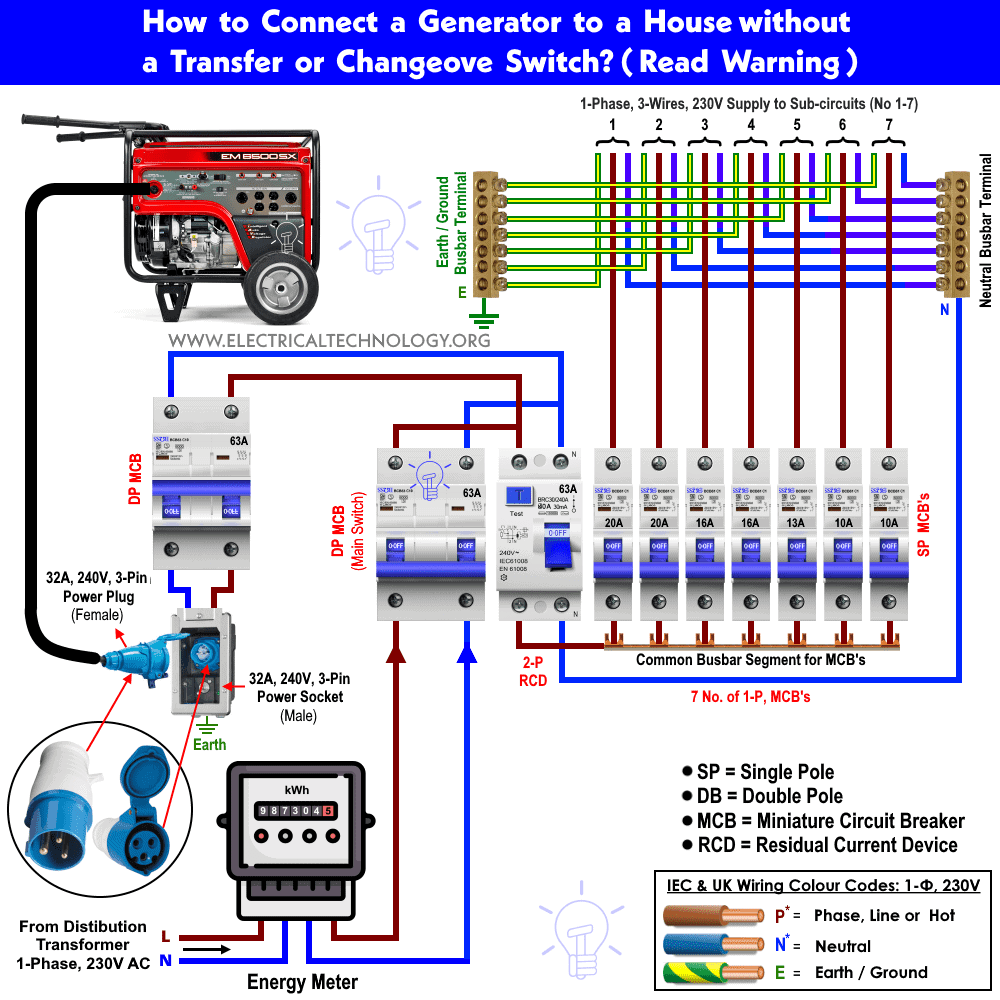
I cannot emphasize this enough: this is a simplified explanation. Always consult the manuals for your generator and transfer switch. Electricity is powerful and dangerous. If you're not comfortable working with electricity, please, for the love of all that is holy, hire a qualified electrician. Don't be a hero. Be a smart, safe, power-outage-prepared homeowner.
And there you have it! You're now equipped to keep your home humming through the darkest of power outages. Go forth and conquer the darkness! (But do it safely, please!).
Remember: When in doubt, call a professional! Electricity is not something to mess around with! Your safety is the most important thing.