
How To Unlock Cells In Excel Without Password
Okay, so you’ve stumbled upon a locked door in your Excel kingdom, haven't you? Don't worry, it happens to the best of us! It's like finding your favorite candy jar locked – frustrating, right? You know the sweets are right there, but you just can't get to them. In Excel, those "sweets" are probably important data or formulas you need to tweak.
Imagine baking a cake and realizing your favorite spatula is locked in a drawer. You could make do with another utensil, but that spatula is just perfect! Unlocking those cells in Excel is often the same – you can maybe find a workaround, but getting to the locked cells directly is usually the easiest, cleanest solution.
Why Bother Unlocking Cells?
Why should you even care? Well, imagine trying to change the price of an item on a locked spreadsheet that everyone in your team uses. Or think about updating your budget but being unable to edit the income section. Suddenly, unlocking those cells isn't just a nice-to-have; it's a necessity! It's like needing to change the batteries in your remote – you could just use the buttons on the TV itself, but the remote is so much easier, isn't it?
Must Read
Think of it like this: a locked cell is like a "Do Not Enter" sign on a room you need access to. Unlocking it removes that sign and allows you to move freely within your spreadsheet domain. It’s about freedom, flexibility, and getting things done efficiently.
The (Often Overlooked) Obvious: Do You Have the Password?
Let's start with the most straightforward scenario, because sometimes the answer is staring you right in the face! Did you, or someone else who created the spreadsheet, set a password? This is the most common reason for locked cells.

Here's how to check and unlock if you do have the password:
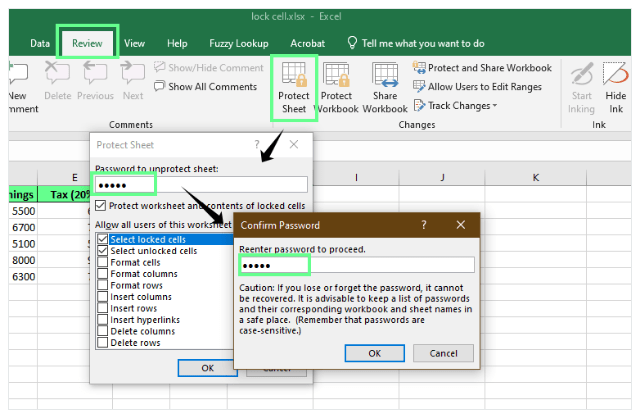
- Go to the "Review" tab on the Excel ribbon.
- Look for the "Unprotect Sheet" or "Unprotect Workbook" button.
- If it's clickable, great! Click it.
- Excel will likely ask for a password. If you know it, type it in and click "OK".
If that works, congratulations! You've successfully unlocked the sheet. It's like finding the key to that candy jar – pure bliss!

Uh Oh, No Password? Don't Panic!
Okay, so you've tried the obvious, and it didn't work. You don't know the password. This is where things get a little more… interesting. Don't worry; you're not entirely out of luck! Think of it like losing the recipe for your grandma's famous cookies. It's a setback, but you might be able to find a similar one online, right?
Important Note: We're going to discuss methods that may work, but they aren't guaranteed. Password protection is designed to be secure, and attempting to bypass it without authorization might not be ethical or legal, especially on work or company files. Use this information responsibly.
Trying a "Gentle Nudge" - The XML Method (Advanced-ish)
This method involves digging into the underlying XML code of your Excel file. It sounds scary, but it's often surprisingly effective. Think of it like trying to pick a simple lock with a paperclip. It might work!
Here's a simplified rundown (remember to back up your file first!):
- Save a copy of your Excel file as a .zip file. (Yes, you can rename it from .xlsx to .zip).
- Open the .zip file. You'll see a bunch of folders.
- Navigate to the folder that contains the sheet you want to unlock. It's usually something like "xl/worksheets/".
- Find the XML file for your sheet (e.g., "sheet1.xml").
- Open the XML file in a text editor (Notepad on Windows, TextEdit on Mac).
- Look for the tag <sheetProtection...>. If you find it, delete the entire tag, including the opening and closing brackets.
- Save the XML file.
- Replace the original XML file inside the .zip file with your modified version.
- Rename the .zip file back to .xlsx.
- Open the file in Excel. The sheet should now be unprotected!
This process works because the <sheetProtection...> tag tells Excel that the sheet is locked. Removing it often removes the protection. It’s like taking the "Locked" sign off the door!
Important Disclaimer: This XML method is not foolproof. It might not work if the file has stronger encryption or more complex protection measures. Also, be very careful when editing XML files. A small mistake can corrupt the file.
Final Thoughts
Unlocking cells in Excel can feel like a mission, but hopefully, these tips have given you a good starting point. Remember to be responsible with the information and prioritize ethical considerations. And remember, sometimes the best solution is to ask the person who created the spreadsheet for the password! It's like asking your grandma for her cookie recipe – often the easiest and most reliable way to get what you need.
Good luck, and happy spreadsheets!