
How To Turn Off First Alert Smoke Detector

You know that moment. The one where your heart leaps into your throat, your cat does a triple backflip off the couch, and your calm, serene home suddenly transforms into a full-blown siren test? Oh yes, we're talking about the First Alert smoke detector that has decided, with absolute certainty, that it's time for its grand, ear-splitting performance right now.
Fear not, brave home-dweller! We're here to guide you through the thrilling quest of reclaiming your peace and quiet. This isn't just about silence; it's about empowerment. It's about showing that little plastic disc who's boss!
The Great Silence Button Gambit: A Temporary Truce
First things first, let's acknowledge the immediate crisis. That piercing, insistent chirping is demanding your attention, probably making you wonder if you accidentally left the toaster oven on high for your imaginary marshmallow roast. Before you grab a broom and start flailing wildly, look up!
Must Read
Most First Alert models come equipped with a magnificent feature: the Silence button. It’s usually a prominent, often slightly recessed button right on the face of the detector.
Press it! Firmly but gently, like you're trying to convince a stubborn toddler to share their toy. For many, this will grant you a blissful, albeit temporary, reprieve. It's like hitting the snooze button on an alarm clock that decided to go off at 3 AM – a glorious moment of relief, but you know the beast will be back.
Ah, sweet silence! A fleeting moment of peace before the true battle begins.
This button is fantastic for silencing false alarms – perhaps a particularly ambitious chef (you!) accidentally created a small cloud of culinary "smoke" from sizzling bacon. However, if the chirping returns, or if it's a persistent low-battery warning, we need to go deeper.
Operation: Identify and Conquer the Chirping Culprit
Sometimes, the chirping isn't a full-blown alarm but that nagging, irregular "chirp-chirp-pause" that signals a low battery. And it always seems to happen in the dead of night, doesn't it?
The first mission is to pinpoint the exact perpetrator. Smoke detectors have a mischievous way of making their alarming sounds echo throughout your home, making it seem like all of them are screaming for attention.
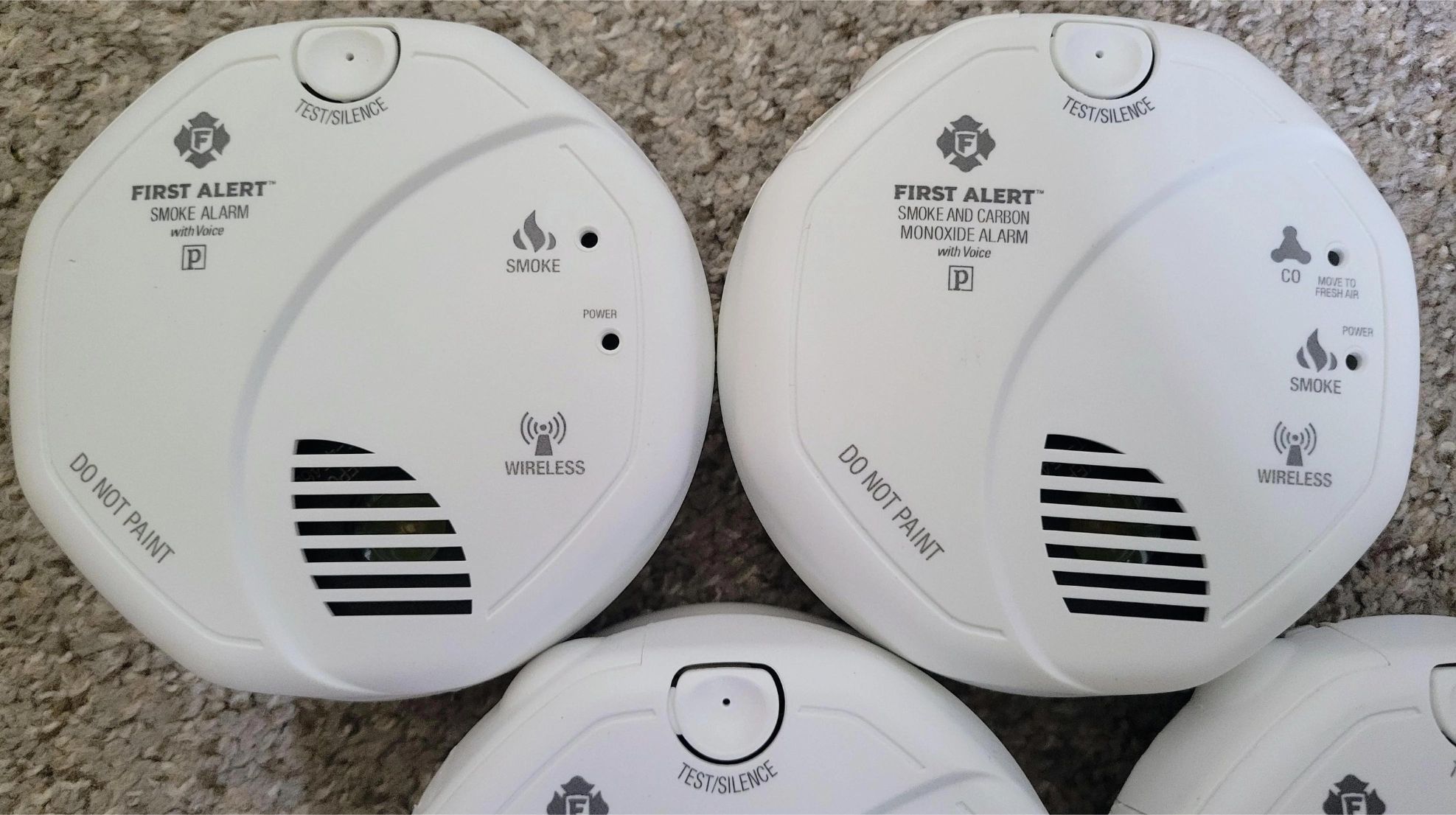
Stand still, close your eyes (briefly!), and listen. Walk slowly through your home, ears perked like a meerkat on watch. Which room is the loudest? Which ceiling seems to be radiating that irritating sound?
You'll eventually discover the true source, the blinking bandit, the single First Alert unit that has declared war on your tranquility. It usually has a little blinking light that corresponds with the chirp. Found it? Excellent work, detective!
The Great Detachment: Twisting Your Way to Freedom
Now that you've identified the specific unit, it's time for the real action. You'll need a stable step stool or a ladder, because unless you're a professional basketball player, reaching the ceiling is usually a challenge.
Carefully, and with a sense of purpose, climb up. Take a moment to admire your courage. You're facing this beeping menace head-on!
Most First Alert smoke detectors are mounted to a base plate with a simple twist-and-lock mechanism. Imagine you're opening a really stubborn jar of pickles, but instead of pickles, it's silence you're trying to get out.
Grab the unit firmly with both hands. Give it a gentle but confident twist, usually counter-clockwise. You'll feel a slight click, or perhaps a satisfying pop, as it disengages from its base. It's a glorious moment of liberation!

The unit is in your hands! A momentous victory in the battle for quiet.
Gently bring it down from its perch. Hold it triumphantly, like a trophy from a hard-fought battle. You've isolated the problem; now for the final solution.
The Heart of the Matter: The Battery Extraction Extravaganza
With the First Alert unit safely in your hands, flip it over. You're looking for the battery compartment. This is the heart of the beast, the power source that fuels its relentless chirping.
Sometimes it’s a sliding door, sometimes it’s a little tab you need to press and pull. Don't be shy! If it’s a bit stubborn, a flathead screwdriver can sometimes coax it open. Remember, you're on a mission to restore quietude.
Inside, you'll likely find a 9-volt battery – that rectangular little block with two terminals on top – or perhaps a couple of AA or AAA batteries, depending on your model. This is the culprit's secret weapon!
Carefully pry the battery (or batteries) out. Often, they're nestled quite snugly in their little compartment. You might need to use a strong thumb or even a small tool to pop them free.
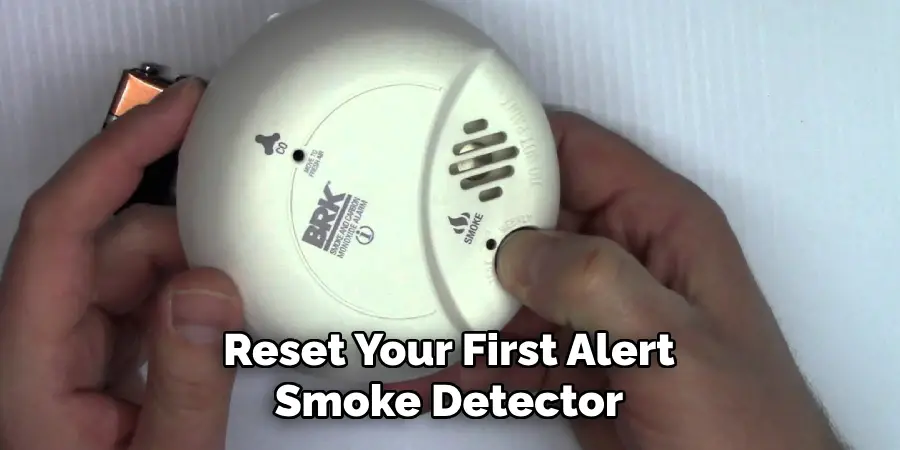
Snip! The connection is severed. The power source is removed!
Hold that battery in your hand. It looks so innocent now, doesn't it? But moments ago, it was fueling an audible assault on your nerves. Place it aside, ready for proper disposal or recycling later.
The Grand Finale: Draining the Last Whispers of Power
Even after removing the battery, some smoke detectors, especially the tenacious First Alert models, might still cling to a tiny spark of residual power. This means they could, theoretically, let out one last, defiant little peep.
To ensure absolute, utter silence, perform this final, satisfying ritual. With the battery out, press and hold the Test button on the unit for about 15-20 seconds.
You might hear a faint, almost apologetic little beep, or see a tiny flash of light as the last bit of energy drains away. Consider it the smoke detector’s final sigh before succumbing to glorious, beautiful silence.
Congratulations! You have successfully disarmed the First Alert intruder. Your home is now a sanctuary of peace once more. Bask in the quiet. Revel in the calm.
![How To Deactivate First Alert 10 Year Smoke Alarm? [Answered] – Fire](https://firesafetysupport.com/wp-content/uploads/2023/03/How-to-Turn-Off-First-Alert-Smoke-Alarm.jpg)
But Wait! What About Hardwired Heroes?
Now, some of you might be thinking, "But what if my First Alert detector is hardwired into my home's electrical system? Does it still have a battery?" The answer is a resounding, "Yes!"
Even hardwired smoke detectors almost always have a battery backup. This is crucial for keeping them operational during power outages. So, for these models, the steps are largely the same: identify, detach, and then, most importantly, find and remove that hidden battery backup.
The battery is still the primary source of that pesky chirping sound indicating a low battery. So, even if it's hardwired, removing the battery will silence the unit. You'll still need to put a fresh one in eventually, but for immediate peace, that's your ticket!
Remember, a fresh battery is a happy, silent detector. Well, silent until it's needed!
The Aftermath: Revel in the Quietude!
Look around you. The cat is no longer doing acrobatics. Your heart rate has returned to normal. The air is still, save for the gentle hum of your refrigerator or the distant chirping of actual, non-alarming birds.
You did it! You took on the mighty First Alert, and you won. Feel that sense of accomplishment? That warm glow of victory? It’s entirely deserved. You’ve mastered a household challenge with grace, determination, and just a touch of dramatic flair.
Now, about getting a fresh battery and putting it back so your home remains safe... that's a story for another day. For now, enjoy the sweet, sweet sound of nothing at all.