How To Turn Gas Off To Dryer

Ah, the domestic landscape! Full of mysteries, hidden buttons, and those little tasks that always seem to belong to someone else, don't they? Well, prepare to unlock a tiny secret. One that’s less about ancient maps and more about modern marvels. We’re talking about a simple move, a flick of the wrist, that might just make you feel like a secret agent of your own home. Forget grand conspiracies; this is about a small, satisfying victory over the unknown. And the best part? It's so surprisingly simple, you'll wonder why everyone doesn't talk about it more. It's almost an unpopular opinion how easy this truly is.
The Grand Unveiling of Your Appliance
First things first, let’s identify our hero, or rather, our inanimate object of interest. You know the one. That big, boxy friend that devours wet socks and spits out fluffy, warm happiness. Yes, we’re talking about your dryer. Sometimes it lives in the basement, perhaps in a dedicated laundry nook, or even, daringly, in a closet. Wherever it resides, give it a respectful nod. It’s probably humming along, minding its own business, perhaps even halfway through a load of towels. We’re not here to disturb its peace, merely to understand its hidden anatomy. Take a moment to appreciate its steadfast presence. Its quiet dedication to the cause of dry clothes. Our little adventure begins with this familiar sight, so make sure you’re looking at the right, large, often white or silver, tumbling apparatus. No mistaken identities, please! We want the laundry champion, not the fridge or the washing machine. It has a vent, usually a big exhaust pipe. That’s a good clue.
The Mysterious Tube Behind the Scene
Now, for the thrilling part. Peer behind your trusty dryer. This might involve a gentle tug, a slight shimmy, or even a full-on, theatrical performance of moving the appliance out from the wall. Don't be shy! What you're looking for is a flexible tube, often yellow, sometimes black, sometimes a silvery metallic color. It’s not the chunky vent pipe that carries lint and warm air away; this is a more slender, often coiled or curved friend. It snakes its way from the wall, or perhaps from the floor, directly into the back of your dryer. It’s usually robust, maybe even a little bit stiff, and definitely not something you want to bend or crease violently. This is a very particular connection, a vital conduit that often goes unnoticed in the hustle and bustle of daily life. Observe it. Follow its path with your eyes. It’s a bit like finding a secret tunnel in a children’s book, only less dusty and without any actual gnomes. It's definitely not the electrical cord, that’s another story for another day. This one looks a bit more… industrial, perhaps?
Must Read
“Who knew that being in charge of your home’s inner workings could feel so wonderfully, playfully rebellious?”
The Tiny Guardian of Flow
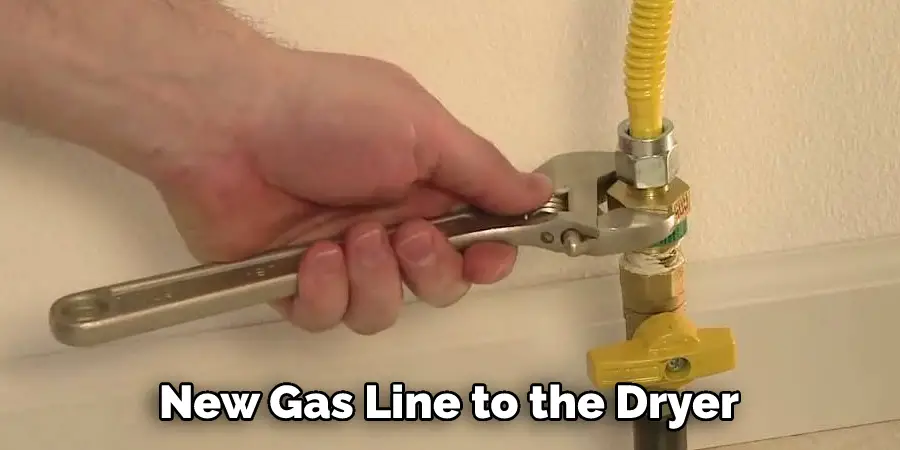
Once you’ve successfully identified the flexible tube, follow it back to where it connects to the wall or floor. This is where our next discovery lies. You're looking for a small, unassuming lever or handle. It’s often brass-colored, sometimes with a red or yellow handle, or just a simple metal tab. This little hero is usually found right where the flexible tube meets the rigid piping coming out of your wall. It’s typically a compact device, not much bigger than your thumb, but oh, what power it holds! It might be a simple straight bar, or a rounded handle. It sits there, quietly doing its job, often overlooked. This little fellow is the shut-off valve. Don't be intimidated by its official-sounding name. Think of it as a friendly gatekeeper, waiting patiently for your instruction. It’s a very common sight in many homes, once you know where to look. It’s designed for easy access, though sometimes it tries to hide a bit. Be persistent!
The Quarter-Turn Revolution
Now, for the grand finale. The moment of truth! Look closely at the small shut-off valve you've identified. You'll notice that its handle or lever is currently running parallel to the flexible tube it’s attached to. This signifies its current, active state. To enact our little household magic trick, you simply need to turn this handle. Not a full spin, not a wrench-straining twist. Just a simple, decisive quarter turn. Imagine turning the hands of a clock from 12 to 3, or 9 to 12. The goal is to make the handle or lever of the valve run perpendicular to the flexible tube. So, if it’s currently running in the same direction, a quick twist will make it stick out at a 90-degree angle. It should turn with a firm but not overly strenuous effort. No need for heroics or specialized tools; your hand should be perfectly sufficient. A satisfying click or a gentle resistance, and there you have it. A small, but profoundly impactful, action.
And just like that, you've done it. You’ve mastered a tiny but mighty piece of household wizardry. No complex spells, no obscure incantations, just a bit of observation and a simple quarter turn. Who knew that being in charge of your home’s inner workings could feel so wonderfully, playfully rebellious? It truly is an unpopular opinion that such a simple act can instill such a sense of accomplishment. Go ahead, give yourself a pat on the back. You've uncovered a secret, and now you hold a small but significant power. The knowledge is yours, and it feels pretty good, doesn't it?
![How To Purge Gas Line For Dryer [ Step By Step Process ] - YouTube](https://i.ytimg.com/vi/9L1N8kcgySU/maxresdefault.jpg)