
How To Tell If Your Drain Field Is Failing

Okay, so picture this: You’re having a perfectly normal Tuesday evening. You’ve just finished a magnificent spaghetti dinner (with extra sauce, naturally), and you head to the kitchen sink to start the clean-up. You turn on the faucet, ready for battle with a mountain of dishes, and… drip… drip… drip. The water just sits there. Or maybe it’s the shower that suddenly feels like you’re standing in a small pond, or the toilet that gives you a panicked stare after flushing, looking suspiciously full. Sound familiar? We’ve all been there, mentally calculating the cost of a plumber while trying to plunge away our woes. But sometimes, those slow drains or gurgling pipes aren't just a simple clog. Sometimes, they're a little SOS from a much bigger, smellier, and frankly, more vital part of your home: your drain field.
Yep, your drain field. That unsung hero buried beneath your yard, diligently processing all the wastewater from your home. It’s like the quiet kid in class who does all the heavy lifting but never gets any credit. Until it decides to throw a tantrum, that is. And trust me, when a drain field throws a tantrum, you’ll know it. It's less "gently declining" and more "full-blown sewage apocalypse." So, how do you tell if your subterranean MVP is having a rough time before things get truly… moist?
The Telltale Signs Your Drain Field Is Crying for Help
Let's dive into the dirty details, shall we? Because catching these issues early can save you a whole lot of headache (and maybe your lawn).
Must Read
1. Sluggish Drains and Backups – The Classic Cry for Attention
This is probably the most common, and often the first, sign you’ll notice. Are your bathtubs taking ages to drain? Do your toilets seem to gurgle more than usual or just… refuse to flush properly? It’s not always a hairball in the shower trap, my friend. If multiple drains in your house are acting sluggish, especially after heavy water usage, it's a huge red flag. This means the wastewater isn't flowing freely from your septic tank to the drain field, or the drain field itself is saturated and can't absorb any more liquid. Think of it like a sponge that's already soaked – it just can't take another drop.
2. Foul Odors Outside – Your Nose Knows
Ever step outside and get a whiff of something… distinctly unpleasant? Like a port-a-potty decided to relocate to your backyard? Yeah, that’s not your neighbor’s questionable compost pile. If you smell sewage in your yard, particularly around the drain field area (which is usually a big, flat, grassy area away from your house), it’s a pretty strong indicator that wastewater is either sitting on the surface or isn't being properly treated and absorbed underground. It's a smell you won't soon forget, and definitely one you don't want to ignore!
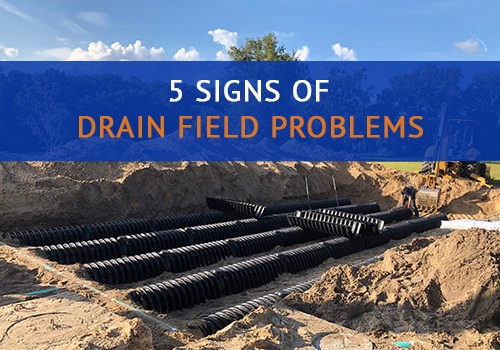
3. Standing Water or Wet Spots – The Pond Effect
This is where things get visually alarming. If you notice puddles of standing water, squishy ground, or overly moist spots in your yard, particularly over your drain field, even when it hasn’t rained recently, you've got a problem. This liquid is likely untreated wastewater that has nowhere else to go. It’s literally seeping out of the ground. Gross, right? Not only is it a health hazard, but it also screams, "My drain field is done, cap’n!"
4. Super Lush, Green Grass Over the Drain Field – The Ironic Beauty
Now, this one might trick you. You might think, "Wow, my grass looks amazing right there!" But if there's a patch of grass over your drain field that is suspiciously greener, taller, and lusher than the rest of your lawn, don't celebrate just yet. This isn't a sign of your superior gardening skills. It's a sign that the grass is getting an unintended nitrogen boost from effluent that's rising to the surface. It’s like Mother Nature’s way of highlighting your problem area with a big, verdant arrow. I know, it's pretty ironic, isn't it?

5. Septic Tank Alarm Going Off – The Blaring Warning
If your septic system has an effluent pump (which some do, especially if your drain field is uphill from your tank), it might come with an alarm. If that alarm starts blaring, don't just hit snooze! It means the liquid level in your pump tank is too high, indicating that the pump can't push the wastewater out to the drain field, likely because the drain field is oversaturated or blocked. Pay attention to those beeps!
What to Do When You Spot Trouble
So, you’ve noticed one (or worse, several) of these signs. Don't panic! The first step is always to call a certified septic professional. They have the tools and expertise to properly diagnose the issue. They can tell you if it's a simple fix (like a clogged pipe leading to the drain field) or if it's time for a more serious intervention, like a drain field repair or even replacement.
Your drain field might be out of sight, but it definitely shouldn't be out of mind. Paying attention to these subtle (and not-so-subtle) cues from your home can save you a ton of stress, mess, and money down the line. Keep an eye (and a nose!) on your yard, and your septic system will thank you!

