
How To Tell If Key Fob Battery Is Low
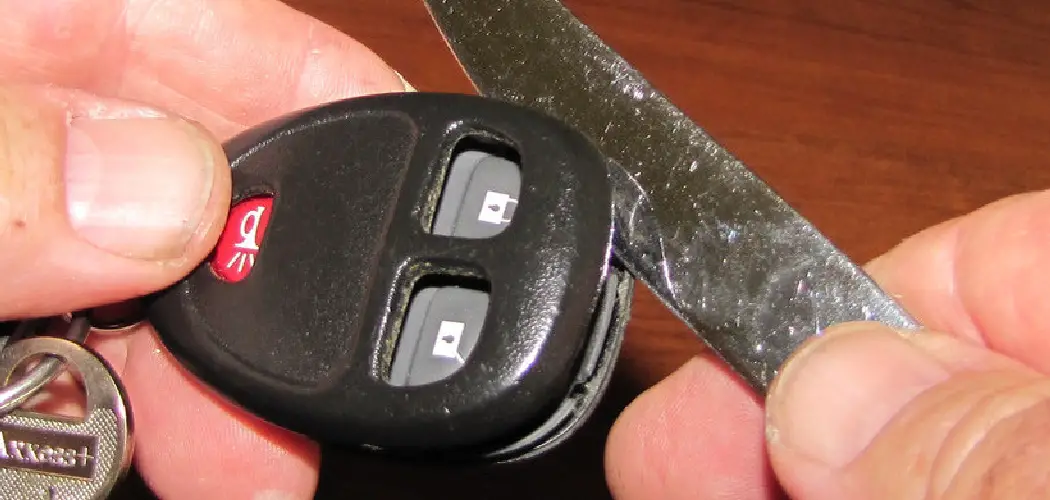
Ah, the modern marvel: your car key fob. It's a small, unassuming rectangle of plastic and buttons. It promises convenience, freedom, and a quick escape from a sudden downpour. But what happens when this tiny hero starts to falter?
We're here to talk about a widely unspoken truth. A truth that only car owners truly understand. The truth that your key fob battery doesn't just "die." Oh no, it orchestrates a dramatic, slow-motion exit, full of passive-aggressive cues.
Most people expect a clear warning. A little light, perhaps? A polite beep? Nope. Your fob operates on a much more theatrical, less direct system. It's almost like it enjoys the suspense.
Must Read
The Subtle Snubs: Early Warning Signs
The "Did I Press It?" Game
This is where it all begins. You press the unlock button. Nothing. You wait a beat. You press it again, maybe a little harder. This time, voila! Your car chirps to life. This isn't a fluke; it's a warning shot.
Your fob is playfully testing your patience. It's gauging how much effort you're willing to put in. It’s an early indicator that its energy reserves are dwindling.
The fob's secret language often starts with a single, ignored command. It's like a teenager ignoring a chore request the first time.
The "Closer, Please" Ritual
Remember when you could unlock your car from across the parking lot? Those were the days. Now, you find yourself practically nose-to-bumper with your vehicle. You're holding the fob up like a sacred relic.
The range is shrinking. The signal is weak. Your fob demands physical proximity, almost like it wants a hug before it performs its duties. It's a clear cry for help, but a very quiet one.
You might even find yourself doing a little "fob dance." You extend your arm, pivot your body, and point the fob directly at the windshield. Anything to get that sweet, sweet unlock chirp.

The "Selective Listening" Phase
This is when things get a bit frustrating. You press unlock, and only the driver's door pops open. The rest remain stubbornly shut. Or perhaps the trunk button suddenly decides it's on vacation.
Your fob isn't broken; it's just being picky. It only has enough juice for the essential functions. Think of it as a grumpy old man conserving his last bit of energy for important tasks.
It's giving you just enough access to make you think it's still working. But it's clearly holding back. This selective unlocking is a mischievous signal that something is amiss.
The Obvious Obstacles: Mid-Stage Meltdowns
The "Press-and-Pray" Technique
Gone are the days of a single, confident press. Now, you’re practically giving your fob CPR. You press it multiple times. You hold it down. You maybe even shake it a little, as if that will magically re-energize it.
This isn't a trick. It's a desperate measure. You're trying to coax the last few volts out of a dying battery. Your thumb aches, but your car remains unresponsive. It's a battle of wills.
At this stage, your key fob starts to feel less like a tool and more like a stubborn pet. It only obeys when it feels like it.
The "Hold It Just So" Angle
You discover that if you hold the fob at a very specific angle, maybe at 45 degrees, facing the rearview mirror, while standing on one foot, it might work. This isn't scientific; it's pure desperation.
Much like a old TV remote that only works if you smash it on the armrest, your fob develops a peculiar sweet spot. It's demanding a very precise input, almost as a challenge.
This particular quirk is a hallmark of a severely weakened battery. The signal is so faint, it needs all the stars to align to reach its destination. It’s definitely not your imagination.
The "Silent Treatment"
Your car used to chirp happily when it locked or unlocked. Now, it's a silent affair. The lights might flash, but that reassuring sound is gone. It's unsettling, isn't it?
The chirp requires a bit more power than just flashing the lights. Your fob's battery is so low, it can't even afford the luxury of making a sound. It's conserving every last joule.
This quiet operation feels almost eerie. It's your fob telling you, without words, that it's running on fumes. It's not rude; it's just really, really tired.
The "Push-to-Start Peril"
For those with fancy push-to-start cars, a low fob battery introduces a whole new level of drama. You get in, press the button, and... nothing. Or, it flashes a warning: "Key Fob Not Detected."
Suddenly, your car demands you place the fob directly into a specific slot or hold it against the start button. It needs that direct, intimate contact to confirm your presence. The wireless magic is gone.

This is often the moment people realize something is truly wrong. The push-to-start feature, which seemed so effortless, now adds an extra, inconvenient step. It’s a very pointed message.
The Grand Finale: Total Collapse
The "Brick" Phase
This is it. The battery is officially deceased. Your key fob is now just a fancy, non-functional piece of plastic. It looks like a key, but it acts like a paperweight.
No amount of pressing, shaking, or sweet-talking will bring it back to life. It has chosen to retire completely, leaving you stranded with only your manual key entry. The drama is complete.
When your key fob gives up the ghost, it's not a gentle fade. It's often a sudden, unannounced cessation of all functions. Pure defiance.
The "Emergency Key" Embarrassment
Remember that tiny, hidden metal key tucked inside your fob? The one you hoped you'd never use? Well, today's the day. You're now manually unlocking your car, like it's 1999.
It feels a little primitive, doesn't it? Fumbling with a physical key in public can feel like a walk of shame, especially when everyone else is casually tapping their fob. Your fob relishes this moment.
This is the ultimate sign of defeat. Your key fob has won. It forced you back to basics, just to prove a point about its own importance. It’s a powerful, silent protest.
![How to Fix the Key Fob Battery Low Warning Light? [Simple]](https://warninglights.net/wp-content/uploads/2022/12/What-Causes-the-Key-Fob-Battery-Low-Warning-Light-to-Come-On.jpg)
The "Stuck in Park" Predicament
For some modern vehicles, a truly dead fob battery means your automatic transmission is stuck in park. The car simply refuses to shift gears without recognizing the fob. Talk about being in a pickle!
This advanced level of inconvenience ensures you absolutely cannot ignore the problem. Your fob isn't just locking doors; it's holding your entire vehicle hostage. It's a dramatic final act.
The key fob battery isn't just low; it's actively sabotaging your plans. It's a reminder that these tiny devices wield immense power over our daily lives. Never underestimate them.
Embrace the Fob's Peculiarities
So, there you have it. The secret, passive-aggressive life cycle of your key fob battery. It never just gives a polite "low battery" warning. That would be too simple, too logical.
Instead, it chooses a path of theatrical hints, subtle snubs, and eventual total collapse. It thrives on your confusion and mild frustration. It enjoys making you work for that unlock.
The real takeaway? Don't wait for the grand finale. Pay attention to those early, playful signs. The moment your fob asks you to get a little closer, or play the "did I press it?" game, consider a battery change.
Your key fob battery might not have a light, but it certainly has a language. And once you learn to speak "fob," your car-owning life will be a little less dramatic, and a lot more predictable. Now, go forth and decode!